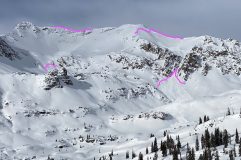
Gothic 7am Weather Update

CBAC2020-21 Observations

Date of Observation: 12/27/2020
Name: billy barr

Zone: Southeast Mountains

Weather: Cloudy and windy most of the night with scattered light snow, as it clears and wind stops around 5 a.m.  Total new snow a scant 1″ with 0.06″ of water and snowpack at 21½”.  Temperature range from a high of 35ºF to a low, and the current, of 14.  Now partly cloudy with a light breeze.

The snowpack is awful with a very rotten base and now a sizable surface hoar build-up.  In the meantime the snowpack continues to collapse.  A big snowstorm will make things interesting, and very dangerous.

Bits and pieces

CBAC2020-21 Observations

Date of Observation: 12/26/2020
Name: Eric Murrow


Zone: Northwest Mountains
Location: Slate River to Poverty Gulch
Aspect: East, South East, South, South West, West, North West
Elevation: 9000′ – 11600′


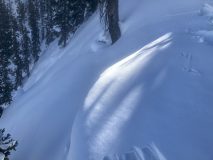
Avalanches: A grouping of small loose avalanches near treeline on southwest aspect – guessing wet from warm weather on Christmas
Persistent Slab on west aspect of Baldy – few days old, likely from wind event on Wednesday/Thursday timeframe
Weather: Pleasant above the inversion zone with calm winds below treeline and light winds near treeline – no blowing snow observed
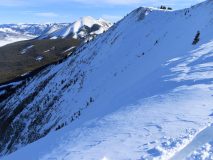
Snowpack: Just a rec ski day with no signs of instability underfoot on steep southwest slopes, or lower-angled easterly slopes. Not many slopes in the alpine in this area looked like good skiing; lots of breaker-crust-looking conditions and wind erosion on others. In early afternoon steep southwesterly slope softened just enough to make for some decent turns.

Photos:


Avy Problem becoming more specific and stubborn

CBAC2020-21 Observations

Date of Observation: 12/26/2020
Name: Evan Ross

Zone: Northwest Mountains
Aspect: North, North East, East
Elevation: 9,500-12,000

Weather: Pleasant temps above the inversions, calm wind, clear sky.

Snowpack: Primary traveled N and NE, with just a little E. Primary traveling just above, or through, start zones on Axtell. While checking on the Persistent Slab Avalanche Problem. In this terrain, the slabs have become more specific, borderline isolated, and were stubborn to trigger. The previous wind has damaged many of these slopes at all elevations. Outside of checking on this avalanche problem, I would have no desire to otherwise recreate in this area given the below-average snowpack and snow quality.

Below Treeline: The slabs are fading away. Especially below about 10,500ft. Potential avalanche problems at the general BTL elevation were isolated and small. Given the below-average snowpack, even a small slab avalanche would be a nasty ride into trees and all the exposed ground hazards. The best place to find that isolated slab would be on some blown up, cross-loaded portion of a terrain feature. Fairly good distribution of SH below ~11,000ft.

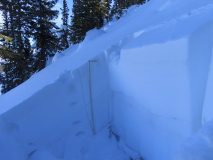
Near Treeline: The same story as lower elevations, a decaying slab. The difference between weak layer grain size/hardness and the slab’s grain size/hardness has become less dramatic. Stoping through plenty of undisturbed snow produced no collapse or shooting cracks, while one ECT test had an ECTP14 SP on the 12/10 interface. The only collapses and shooting cracks, were on NE to E facing slopes, in the Wind Wales right near ridgeline. These results were again stubborn and difficult to produce. The biggest cracks only shot about 10 feet and wouldn’t even connect through the wind-loaded portions of the slope. The previous wind-loading didn’t extend very far into these slopes.

Above Treeline: Didn’t spend much time traveling above treeline on this tour. Looking around it’s more of the same up there. Hard slabs and wind erosion. The snow surface is absolutely ugly looking, wind effected, on many slopes.

Splains Gulch

CB Avalanche Center2020-21 Observations

Date of Observation: 12/26/2020

Name: Jack Caprio

Zone: Kebler Pass Area

Location: Splains Gulch

Aspect: North East, East

Elevation: 9400′-10400′


Avalanches: Two small (D.5 and D1), older avalanches that failed on the 12/10 interface at some point over the last two weeks. The slides failed on small convexities on east-facing slopes below treeline.

Weather: Bluebird. Mild temps. Little to no wind.

Snowpack: We traveled mostly on E aspects below treeline. The snow depth ranged from 60-80 cm. Recently developed surface hoar is widespread below 10,000′, and spotty above that. While touring on a common skintrack, we did not notice any collapsing or whumphing. After venturing off the skin track a short distance, we still did not get any visual or audible signs of collapsing.

Staying skeptical about the persistent slab problem, we tried some stability tests which gave us propagating results. ECTP18. The column initiated on 3-4 mm faceted grains just below a 2 cm MF crust (12/10 interface). With our mild weather, signs of instability seem to be becoming less blatant, however, our persistent slab structure on N-E facing terrain continues to linger around.

Photos:


Cement Creek Christmas Snowmo tour

CBAC2020-21 Observations

Date of Observation: 12/25/2020
Name: Eric Murrow


Zone: Southeast Mountains
Location: Cement Creek Road
Aspect: North East, East, South East, South, South West, West
Elevation: 9000′ – 11000′


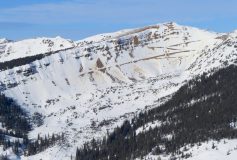
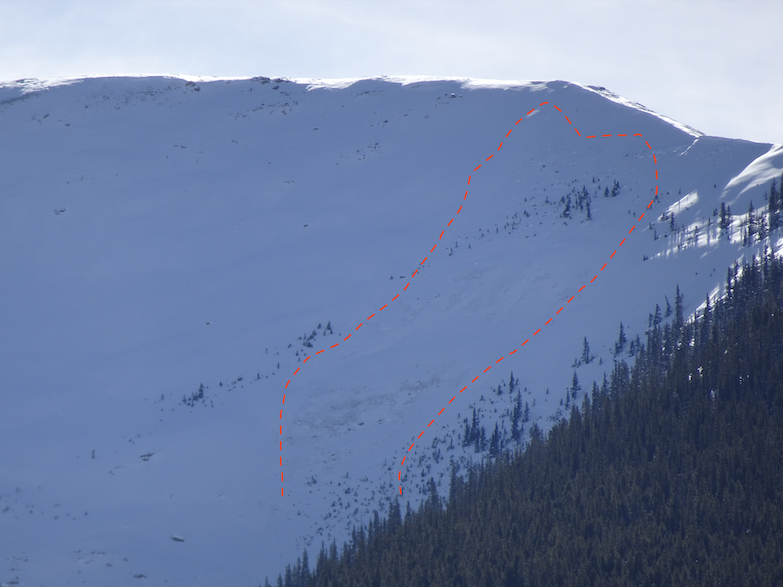
Avalanches: Cement Mountain – large avalanche above treeline in North Bowl, crown drifted over but flanks still visible D2
Hunter Hill – thin slab on SE aspect near treeline D1.5
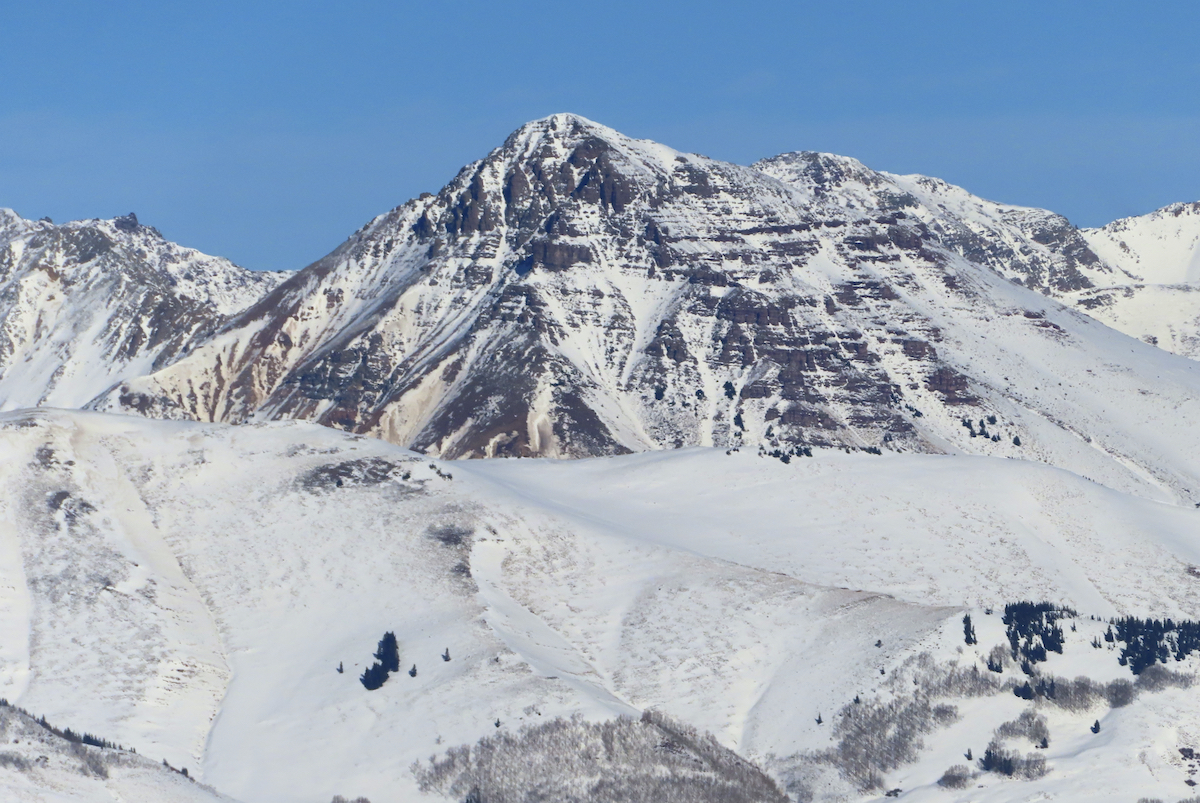
Italian Mountain – debris visible in southwest gully, D1
Weather: Clear, cold low in drainage with much warmer temps at head of valley, no wind below treeline
Snowpack: Traveled along Cement Creek Rd. to look around at snow depths and get a general impression of conditions from snowmobile by glassing terrain with binos. Checked snow depth and snow water equivalent in two locations: near Deadmans TH (9,600′) HS around 45 -50cm (18″) with 3.6″SWE, near Italian Mountain (11,000′) HS 65cm (26″) with 5″ SWE. Overall the snowpack is very weak in this area. Boot penetration in areas unaffected by the wind was generally full depth. Below treeline snowpack is just faceted fist hard snow, did not travel on any slopes but hard to imagine much Persistent Slab issues except for very isolated features stiffened by the wind. Near treeline terrain coverage looked to be deep enough to have Persistent Slab issues. East and southeast slopes near treeline appeared to be the most common places to find slabs of concern. Many northeast slopes near treeline looked to be worked over by the wind. Some minor collapsing while skinning around flat meadows, but collapses did not extend much past 20 feet, silent no audible noise. Alpine terrain was largely hammered by the wind. I would expect hard slab conditions on many features above treeline, I did not see many slopes above treeline with soft snow surfaces.


Photos:


Merry Collapsemas

CBAC2020-21 Observations

Date of Observation: 12/25/2020
Name: Zach Guy

Zone: Southeast Mountains
Location: Coneys
Aspect: North East
Elevation: N/BTL

Avalanches: No recent avalanches. Plenty of older ones.
Weather: Beautiful day: few clouds, mild temps, calm winds.
Snowpack: Stepping off the skintrack in a heavily trafficked area, got several audible collapses, but certainly not as reactive as some previous tours where we have been breaking trail. The brief bit of travel I did into untracked areas (NTL) produced a few large collapses. Small grained surface hoar growth overnight on the surface of shady aspects. Quick handpit on south facing slope shows some small faceting below the most recent suncrust (12/22). The crust was about an inch thick on a 25* slope. Feels like the slab is starting to facet away in the shallowest areas.


Anthracite Mesa

CBAC2020-21 Observations

Date of Observation: 12/24/2020
Name: Eric Murrow


Zone: Southeast Mountains
Location: Anthracite Mesa – terrain features just up valley of Coney’s proper
Aspect: North East, East, South East
Elevation: 9,500′ – 10,800′


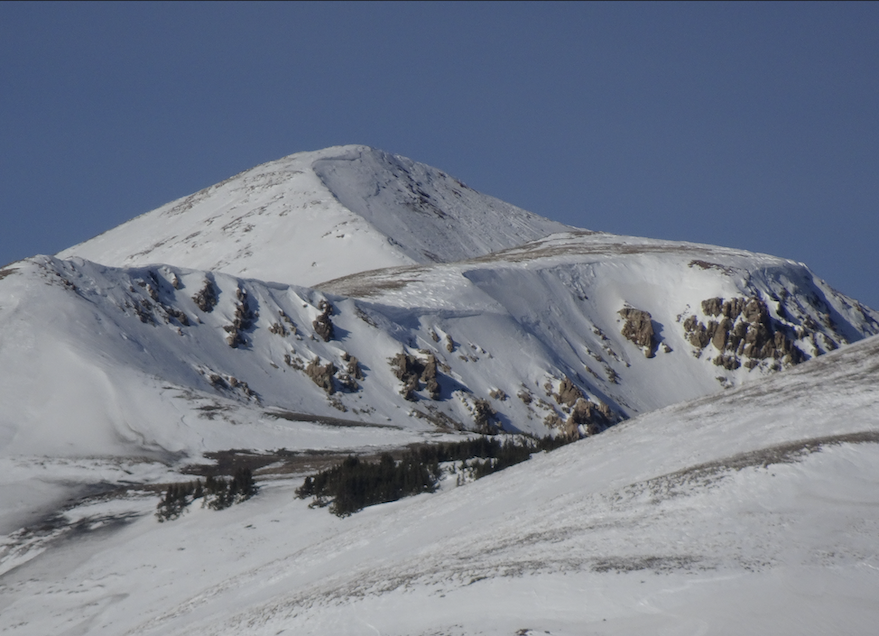
Avalanches: some evidence of moving snow in Rock Creek bowl on Baldy (southeasterly above treeline), but too far away to see any reportable details.
Weather: Cold morning at valley bottom, but temps warmed to a comfortable level by midday. Winds were light below treeline and at 10,800′ ridgeline. Blowing snow was visible on several high peaks but hard to say how much loading actually occured. Winds looked to be from N/NW loading terrain that faced south and east.

Snowpack: Traveled on heavily trafficked uptrack, but traveled out of this area for the descent and obs. Received two large collapses the ran 100+ feet on low-angled northeast aspects around 10,800′. Descended slopes in the 28 to 32-degree range with small steeper features immediately adjacent, but no collapsing or cracking while skiing down. Collapsing felt like it was less frequent but larger in size. Stomped above steeper features looking for a result from a safe location, but nada. Test profile continues to show up to 4-finger hard slab resting on fist hard 2mm facets with even larger grained snow at the ground (see photo). Snowpack still looks and talks like trouble in areas with median level snow depths, not the deepest snowpack around Crested Butte but more than the shallowest areas.

Still Sketchy

CB Avalanche Center2020-21 Observations

Date of Observation: 12/24/2020
Name: Joey Carpenter


Zone: Northwest Mountains
Location: LJ
Aspect: South, South West, West, North West
Elevation: 9.4-10.6


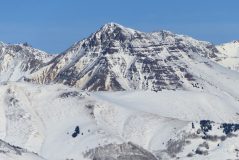
Avalanches: Repeater path on purple ridge, Natural (photo from SL)

Saw another large D2 sized natural on the E facing ridge near Angel Pass. We were very far away, no photo.
Weather: Clear and cold in the morning. Temps were around zero at the TH at 900 and made it into the mid twenties by 2p. Wind was calm overall in areas we traveled but large plumes from Northerly winds were transporting large amounts of snow above the S Baldy bowl for much of the morning. NTL and ATL terrain that has any western tilt has been ravaged by the wind event on 12/22. Even relatively sheltered terrain in the Western compass has seen significant impact from wind in this area.
Snowpack: Cracking and collapsing are the world we live in. The snowpack is very weak, encouraging us to be exceptionally careful. The difference today, from the past two weeks, is the feedback is less predictable, less consistent, and larger. Collapses that would’ve propagated short distances two weeks ago are now impacting much larger swaths of the snowpack as slabs stiffen. The most notable of the 30+ collapses we got today was on a lap track that we’d traveled on earlier in the day. We got 3 large collapses with accompanying cracks on slopes approaching 30 degrees in an area that had already been impacted by skier weight twice.


Crackatoa

CBAC2020-21 Observations

Date of Observation: 12/24/2020
Name: Zach Guy

Zone: Southeast Mountains
Location: Mount Emmons
Aspect: North, North East
Elevation: N/BTL

Avalanches: Ski triggered a few thin windslabs (5”-10” thick) breaking on the 12/22 near surface facets. Ski triggered a small persistent slab (16” thick, 12/10 interface) on a small terrain feature. Saw one fresh natural wind slab in Wolverine Cirque (D1.5)
Weather: Clear and calm
Snowpack: Widespread rolling collapses and shooting cracks while breaking trail in open terrain or aspen groves. Cracks radiated 50 to 100 feet on average, collapses were noisier than a similar location last week. Below treeline, the 12/10 interface is buried about 16″ by a F down to 4F slab.  The 12/22 near surface facets produced some minor cracking in wind sheltered terrain, buried about 3″ or 4″ deep.


Photos: