
Cement Creek dirtmobile and skin tour

CBAC2020-21 Observations

Zone: Southeast Mountains

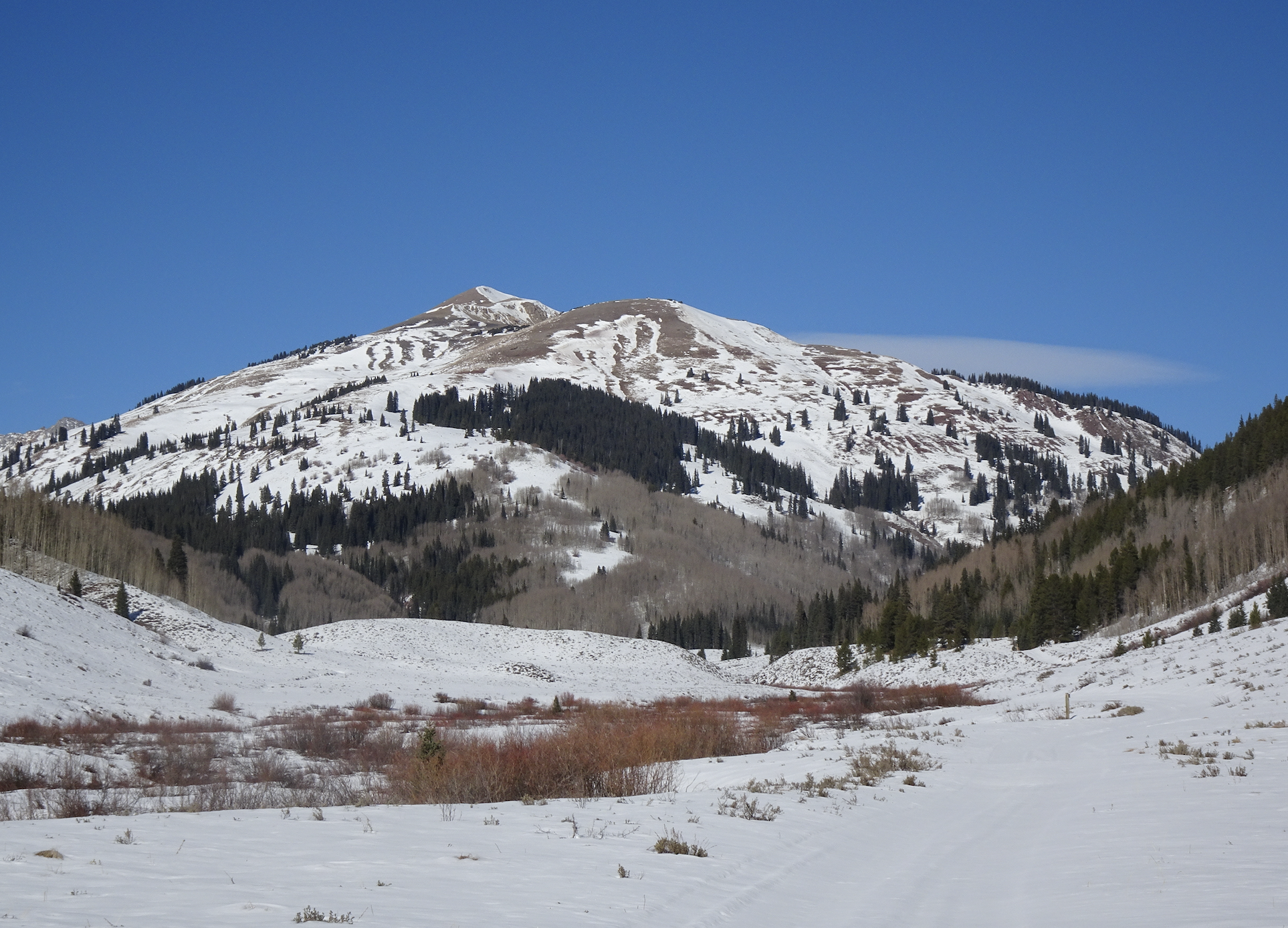
Location: Cement Creek Road to northeast side of Hunters Hill

Date of Observation: 11/19/2020

Name: Eric Murrow

Subject: Cement Creek dirtmobile and skin tour

Aspect: North, North East, East, South East, South, South West, West, North West

Elevation: 9,000′ – 12,000′

Weather: Mild air temps, mostly clear skiers, with light winds that slowly increased into the afternoon.

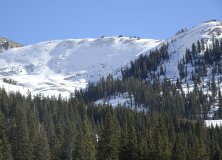
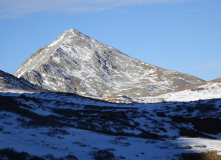
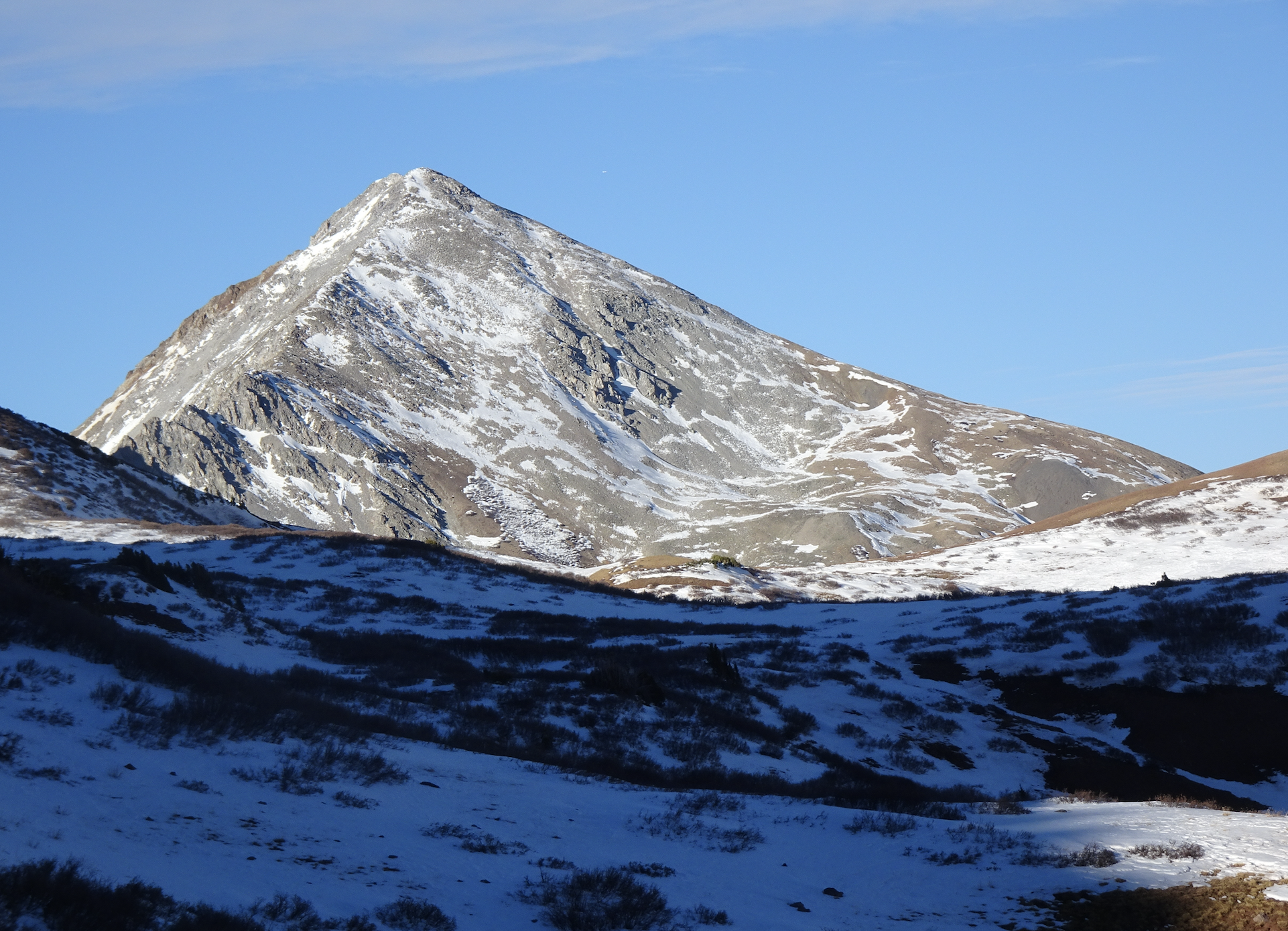
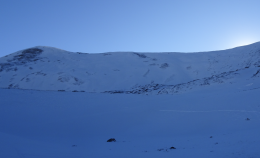
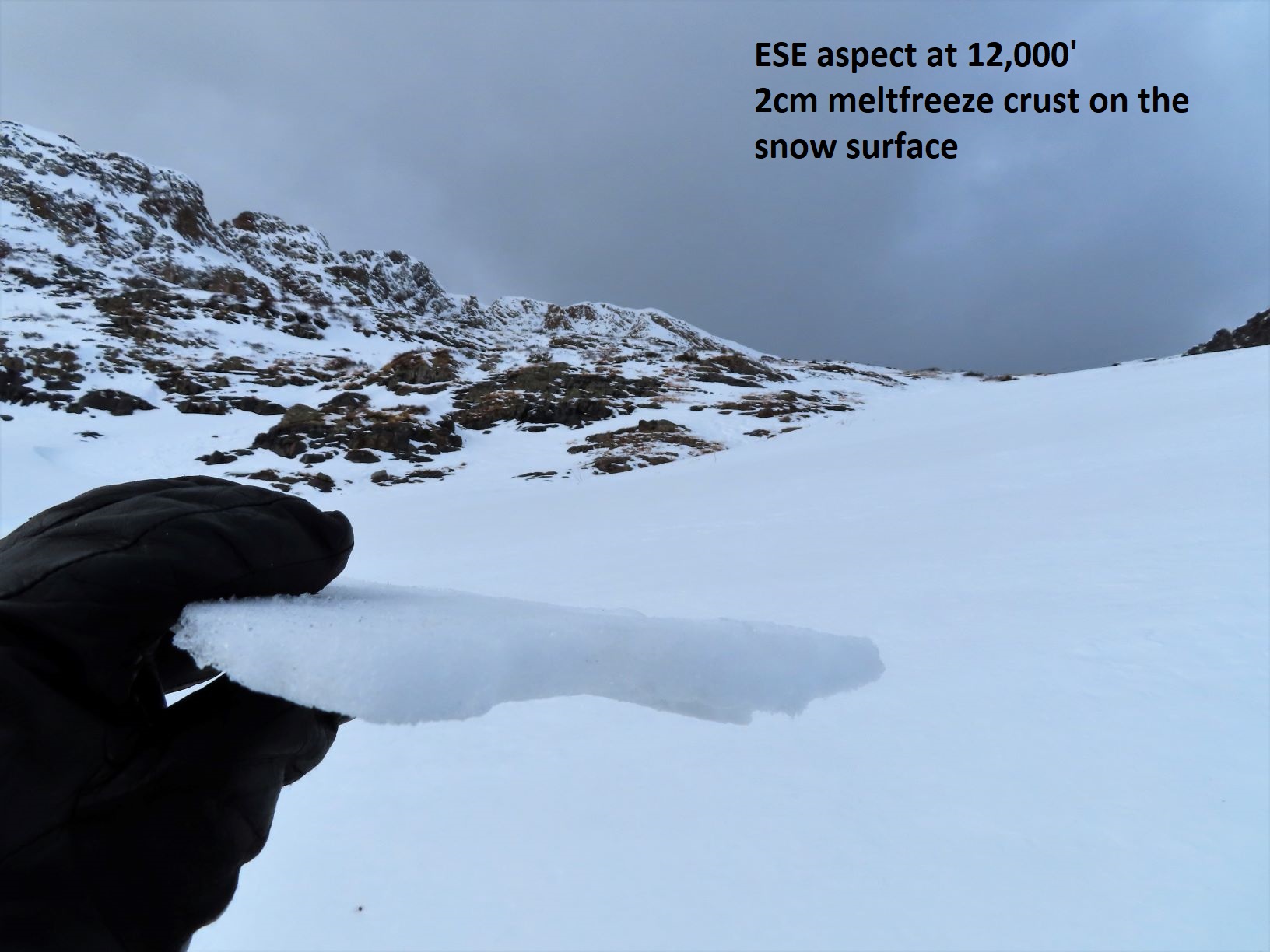
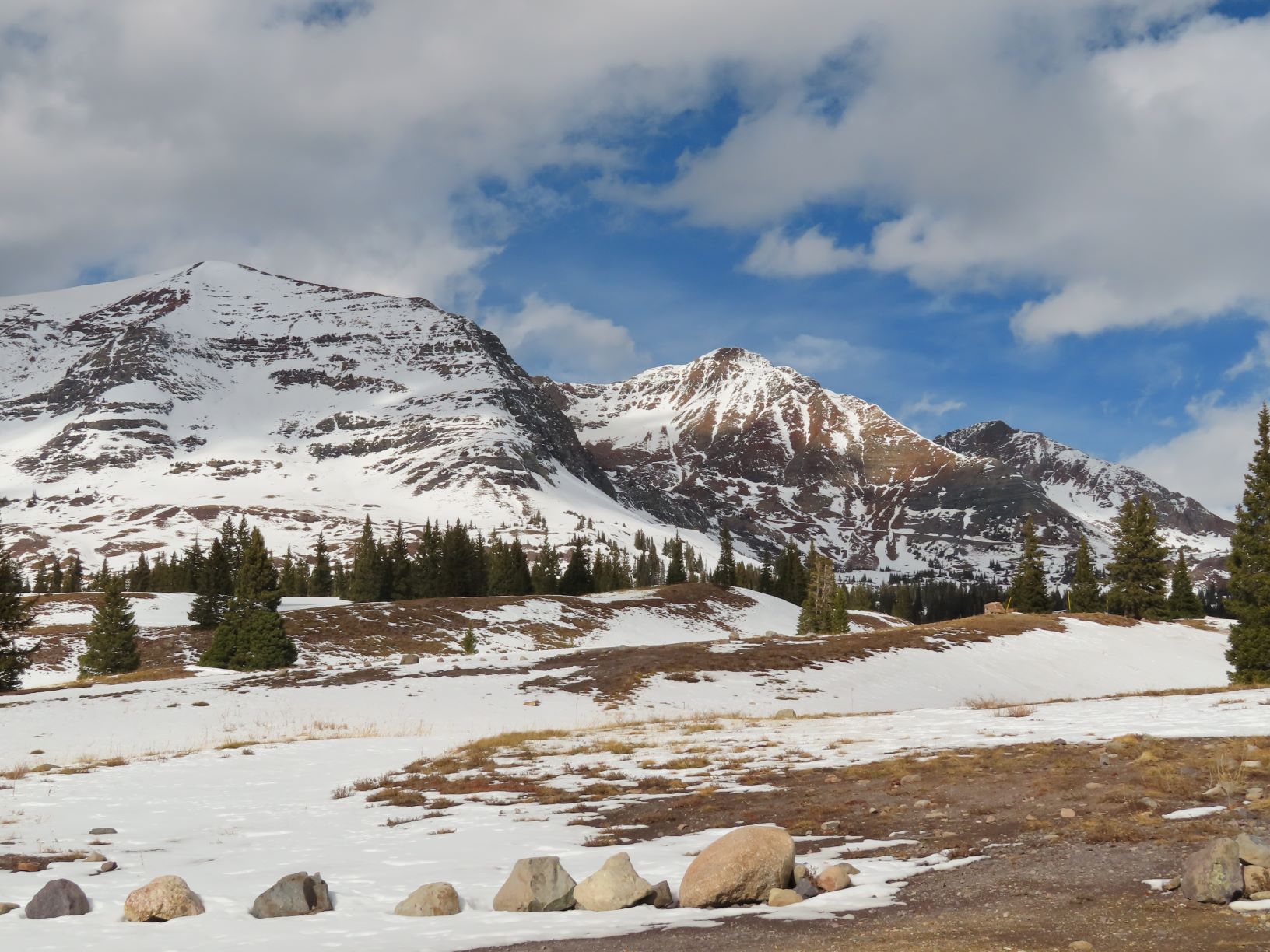
Snowpack: Traveled through a typically shallow part of the forecast area checking on snow cover, surface conditions, and to perform snowpack tests on drifted, shady terrain feature at upper elevations. Below treeline snow cover is shallow but pretty continuous across all aspects except for a good bit of dirt on due south slopes below 9,500′. Snow surfaces on sunny slopes near and below treeline were moist/wet at the surface and moist to the ground. Crusts have formed extensively on east through south through southwest slopes. Northerly slopes, even at lower elevations, remained dry and have started to facet in protected areas though the grains remain small, around 1mm. HS (snow depth) at the head of Cement Creek was only about 1 foot (30cm) at 11,400′.
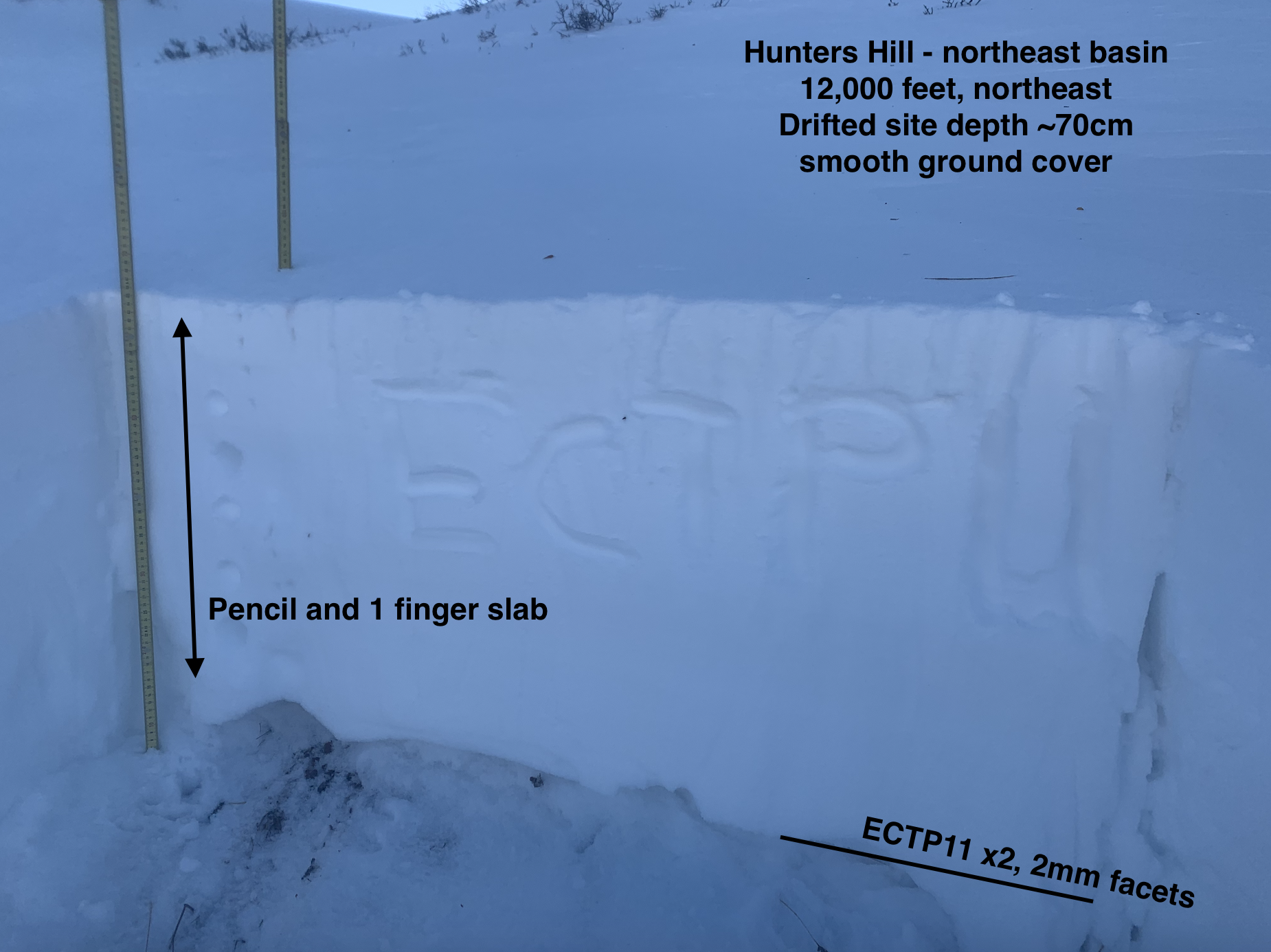
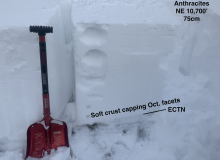
Upper elevation northerly slopes were a mix of sastrugi and windboard. Traveled to around 12,000′ looking to find slab resting over weak snow near the ground. Walked across several stiff drifted pockets without signs of instability. Test site produced propagating results on a small drifted feature in old, weak 2mm facets at the ground (ECTP 11, see photo). The ground was very smooth at test site. Additionally, I had to probe this feature to find where the weak layer was present, it was discontinuous during probing and in a portion of my pit wall. Snow surface and slab were very stiff, supportive to boots. 20 feet to either side of my test site the slab tapered down to only 10 inches thick. Visually it was impossible to tell without probing. Nearby start zones immediately below ridgetop looked to have some small, pockets of slab present but they were not connected and very isolated across the terrain. Triggering an avalanche appeared unlikely but not impossible on upper elevation shaded slopes in this area due to the isolated nature of slab and weak layer.


Photos:

Mooiiist snow

CBAC2020-21 Observations

Zone: Northwest Mountains

Location: Mt. Owen

Date of Observation: 11/18/2020

Name: Zach Guy


Subject: Mooiiist snow

Aspect: North, North East, East, South East

Elevation: 10,500 – 12,800′

Avalanches:

No recent activity

Weather: Unusually warm temps. Strong SW winds but no snow transport. Scattered clouds.

Snowpack: We found good stability on various aspects. On the southern half of the compass, the snow surface was moist or wet from warm temps, often isothermal through the whole snowpack. Expect a crust of varying thickness going into the weekend. Northerly aspects hold dry snow, a mix of softer sastrugi and wind-packed rounds on the surface. No notable persistent weak layers on the surface at the moment thanks to abusive winds and sun, and a generally a homogenous 4-finger snowpack from surface to ground on all but due north aspects. On a NNE aspect, we found the 11/6 facet layer lurking below 70 cm of slab, but it was discontinuous due to talus on the ground. It did not produce concerning pit results or signs of instabilities. We skied steep terrain on both north and east aspects with no instabilities.

Photos:

Kebler Pass afternoon obs

CBAC2020-21 Observations

Zone: Northwest Mountains
Location: Kebler Pass to Anthracites ridgeline
Date of Observation: 11/14/2020
Name: Zack Kinler Eric Murrow

Subject: Kebler Pass afternoon obs

Aspect: North, North East, East, South East, West, North West

Elevation: 10,000 to 11,250

Weather: Decreasing cloud cover, no accumulating snowfall, and strong northwest winds afternoon. Air temps noticeably decreased throughout the tour. Blowing snow was common at all elevations; much of the transported snow near and above treeline was blasted into the atmosphere or loaded lower on slopes than usual.

Snowpack: It was difficult to find a good place to measure the new snow, but it was around 10 to 12 inches. Strong northwest winds pounded through much of the open terrain leaving soft, “breaker” wind board mixed in with some pockets of soft snow. Snow surfaces were disturbed by the wind on almost all slopes. Westerly and northwesterly alpine features were largely blown back to ground.

We traveled through BTL and NTL northerly slopes largely looking at the old snow from October. Snow depth was around 60 cm. In this area, NE and N facing slopes had developed a soft crust around an inch thick (~2cm) above the thin layer of weak snow at the ground. Tests did not produce propagating results. We did not experience any significant cracking or collapsing, but we did not travel through any features with significant previous drifting. The weak layer may have been a bit too thin to overcome ground roughness through much of the terrain we looked at.

Crossed a southeasterly slope at 11,200′ and found the new snow sitting on a soft crust around an inch thick.

Photos:

7 am Gothic Weather Update

CBAC2020-21 Observations

Zone: Southeast Mountains
Location: Gothic Townsite
Date of Observation: 11/14/2020
Name: Billy Barr
Subject: 7 am Gothic Weather Update

Weather: Very strong wind overnight with snow starting around midnight and blizzard conditions. Moderate snowfall with 5″ new and water 0.35″ and steady west wind 10-15, gusts into the 30’s. Currently the snowpack is at 10″ with no visibility, strong wind and light snowfall.

Small naturals

CBAC2020-21 Observations

Zone: Northwest Mountains

Location: Ruby Range

Date of Observation: 11/11/2020

Name: Zach Guy

Subject: Small naturals

Aspect: East

Elevation: to 11,800′

Avalanches:

Good views of various aspects in the Ruby Range. Nothing significant of note, although winds had reworked the surfaces in the last couple of days. I noted one small debris pile below the south face of Mineral Point (see photo), and got a second-hand report of a small debris pile below the north face of Ruby.

Weather: Clear skies, light winds with occasional drifting snow. Strong diurnal temperature swing.

Snowpack: Traveled primarily on east aspects: no signs of instability, just recent snow on dirt. The snow surface is already starting to facet.

Photos:

Welcome back winter!

CBAC2020-21 Observations

Zone: Northwest Mountains

Location: Upper Slate

Date of Observation: 11/10/2020

Name: Zach Guy and Zach Kinler

Subject: Welcome back winter!

Aspect: North East, East, South East

Elevation: 9700-11,600′

Avalanches:

None observed. Limited visibility of alpine terrain.

Weather: Broken to overcast skies. Moderate northwest winds at ridgetop. Very light snowfall (S-1).

Snowpack: Simple snowpack with minimal signs of instability. 15″ to 18″ of right-side-up storm snow across previous bare ground. Previous drifting from the southwest had left drifts up to 3′. Shifting winds were lightly redistributing the snow off of northerly aspects this afternoon. In a few wind drifted features, we produced stubborn cracking up to 10″ deep and 8′ long. We went sniffing for a persistent slab problem on shady aspects here but couldn’t find direct feedback. On a northeast aspect at 11,000′, we found old faceted and crusty snow near the ground, but it wasn’t propagating in pits and didn’t produce any obvious signs of instability (see photo). The layer was only an inch thick on the ground and somewhat discontinuous here due to rocks and shrubs.

Photos:

October flyover

CBAC2020-21 Observations

Zone: Northwest Mountains

Location: Elk Mtns and Ruby Range

Date of Observation: 10/29/2020

Name: Mason Schultz


Subject: October flyover

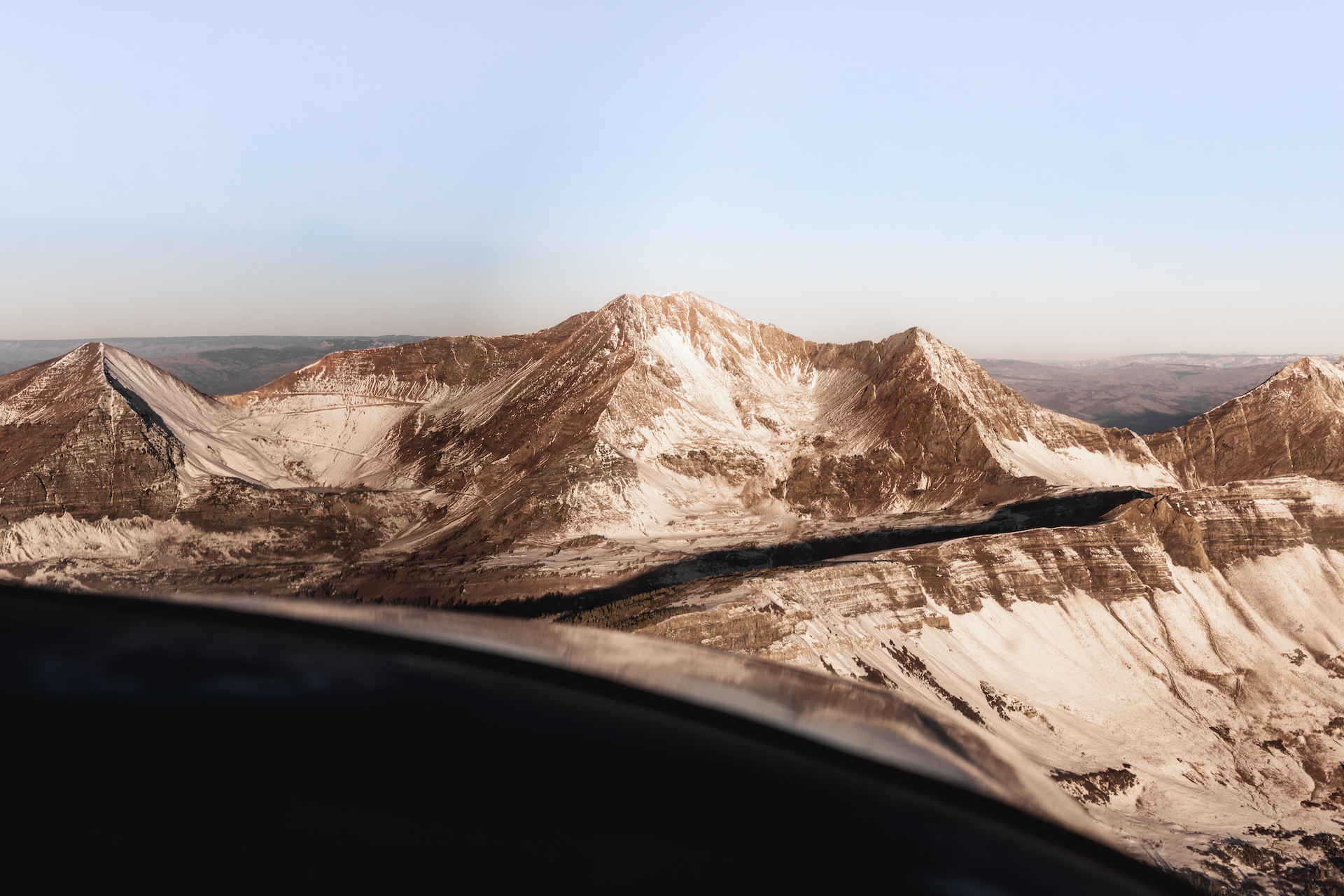
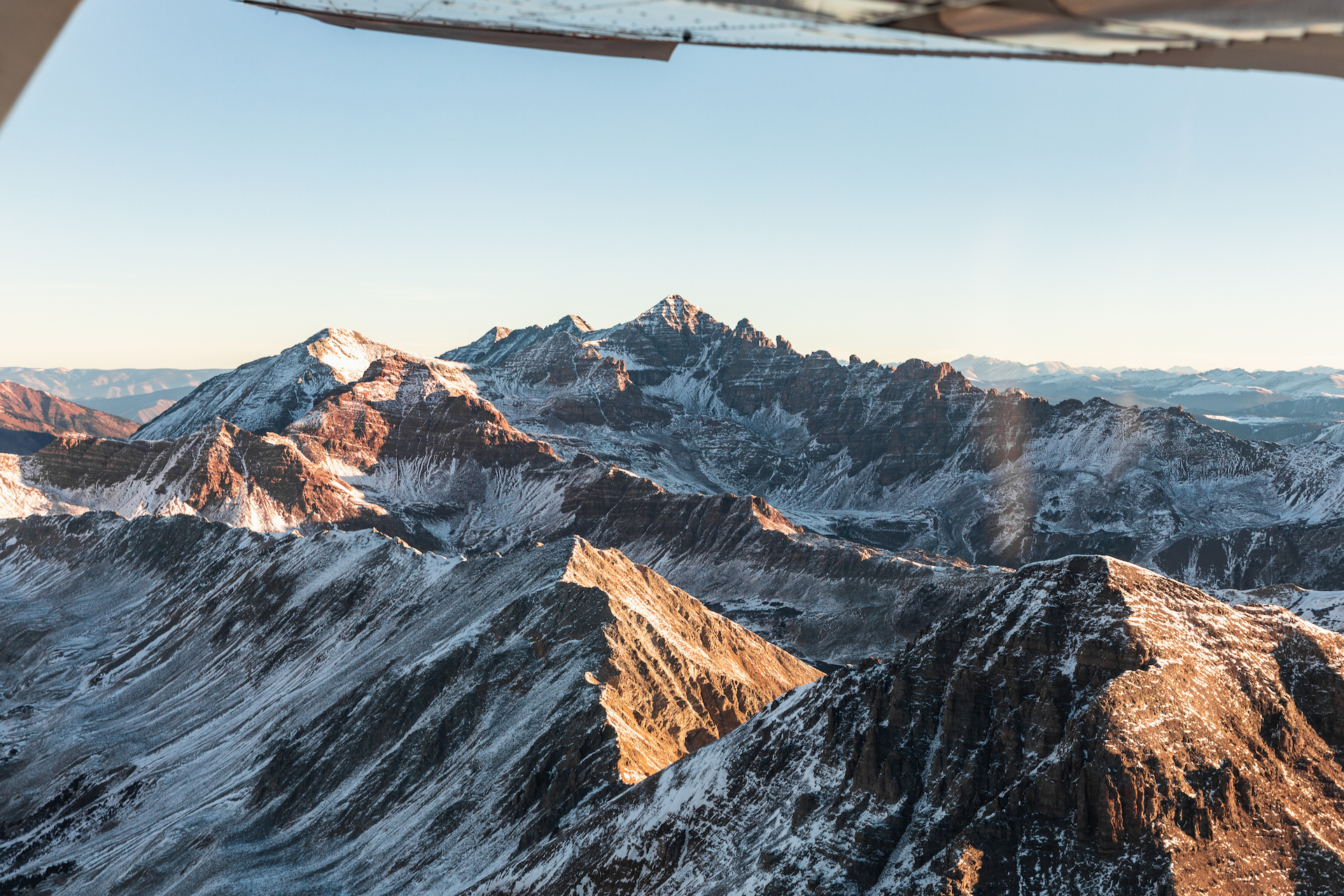
Snowpack: See photos from October 29, 2020 flight.
CBAC note: The additional week of dry, warm weather following this flight and prior to the November 6th storm further melted snow coverage back, especially on E, S, and W aspects.

Photos:

Patchy on Cement Mountain

CBAC2020-21 Observations

Zone: Southeast Mountains

Location: Cement Mountain

Date of Observation: 11/05/2020

Name: Zach Guy


Subject: Patchy on Cement Mountain

Aspect: North, North East, North West

Snowpack: See attached photos. Thin snow coverage prevails on high, shady aspects of Cement Mountain. Expect similar coverage to exist higher up Cement Creek

Photos:

Early season snow coverage

CBAC2020-21 Observations

Zone: Northwest Mountains

Location: Slate River to Paradise Divide to Schofield Pass

Date of Observation: 11/06/2020

Name: Zach Guy and Eric Murrow


Subject: Early season snow coverage

Weather: Mild temps, mostly cloudy skies, light winds.

Snowpack: Shallow coverage (a few inches or less) of late October snow remains on northerly aspects (NE, N, NW) near and above treeline. Snow coverage is mostly melted off on E – S – W aspects. On high, shady aspects, the thin snowpack is weak: 2mm, fist hard facets.  On warmer slopes, the snow is capped by a melt-freeze crust of varying thickness. Because of the thin snow coverage, the weak layer is discontinuous on a majority of northerly terrain, interrupted by clumps of grass, talus, etc. However, some of the smoother alpine bowls or heavily shaded pockets near treeline have relatively continuous coverage. Start zones such as Redwell Basin on Emmons, Halloween Bowl and Emerald Bowl on Baldy, and the slopes above Purple Bench are examples of the latter. See photos for various examples through the terrain.

Photos:

New forecast platform

CBACAnnouncements, Avi Blog, Backcountry Notes

We have a few exciting changes to announce as we gear up for winter, including a new forecast platform and new forecast zones!

Forecast Platform

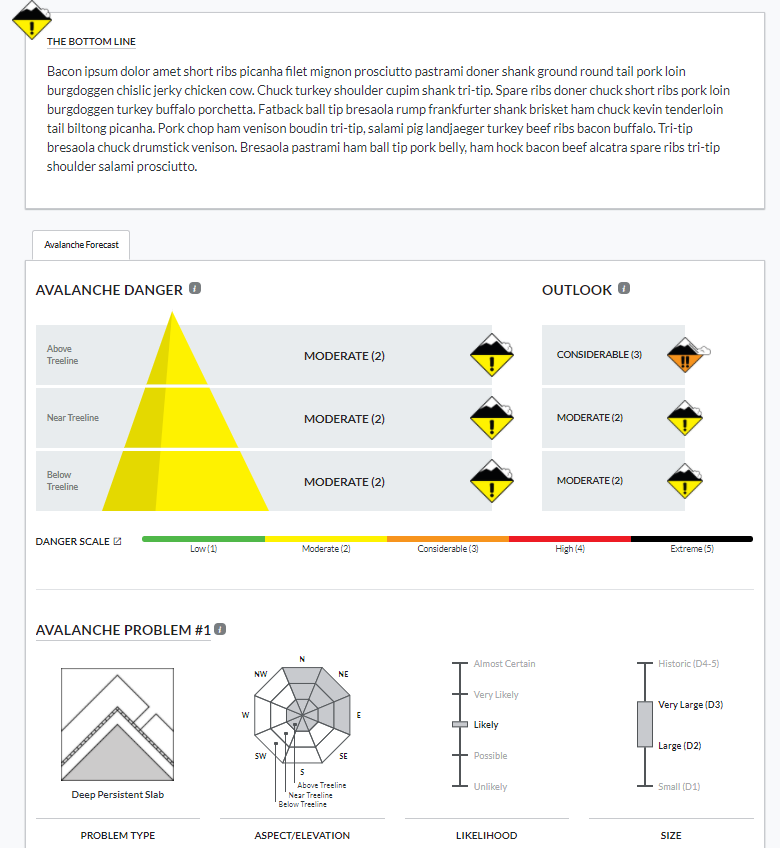
We are adopting the National Avalanche Center’s new forecast platform.  The new platform has some great upgrades for our users to help us better communicate our safety messages to you.

  • It’s mobile-friendly.  More and more of our users are now accessing the forecast from their phones. The new forecast pages will now adjust to fit your phone or tablet, making it easier to read our forecasts on the go.
  • Better media.  We now have the ability to add photos, videos, and captions within portions of the forecast to help illustrate avalanche problems or travel advice more clearly to you.
  • Bottom line and problem descriptions. While the basic layout of the forecast page will look similar to years past, this platform allows us to add a bottom line and problem descriptions.  The bottom line will highlight the key points of the forecast, and the problem descriptions allow us to provide dynamic travel advice for each avalanche problem as conditions evolve.
  • Conditions blog.  We’re experimenting with a “Conditions Blog” tab that can accompany the forecasts.  This is where we will provide weekly summaries and bonus material that supplements the forecast. More info for you at your fingertips!
  • Consistency.  There are about 8 or 9 other avalanche centers around the country that are adopting the same platform.  If you go skiing or riding in the Sawtooths, or Cascades, or Sierras, or any number of other mountain regions around the West, you can expect to see avalanche information presented in the same format as ours.  That makes it easier for you to digest the info and communicate with your partners.

New Forecast Zones

This map, which lives on our homepage, will show the daily avalanche danger rating for each of the two forecast zones. Clicking on a forecast zone will lead you straight to the forecast.

As most of our regular users know, the Crested Butte backcountry often develops into distinct snow climates: one with a deeper snowpack to the west and north of town, and one with a shallower snowpack near, east, and south of town.  In the past, we often use the text to describe nuances between the snow-favored parts of the forecast area and the drier parts of the forecast area.  Now, with our new forecast platform, we are integrating two forecast zones: the Northwest Mountains and Southeast Mountains.   This change allows our forecasters to better highlight spatial differences in the avalanche danger, travel advice, or size and distribution of avalanche problems.   We divided the zones based on our historical understanding of where the deeper and shallower snowpacks commonly develop.  Our homepage has a map of the forecast zones to reference these boundaries.   The Northwest Mountains include the snow belts of the Anthracite Range, Kebler Pass, Ruby Range, and Paradise Divide.  The Southeast Mountains include the drier parts of our forecast area such as Cement Creek, Brush Creek, the Gothic area, and some terrain close to town such as Red Lady Bowl, Climax Chutes, Coneys, and Snodgrass.  Our forecast team expects that there will be plenty of days where the forecasts for each zone will be exactly the same.  However, there will also be days where we highlight important differences.  For you, it’s simple. Click on the forecast map or select the forecast zone for the region that you plan to travel in for the day. That will lead you to the most current and relevant information.  Our detailed forecast discussion will be the same across both forecast zones to simplify the material for those folks who enjoy following the progression of the snowpack on a daily basis.  And as a reminder, these are regional forecasts that generalize conditions across a large area.  Although they should serve as a starting point for planning your day, you are responsible for assessing conditions on a slope by slope basis to minimize your avalanche risk.

Feel free to shoot us a message if you have questions about any of these changes!  cbavalanche@gmail.com


Zach Guy

CBAC Lead Forecaster