




Name: Brian Goldstein
Title: Snodgrass Avalanche
Location: Crested Butte Area
Date of Observation: 11/25/2014
Aspect: North East
Elevation: 11,000
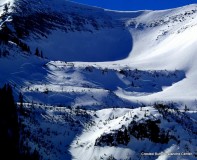
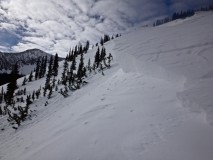
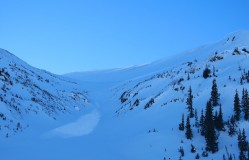
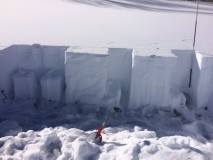
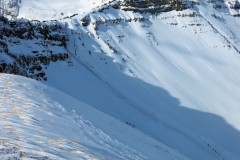
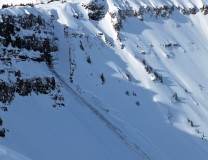
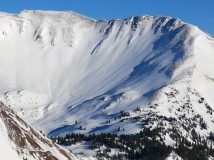
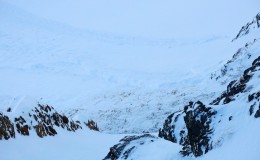
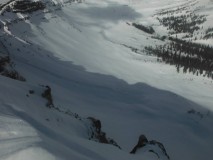
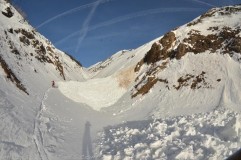
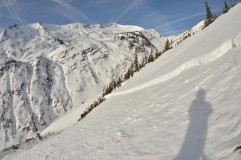
Avalanches: Observed an Avalanche on the Northface of Snodgrass in between first bowl and second above the open pillow zone. Propagated 120 feet wide and was much bigger than the anticipated potential. Probably an R3D2.5. Ran approx. 500 feet into the terrain trap below snapping numerous small trees. Almost propagated an additional 40 feet, but stopped with a major crack on a knob above an adjacent gully. We were observing the terrain from sheltered trees about 5 feet from an open area on the ridge above the rock formations/pillows. Aspect was NorthEast. We stomped around above some convexities with no reaction. Deciding the terrain was unsafe we turned around, walked five feet into the trees and the slope was remotely triggered presumably from a small buried tree. Slid all the way to the ground. The storm slab, and slab from last week, slid on the weak faceted layer at the base of the snowpack, taking the entire snowpack with it. One other wumph was observed in the same area prior to the slide. The crown was approx 60 cm. Consistent crown with no obvious wind deposits, although this specific area is subject to wind loading due to its exposure and openness compared to the rest of the snodgrass trees. Slope angle averaged about 38 degrees as the starting zone.
Weather: Light to moderate winds. Moderate temps (21ish?). Snowing S1.
Snowpack: 60-100 cm
-
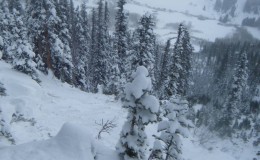
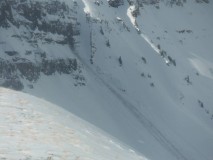
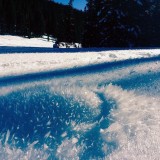
- 11/25 Alternate view (photo: Kitt Haven)
-
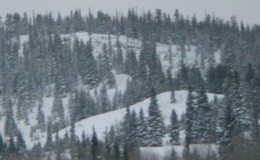
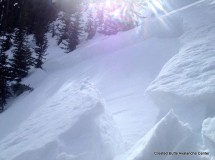
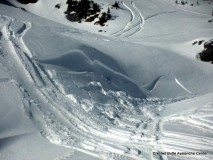
- 11/25 Overview of slide (Photo: Kitt Haven)
-

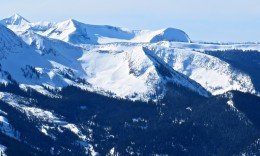
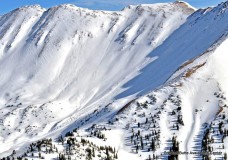
- Snodgrass north aspect (Photo: Brian Goldstein)
Remotely Triggered Avalanche on 11.25.2014
Catagorized : (SS-R2-D2-AS-O/G)
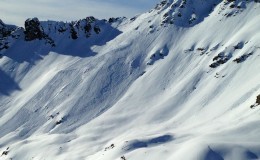
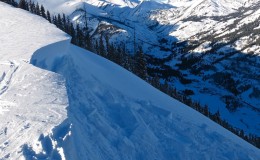
 Release of the entire snow cover as a result of gliding over the ground. Glide avalanches can be composed of wet, moist, or almost entirely dry snow. They typically occur in very specific paths, where the slope is steep enough and the ground surface is relatively smooth. The are often proceeded by full depth cracks (glide cracks), though the time between the appearance of a crack and an avalanche can vary between seconds and months. Glide avalanches are unlikely to be triggered by a person, are nearly impossible to forecast, and thus pose a hazard that is extremely difficult to manage.
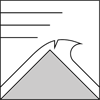 Cornice Fall is the release of an overhanging mass of snow that forms as the wind moves snow over a sharp terrain feature, such as a ridge, and deposits snow on the downwind (leeward) side. Cornices range in size from small wind lips of soft snow to large overhangs of hard snow that are 30 feet (10 meters) or taller. They can break off the terrain suddenly and pull back onto the ridge top and catch people by surprise even on the flat ground above the slope. Even small cornices can have enough mass to be destructive and deadly. Cornice Fall can entrain loose surface snow or trigger slab avalanches.
 Release of a cohesive layer of snow (a slab) that is generally moist or wet when the flow of liquid water weakens the bond between the slab and the surface below (snow or ground). They often occur during prolonged warming events and/or rain-on-snow events. Wet Slabs can be very destructive.
 Release of wet unconsolidated snow or slush. These avalanches typically occur within layers of wet snow near the surface of the snowpack, but they may quickly gouge into lower snowpack layers. Like Loose Dry Avalanches, they start at a point and entrain snow as they move downhill, forming a fan-shaped avalanche. They generally move slowly, but can contain enough mass to cause significant damage to trees, cars or buildings. Other names for loose-wet avalanches include point-release avalanches or sluffs. Loose Wet avalanches can trigger slab avalanches that break into deeper snow layers.
 Release of a cohesive layer of snow (a slab) formed by the wind. Wind typically transports snow from the upwind sides of terrain features and deposits snow on the downwind side. Wind slabs are often smooth and rounded and sometimes sound hollow, and can range from soft to hard. Wind slabs that form over a persistent weak layer (surface hoar, depth hoar, or near-surface facets) may be termed Persistent Slabs or may develop into Persistent Slabs.