



Date of Observation: 01/01/2021
Zone: Northwest Mountains
Aspect: West
Elevation: BTL
Avalanches: See photos.
Photos:
Date of Observation: 01/01/2021
Zone: Northwest Mountains
Aspect: West
Elevation: BTL
Avalanches: See photos.
Photos:


Date of Observation: 01/01/2021
Name: Eric Murrow, Zach Kinler, Zach Guy
Zone: Southeast Mountains
Location: Upper Cement Creek
Aspect: North East, East, West
Elevation: Near and below treeline to 11,800′
Avalanches: This area got about 6″ of snow from Monday night’s storm and we saw limited evidence of natural activity from storm. A few D1 to 1.5s on easterly aspects. No avalanches triggered today.
Weather: Increasing clouds, a snowflake or two, light winds.
Snowpack: In Lower Cement, the persistent slab structure is poorly developed without enough snow to make a slab. As we gained elevation further up the basin (around 10,000′ near Block and Tackle trail), we started noticing shooting cracks and collapses. The slab is soft and a foot thick over fist hard depth hoar (3-4mm). The snow surface and slab are faceting. In less sheltered areas, there is a pencil hard wind crust near the 12/10 layer helping making for a drastic hardness change near the bottom of the slab. We experienced shooting cracks on both westerly and easterly aspects. In more wind affected areas, the collapses were localized to just drifted areas. We traveled adjacent to a few steep slopes and got them to collapse and crack remotely, but not avalanche. We also got repeatable ECTPV results on the 12/10 layer in a pit on a NE aspect NTL.
Photos:


Date of Observation: 01/01/2021
Name: Evan Ross
Zone: Northwest Mountains
Location: Slate River
Aspect: North East
Elevation: 9,000-11,400ft
Weather: The clouds came and then went again. Calm winds. Nothing notable.
Snowpack: The snowpack in this area is really variable given all the past avalanche activity it has seen throughout December. So it’s hard to make a call on the general stability. We traveled more aggressively on steep slopes where we had high confidence there wasn’t a current persistent slab avalanche problem due to past activity. We kept it real conservative where the conditions were unknown or undisturbed. The 12/10 interface remained the primary layer of concern. The more recent 12/22 layer of facets was observable, but we didn’t encounter any particular concerns there.
We didn’t get much for direct feedback, or obvious signs to instability. A few collapses and some shooting cracks all took some effort to produce. Confidence in the snowpack structure, where undisturbed, still remains low.
The upper 10 to 15cm’s of the snowpack is losing strength. SH was also widespread all the way to ridgeline. The slab had broken down the most at lower elevations below about 10,000ft.
Date of Observation: 12/31/2020
Name: Aaron Peterson
Zone: Northwest Mountains
Location: Washington Gulch
Aspect: South East
Elevation: 11,500
Avalanches: We did not observe any new slides.
Weather: Clear, calm, and gorgeous.
Snowpack: We traveled on south through east facing terrain to the east of Elkton and felt routine collapsing on and off the skin track. Most notably, our pit showed a relatively firm (1 finger plus, almost pencil hard) slab resting on 40cm of basal facets. Test results on this interface were hard to trigger (CT 22- resistant, and ECTX), however they propagated easily (PST 34/100 end). The slab was stubborn and sturdy, but still scary. As if to drive the point home, after demolishing our pit I stepped aside and onto a thinner patch of snow near a wind blown feature. This triggered a very large wumph across our snowfield. “Nearly pant altering” according to my partner. We were incredibly happy not to be on steeper terrain.
Photos:

Zone: Crested Butte Backcountry
Date: 1/1/2021
Name: Jack Caprio/ Ian Havlick
Happy New Year! Unfortunately, our snowpack didn’t stay in 2020. Check out the weekly recap to see how the recent storms shook things up.
Date of Observation: 12/31/2020
Name: Eric Murrow
Zone: Southeast Mountains
Location: Low elevation east-facing terrain at bottom of Mount Crested Butte above East River
Aspect: North, North East, East
Elevation: 9,000 – 9,800′
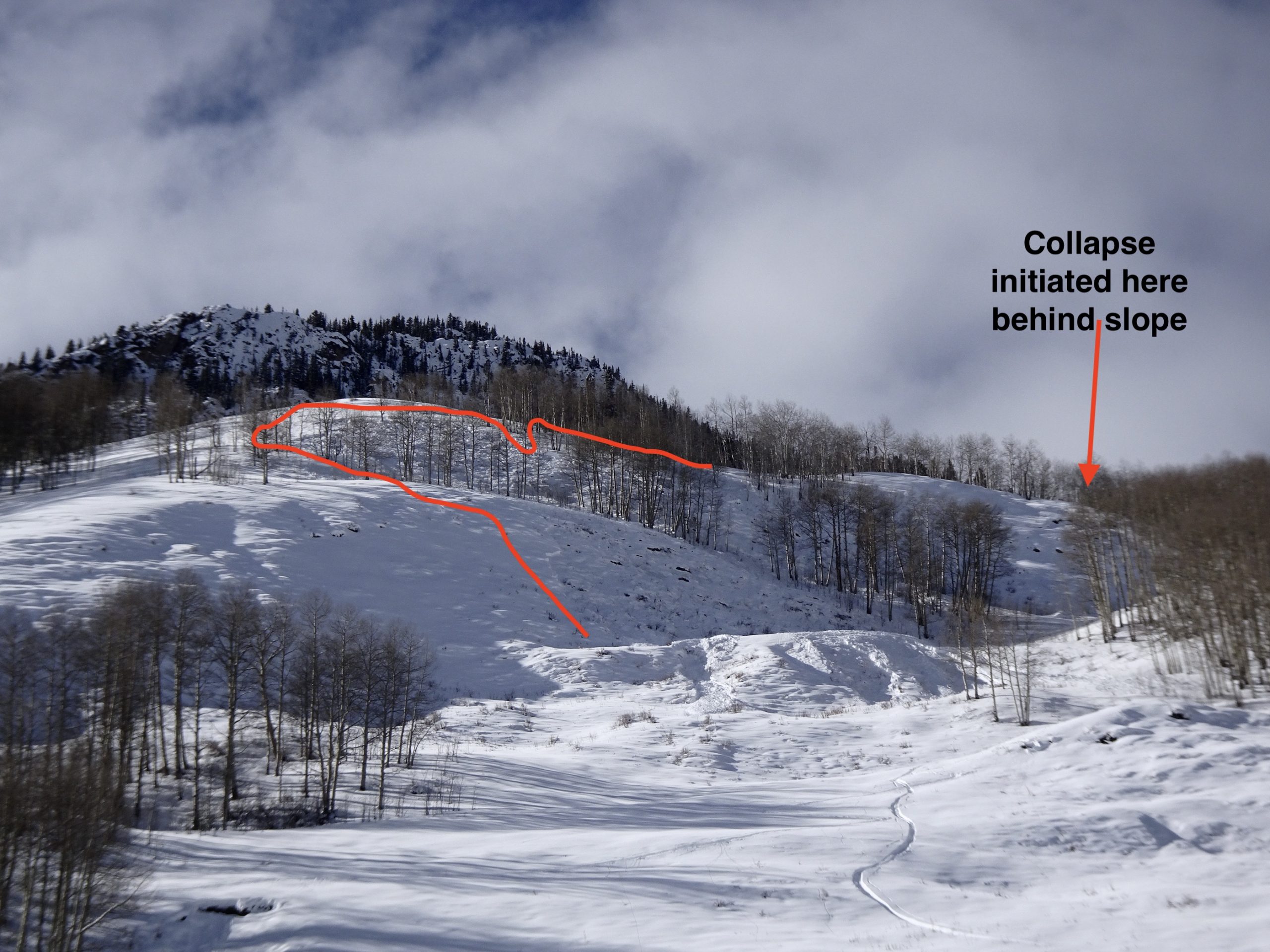
Avalanches: Remotely trigged 3 very small D1’s on east-northeast aspect from a single collapse that propagated around 300-400 feet
Remotely trigger a D2 avalanche from about ~500 feet away that traveled through several terrain features and mature aspen groves
Weather:
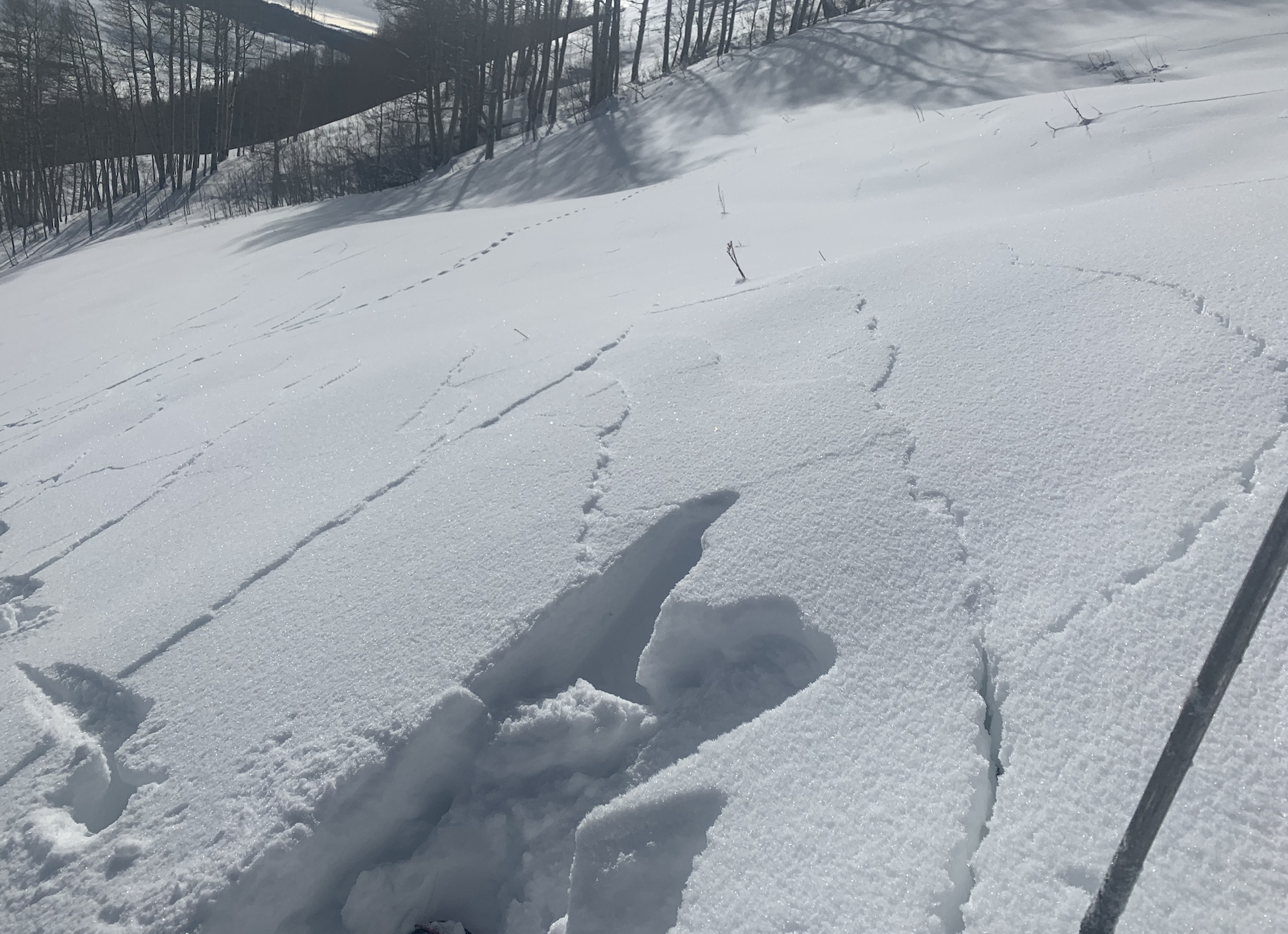
Snowpack: Slopes very near valley bottom felt incredibly weak and produced regular collapsing but only traveled 20 or so feet. As I ascended just a few hundred feet above valley bottom on east and northeast terrain, the collapsing started to propagate hundreds of feet to slope scale size. Slab formation since 12/10 is only about 40cm thick and mostly fist hard with a small amount of 4finger. It rests on well-developed facets around 3mm in size. Total depth on east and northeast slopes averaged around 65cm. The snowpack was screaming to avoid all avalanche terrain and so that’s what I did, but managed to be surprised by collapses rolling through low-angled, mature aspen forest and triggering adjacent slopes. The snowpack in this area is incredibly reactive and steep slopes feel like a sure bet for an avalanche. Small surface hoar observed on northerly slopes.
Photos:

Date of Observation: 12/31/2020
Name: Zach Guy
Zone: Northwest Mountains
Location: Mount Emmons
Aspect: North, North East, North West
Elevation: 9000’ to 12,200’
Avalanches: Remotely triggered a large (D2) persistent slab from about 350 feet away. The slab was about 3 feet thick and 300 feet wide, on a north aspect above treeline.
Handful of previously unreported natural persistent slabs to add to the list from the last cycle. D2 up Peeler basin (E, ATL) and several D2s in Wolverine and Redwell Basin (NW, NTL).
Weather: Partly cloudy midday with clear skies on either end. Light winds
Snowpack: Large, rumbling collapses on low angle terrain still the norm on almost every open slope or small clearing in trees. Collapses are getting a little more stubborn now; sometimes it was the first person breaking trail, sometimes the 2nd or 3rd in line, and sometimes it requires a hard stomp.
Snow surface is faceting. Below treeline slopes that have previously avalanched in mid-December had good stability today.
Photos:


Date of Observation: 12/30/2020
Name: Zach Guy
Zone: Southeast Mountains
Location: Coney’s
Aspect: North East
Elevation: N/BTL
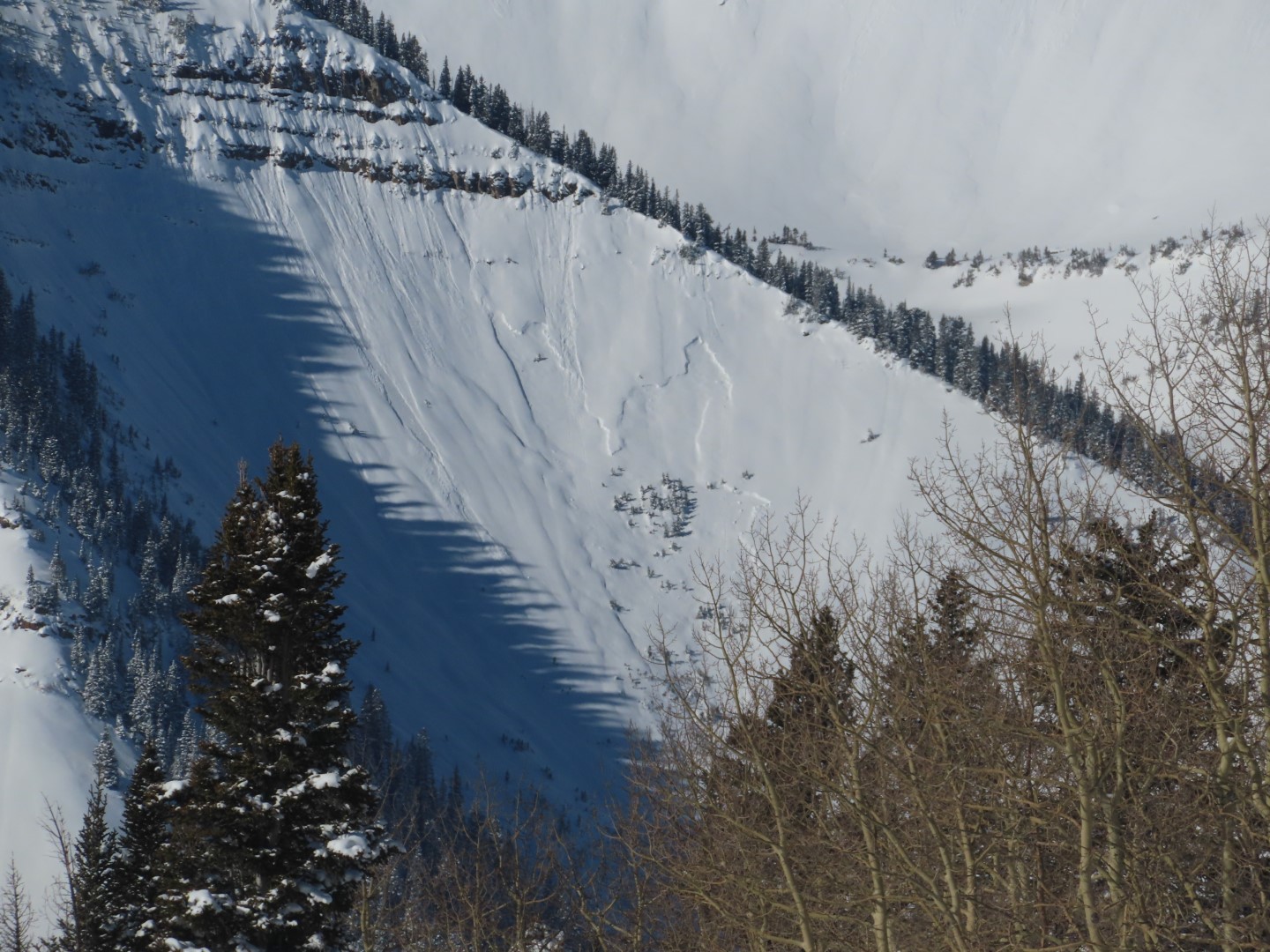
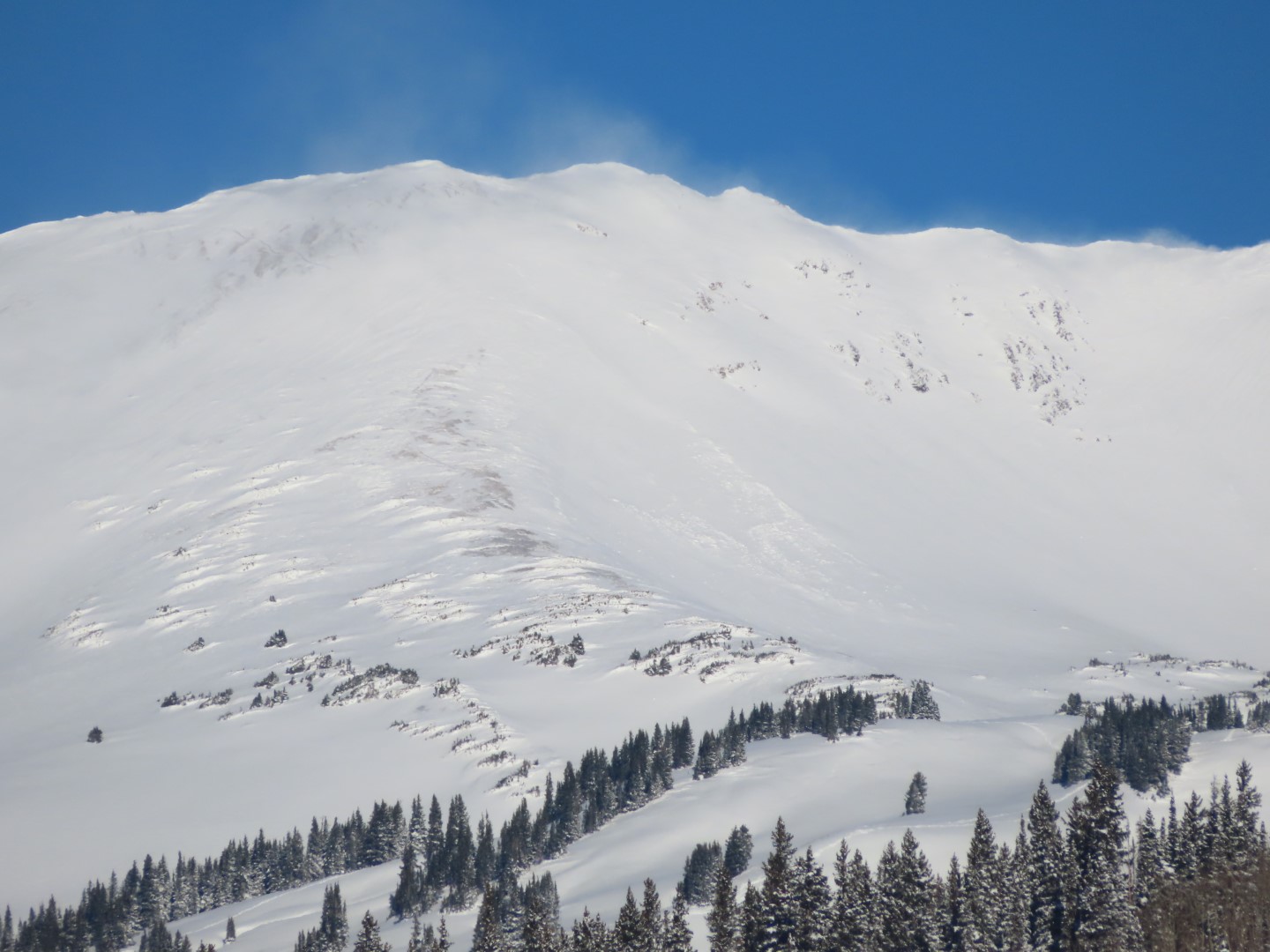
Avalanches: Good views of the leeward aspects of the Northwest Mountains. Plenty of evidence of storm slab instabilities that ran throughout the storm, D1 to D2. A few slides looked like they broke into deeper layers, up to D2.5. Attached photos highlight the largest or most interesting activity.
We triggered a small storm slab (1 foot thick) on a rollover.
Weather: Clear, cold, calm winds.
Snowpack: Stepping off the beaten track we got frequent rumbling collapses and shooting cracks on basal weak layers. On shady aspects, we also got cracking at the storm snow interface about a foot down.
Photos:




Date of Observation: 12/30/2020
Name: Zach Kinler
Zone: Southeast Mountains/ Northwest Mountain
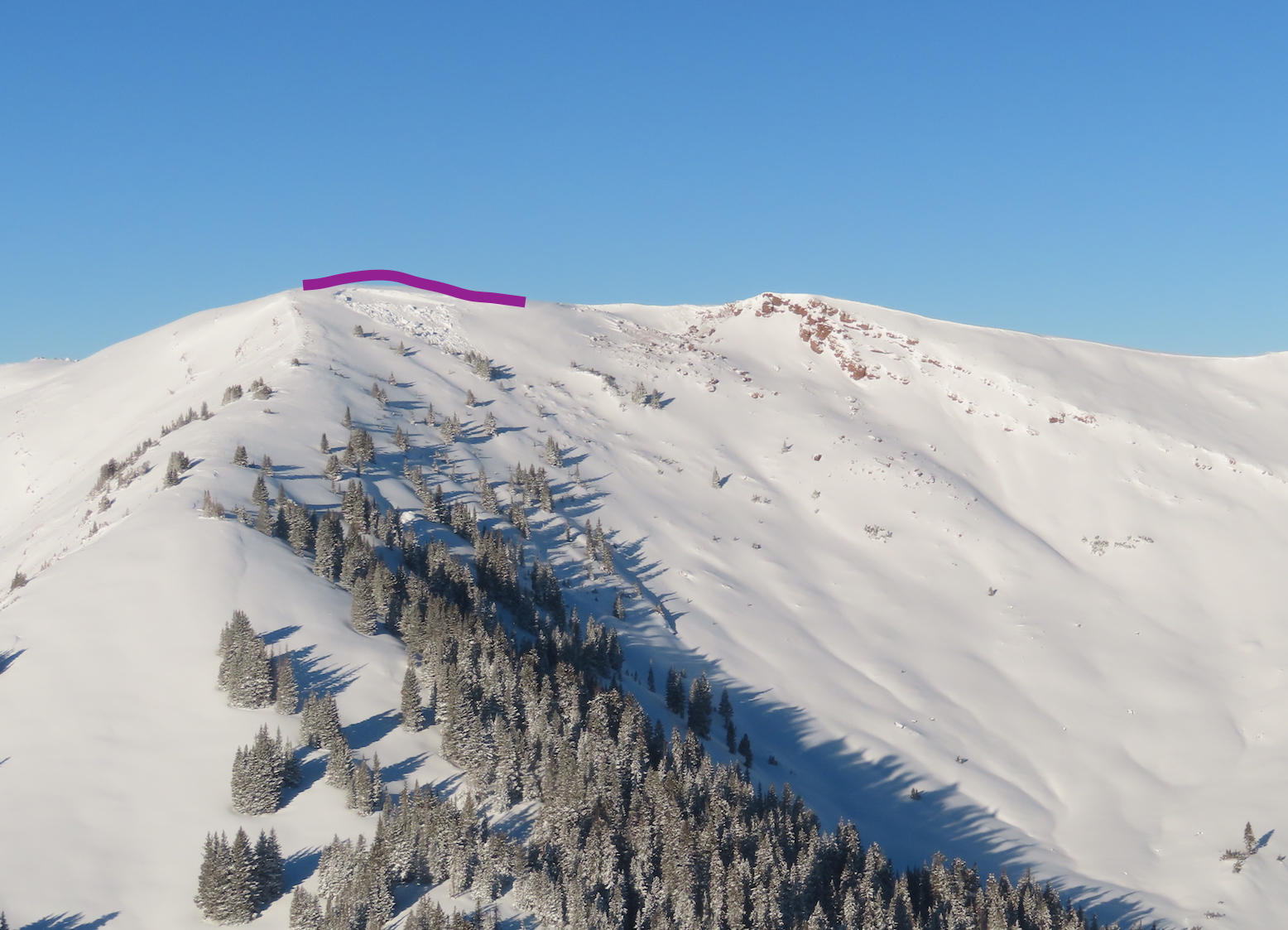
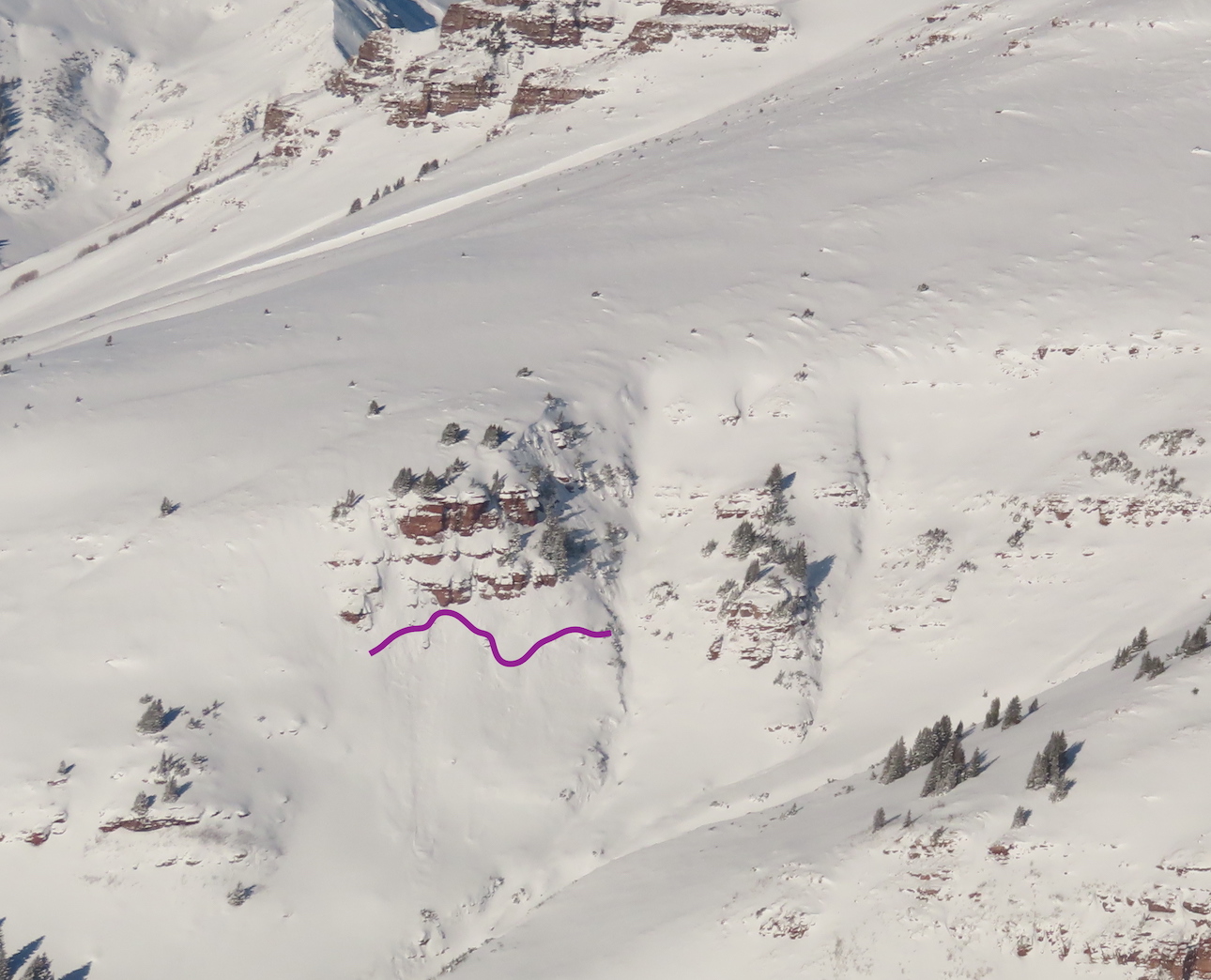
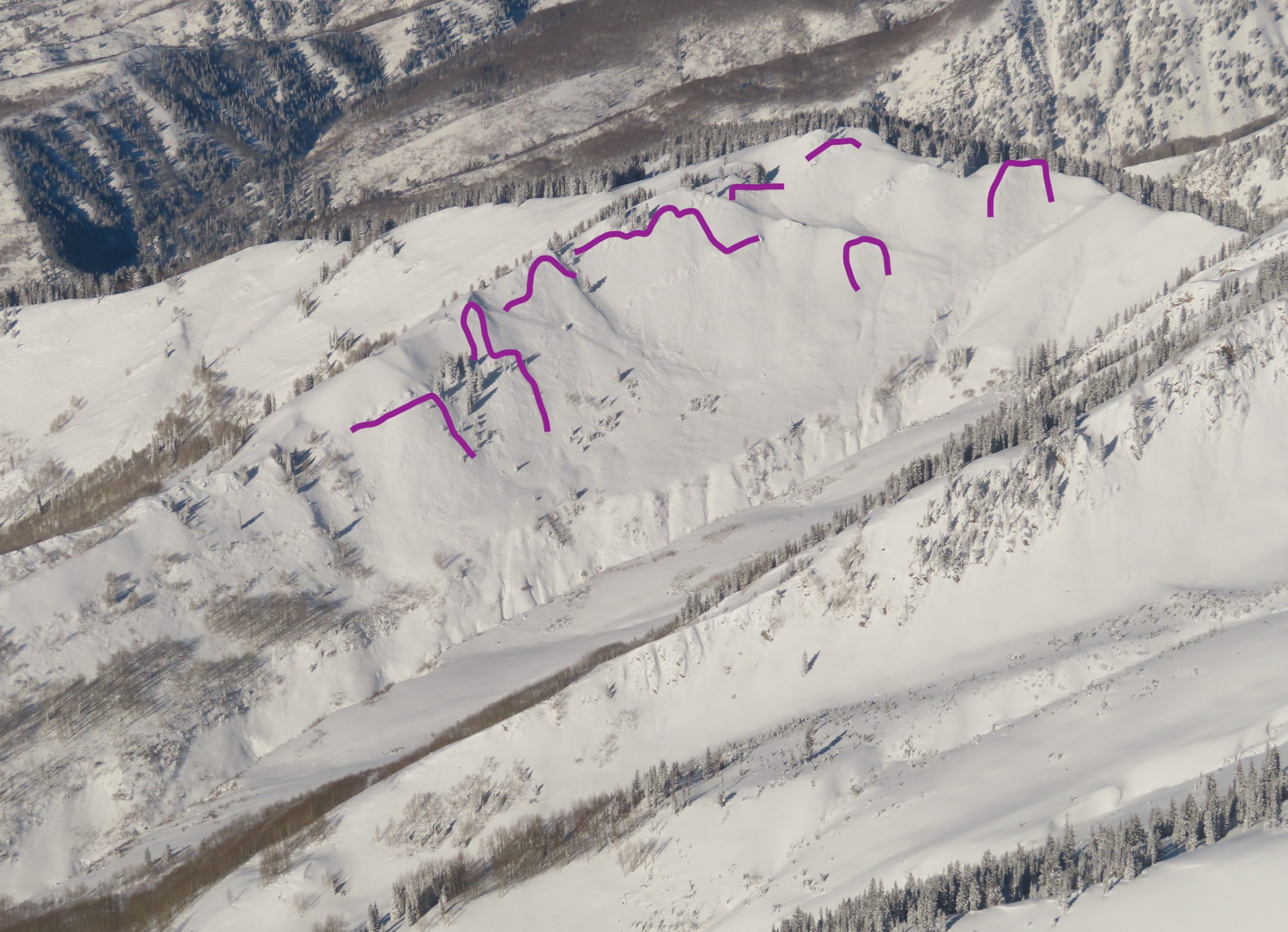
Avalanches: Many avalanches from D1-D2.5 were observed at all elevation bands in both the Southeast and Northwest Mountains. Some failed around the new/old interface with crowns around a foot thick while others failed on the 12/10 interface with crowns 2-4 ft thick. East aspects were the most active benefiting from the combination of fragile buried weak layers and loading from recent westerly winds. Check out the pics below for a better idea of what failed and where.
Weather: Sunny skies, moderate to strong NW winds were observed in the upper Cement area with snow transport along ridges and peaks early this morning.







Date of Observation: 12/30/2020
Zone: Southeast Mountains
Location:
Aspect: South East
Elevation:
Avalanches: The photo below was taken at approximately 11 am on Wednesday, 12/30. From the skin track on Red Lady above tree line, a party of three of us saw two skiers come down the bowl, stop for a while in the circled spot, and remotely triggered the slide spotted lookers left to them maybe a minute or two after they had stopped there. We weren’t sure if they had stopped there for a particular reason and/or if they had noticed the remote slide. (Submitted by CBAC Forecaster from an email)
Weather:
Snowpack:
Photos:
