Cracks & Collapsing in Washington Gulch

CB Avalanche Center2020-21 Observations

Date of Observation: 01/08/2021
Name: David Bumgarner


Zone: Southeast Mountains
Location: Washington Gulch
Aspect: North, North East, East
Elevation: 9800 – 10800


Avalanches: None Observed
Weather: Temp: mid 20’s
Sky: Clear
Wind: Calm
Precip: none
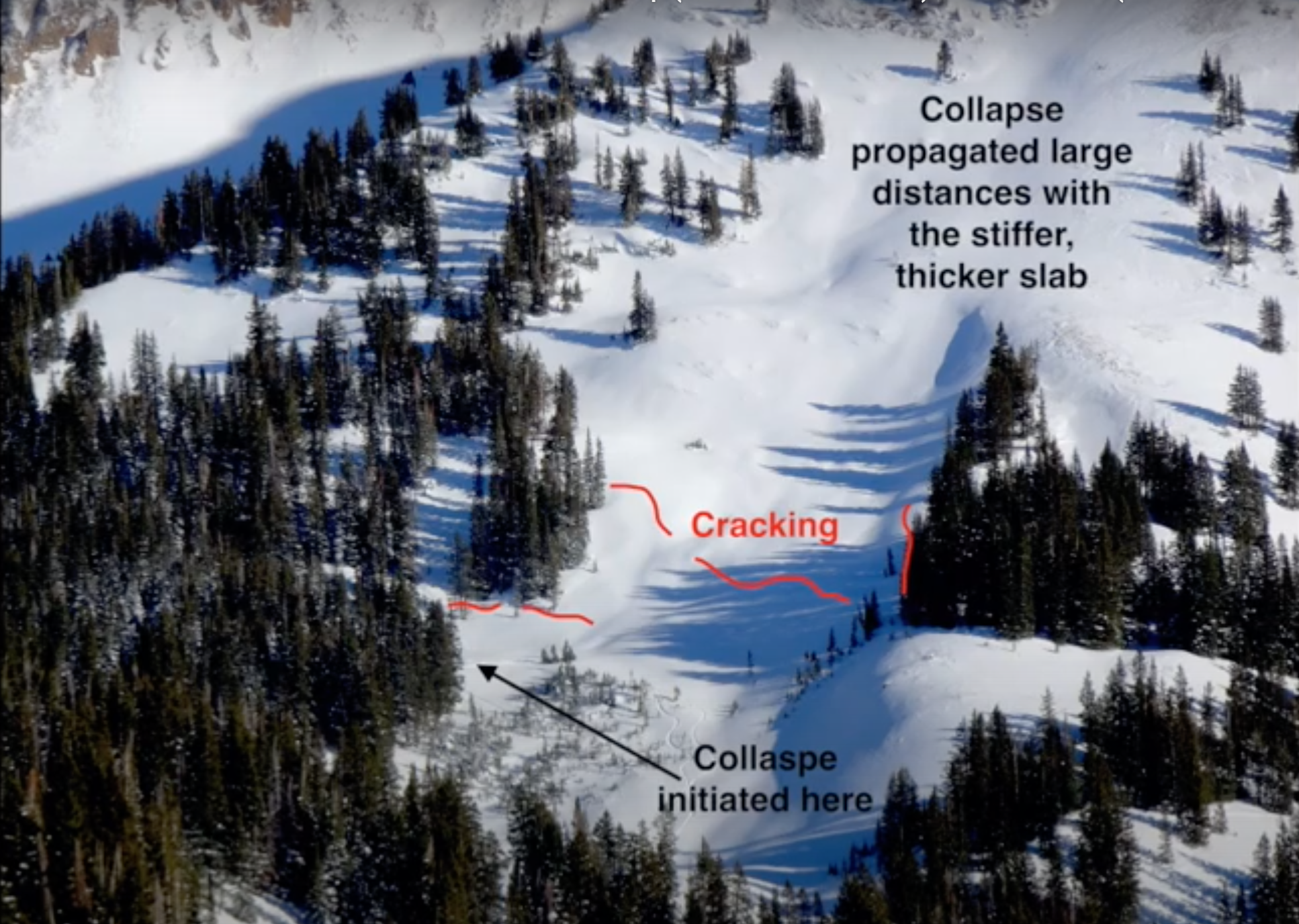
Snowpack: We toured past the Coney’s Ski area and got multiple shooting cracks and collapses on steeper terrain features, upper 20 degree features and even a couple in flat areas. All of these areas had not seen much traffic (probably none) this season. Still feels tender out there! HS ranged from 70cm to 85cm in areas probed.


Photos:

Rotting Slabs

CBAC2020-21 Observations

Date of Observation: 01/08/2021
Name: Jack Caprio & Jared Berman
Zone: Southeast Mountains
Location: Snodgrass to the east river
Aspect: North, North East, East
Elevation: <10,000′

Avalanches: None observed.

Weather: Clear, warm, and calm.

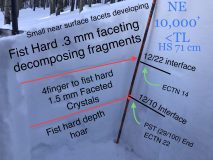
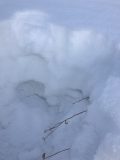
Snowpack: We traveled on primarily NE and E facing aspects up to about 10,000 feet. The lower in elevation we went, the less of a slab we found. Near the east river valley bottom, on a NE aspect, the snowpack consisted of about 50-70 cm of F hard cohesionless, faceted snow. Very weak. The only areas we were able to find a slab below 9,500′ was on isolated, exposed, ridgelines, where previous winds had drifted snow into a firmer slab about 5-20 cm thick.

A bit higher in elevation, still below treeline, we were able to find somewhat of a slab remaining on top of the 12/10 interface. That being said, the slab was 4F to F hardness, bottom to top, and seems to be losing strength as the days go on. A propagation saw test on the 12/10 interface produced an uninterrupted propagation to the end of the column. PST (29/100) End.

In the areas closer to town with a thinner snowpack, the persistent slab structure on shady aspects below treeline is becoming more difficult to find. With dry weather in the forecast after tomorrow, I expect the slabs to continue to rot away.


Photos:

Reno Divide

CB Avalanche Center2020-21 Observations

Date of Observation: 01/08/2021
Name: D K

Zone: Southeast Mountains
Location:
Aspect: South, South West
Elevation: 11k

Avalanches: One fresh looking D2 off a southeast aspect of Hunter Hill.

Weather: Bluebird. Winds around 15 ATL
Snowpack: Initiated several collapses while setting a skintrack and skiing down in the vicinity of the track on S and SW aspects near treeline. Collapsing and cracks went up to 40′ on the largest. HS was about 80cm in sheltered areas and was punchy and unsupportive about 20% of the time


Photos:

cold snow, some crust

CB Avalanche Center2020-21 Observations

Date of Observation: 01/08/2021

Zone: Northwest Mountains
Location: End of Washington Gulch
Aspect: South
Elevation: 10,000-12,000

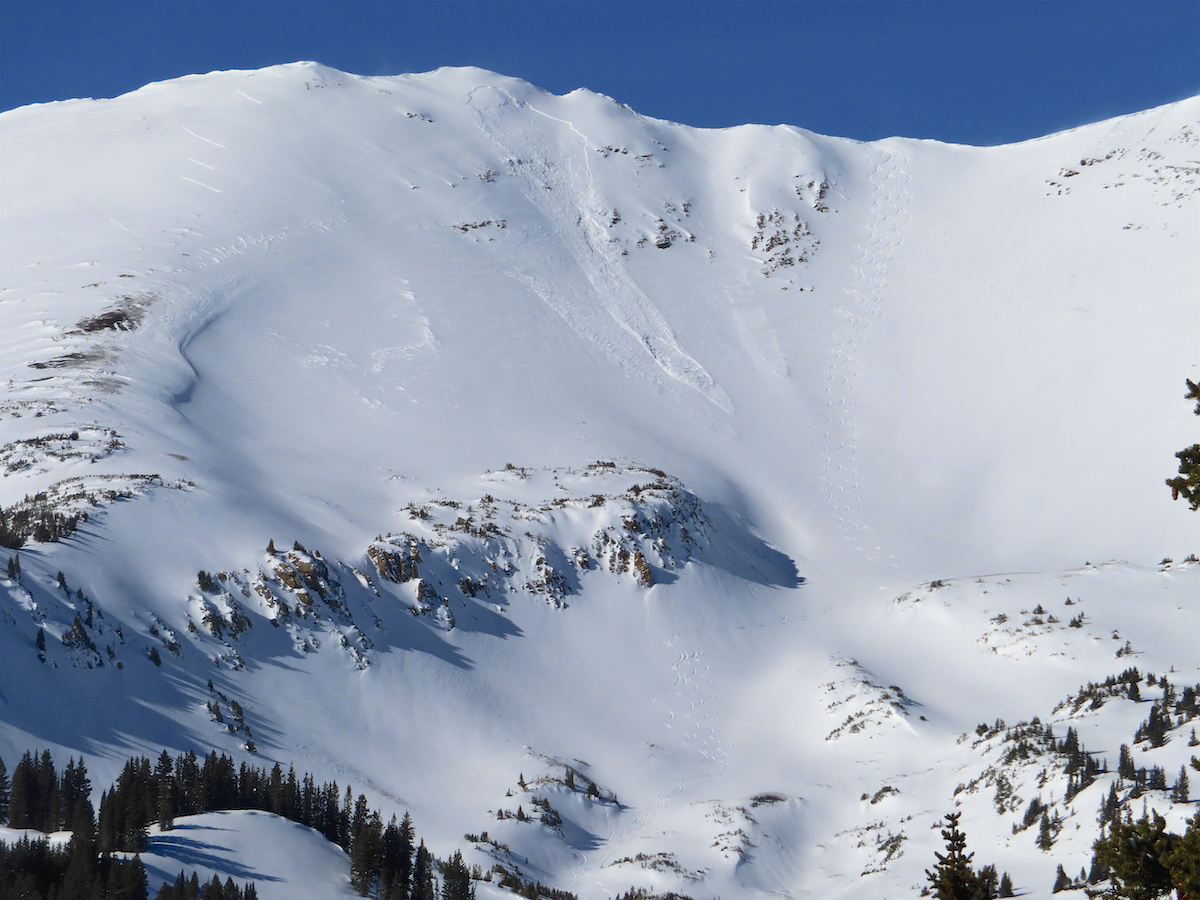
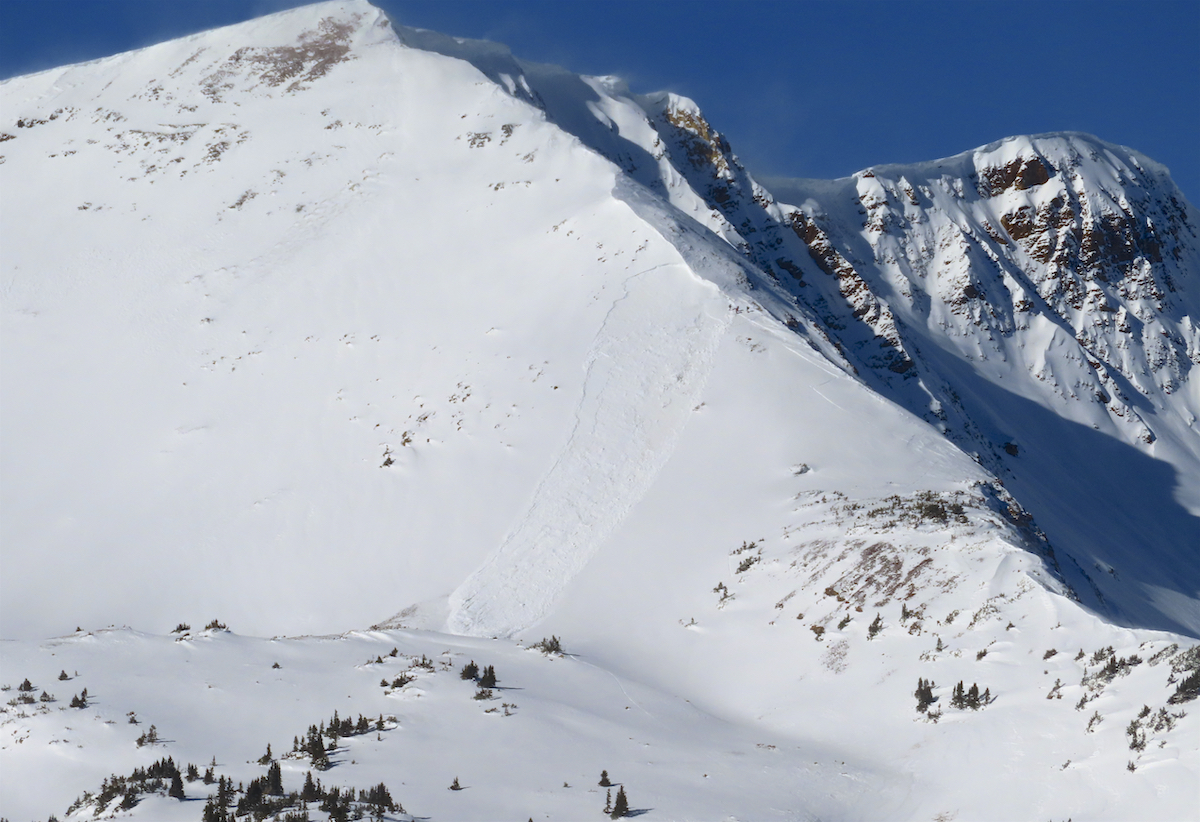
Avalanches: Older natural on Baldy (previously reported)
Weather: sunny, low 20’s up high out of wind. Slight breeze on top. No snow transport.
Snowpack: Variety of depths as we skinned up maxing out at approx 120 cm on a below treeline south facing low angle slope. Small steeper and shallower S and SW pockets below treeline had a sun crust. Majority of the snow in protected areas was soft and awesome. Climbing the ridge between south and southeast bowls also varied in depth with new, wind loaded snow sitting on a slick and very firm surface in some spots. South facing bowl had a hint of a crust on steeper portion of descent (pole punched through the pack on one pole plant) that turned into cold pow once angle diminished. Partner found softer snow on eastern tilt of the south bowl. Ski pen 6 inches.


Good adventure in bad snow…

CB Avalanche Center2020-21 Observations

Date of Observation: 01/08/2021
Name: Travis Colbert


Zone: Southeast Mountains
Location: Farris Creek
Aspect: South, South West, West
Elevation: 9,000-12,200


Avalanches: Old debris from the summit of Double Top N, in NE terrain. No new avalanches observed.
Weather: Blue sky, very little wind. Zero degrees in the AM, felt quite warm in the sun as we ascended…
Snowpack: Pretty much terrible. Ran the full spectrum between breakable crust to bottomless facets. Pretty much everything except supportable, soft snow. Large, widespread surface hoar. A little bit of supportable crust on steep south facing slopes where the snow was shallow (10cm); on those same slopes with deeper snow, punchy and weird, with shallow wind slabs just below the ridges. HS ranged from 0 – 85cm, with the average being 45 – 85cm. Had the opportunity to down climb a little maroon formation where the HS was 0. Also had the opportunity to perfect what I am calling the rocking side-slip in a shallow gully where the crust was particularly breakable and the baby aspens were especially tight. Finally, got the chance to wallow through the deepest and least supportable snow for that last mile or so along Farris Creek, back to our skin track. Exposed a pocket gopher when I punched through into the stream near the bottom; he/she seemed terrified. All in all, a good adventure in bad snow. The skin track is in if anyone wants to give it a whirl and ski a different aspect, or the same ones we did if my description was compelling.


Weak snowpack, still collapsing

CBAC2020-21 Observations

Date of Observation: 01/08/2021
Name: Zach Guy

Zone: Southeast Mountains
Location: Mount Emmons
Aspect: North East, East
Elevation: 9,000 to 11,200 ft

Avalanches: Intentionally skier triggered a few small loose dry avalanches entraining the top 6″ of faceted surface snow. They ran about 600 vertical feet.
Weather: Few clouds, calm winds, mild temps above the inversion.
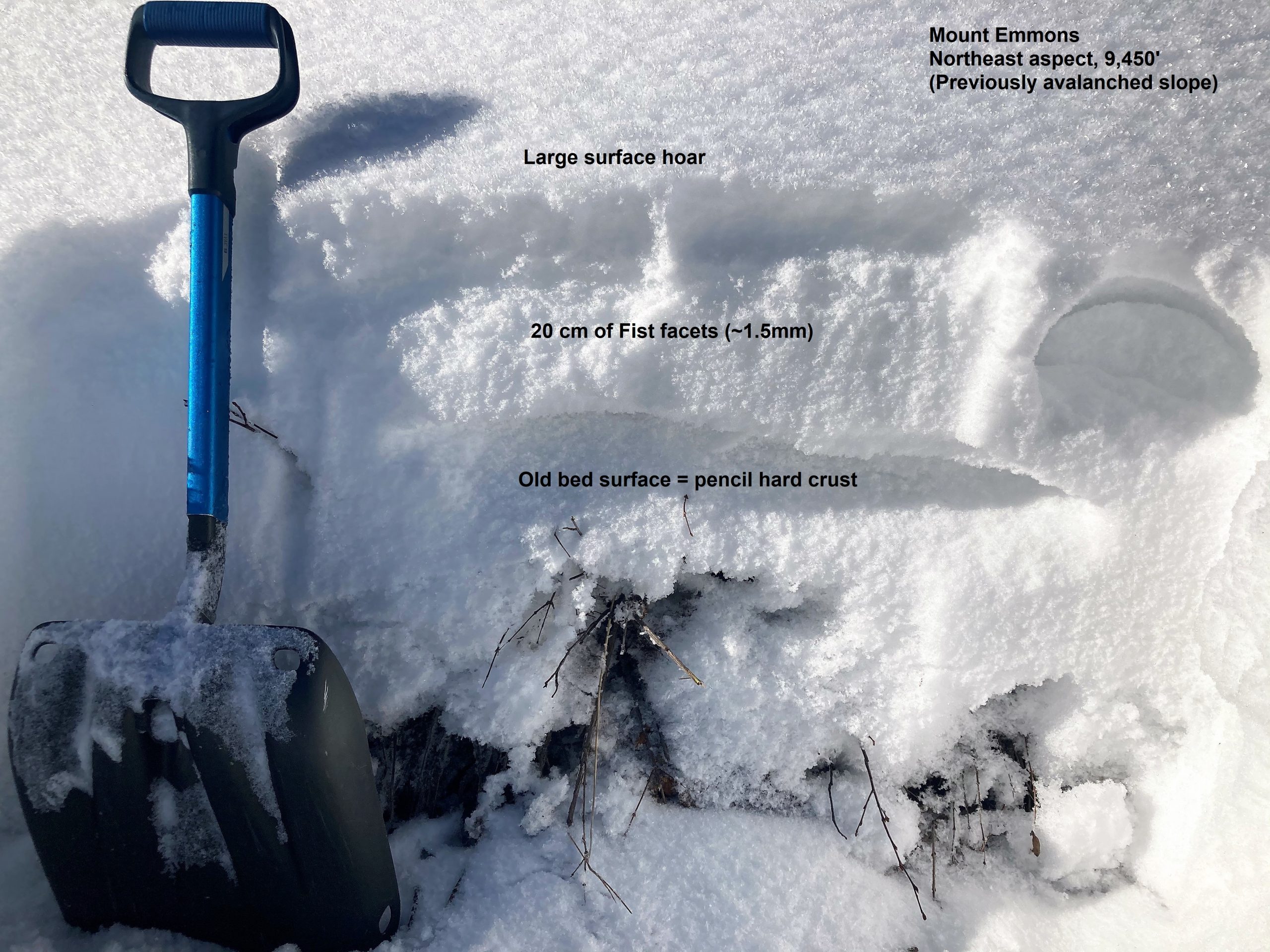
Snowpack: Still getting abundant collapses while breaking trail in untrafficked terrain. Persistent slab structure was about 18″ thick on average. Below ~10,000′, the slabs are so weak and faceted that the collapses only radiating a few yards (on northeast aspects). On east aspects at these lower elevations, we got a few collapses that propagated up to 20′ or so where there is a crust at the 12/10 interface helping to drive propagation. Avalanches at this elevation would be quite small and fairly isolated.
Above about 10,000′, the slabs get stiffer (up to 1F-). Collapses require a stomp or two, but they radiate across entire clearings (which were 50 feet or less where we traveled). Moderate propagating results in stability tests.
The snow surface continues to grow weaker. Large grained surface hoar is widespread except in wind exposed features. Near surface faceting is prevalent, and shallow facet sluffs are easy to trigger. Slopes that have previously avalanched (of which there are many), have an even weaker snow surface due to their shallow depths and stronger temperature gradients. The ones we poked at have an old bedsurface crust below all of the weak junk, which will make for an even more dramatic hardness difference when these layers get buried.


Photos:

Avy 1 Snodgrass Observation Tour

CB Avalanche Center2020-21 Observations

Date of Observation: 01/07/2021
Name: David Bumgarner


Zone: Southeast Mountains
Location: Snodgrass – Upper Open Shot between 3rd bowl & Abbey Lane
Aspect: North East
Elevation: 10,500


Avalanches: None observed
Weather: Temp: Mid 20’s
Sky: Few
Wind: Calm
Precip: none
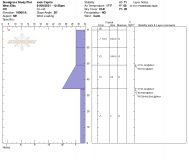
Snowpack: Snow Pit:
Aspect: NE
Elevation: 10,500
Slope Angle: 28

HS: 84cm
Multiple CT Moderate results (12,12, 14) Broken fracture in facets 49cm down (35cm)
ECTN
Mid pack is losing strength and faceting out

Only had one sign of instability throughout tour. Had multiple shooting cracks near a steeper roll near the bottom of our first fun in a shallow area.


Photos:

Coneys

CB Avalanche Center2020-21 Observations

Date of Observation: 01/07/2021
Name: Ross Matlock


Zone: Southeast Mountains
Location: 2nd bowl
Aspect: North East
Elevation: Coneys


Avalanches: No avalanches seen or any sign of instability
Weather: Clear baby, some would say warm!!
Snowpack: In a word weak! I feel we are teetering on full facet top to bottom. What was perhaps a supportably snow pack, is slowly turning to a weak unconsolidated, trap door facet monster. Its nothing unusual for us, but with the surface hoar developing and continued cold temps, we are setting ourselves up for potential problems with more snow load.


Few more shooting cracks in Washington Gulch

CBAC2020-21 Observations

Date of Observation: 01/06/2021
Name: Eric Murrow Evan Ross

Zone: Northwest Mountains
Location: Gothic Mountain
Aspect: West, North West
Elevation: 10,500ft to 11,200ft

Weather: Northwesterly winds moving snow at upper elevations, otherwise calm conditions where we traveled. Few clouds.

Snowpack: Traveled on west to northwest facing slopes below treeline. With some extra effort and a few heavy bounces, we were repeatably able to produce collapses and some long-running shooting cracks. These results were primarily failing on the early December facets. Those cracks ran into slope angels that reached up to about 35 degrees and sometimes displaced a couple of inches. A steeper or unsupported slope may have been necessary for an avalanche to release. We didn’t have the confidence to climb higher in the terrain since lower angle or low consequence route options were not closely available.

Looking at near treeline terrain. The avalanche problem appeared to be slightly more specific to the cross-loaded or gullied portions of the terrain. The same characteristics extended above treeline, but appeared even more isolated in the terrain due to more wind-scoured snow.