Anthracites

CB Avalanche Center2020-21 Observations

Date of Observation: 01/23/2021

Zone: Northwest Mountains
Location: Anthracites skin track near the top before your turn right to tree chit or left to 7th bowl
Aspect: North East
Elevation: 11,200

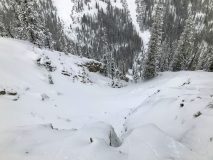
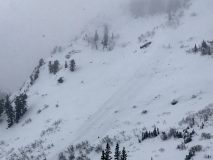
Avalanches: D1 propagated about 50 feet wide
Weather: Actively snowing and windy on the ridge. 20 degrees
Snowpack: Mid storm 15” new snow. 11am Saturday 1/23. Avalanche problem: storm slab

Photos:

Gothic Weather Update 7am

CBAC2020-21 Observations

Date of Observation: 01/23/2021
Name: billy barr

Zone: Southeast Mountains

Weather: Winter is here- i seemed to have forgotten how much more difficult it is to get around when it snows as it has been a while. —Light snow overnight picking up some after midnight with 7½” new and water a lighter 0.45″. The snowpack has reached the winter’s deepest of 35″. Currently obscured cloud cover with moderate snow and thankfully no wind. Yesterday’s high temp was 28F this mornings low and the current is 21F. We had more snow last night than the whole of January up until today.

More Weak Snow Obs…

CBAC2020-21 Observations

Date of Observation: 01/22/2021
Name: Evan Ross & Jared Berman

Zone: Northwest Mountains
Location: Anthracite Range
Aspect: South East, South
Elevation: 9,500-11,500

Avalanches: A few small loose snow avalanches coming out of steep terrain. Noticed a couple on east BTL, and a couple on south NTL.

Weather: Mostly Cloudy. On and off snow up to S1. Calm Wind. New snow since 1/19 ~6″

Snowpack: New snow since 1/19 was at about 6″ at 11,000ft. No current avalanche problems were encountered and the new snow really was improving the riding quietly.

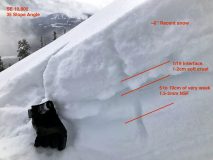
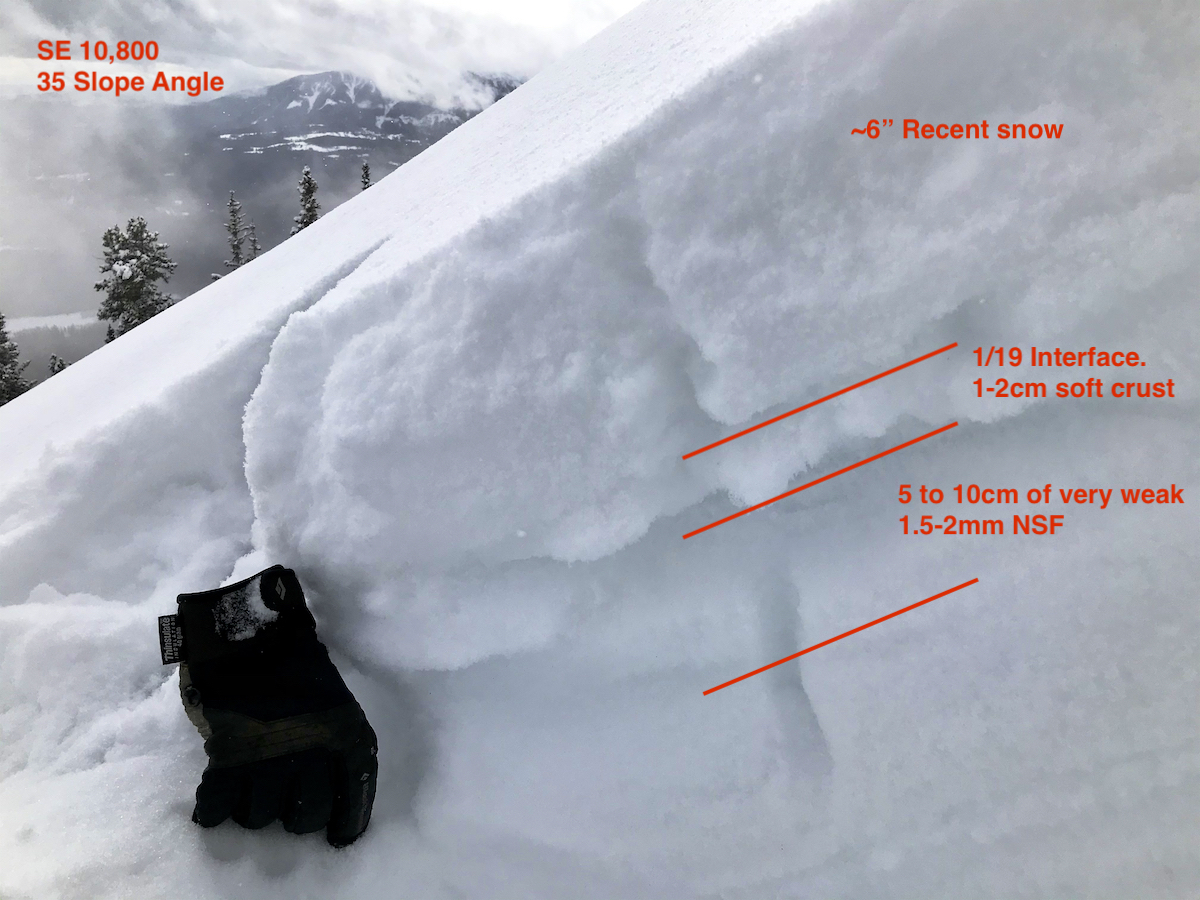
The 1/19 crust on the S to SE aspects sure looked like a bad interface for the incoming snow. Those crusts looked like they would hold a little weight, then aid in propagation as they collapsed into the extremely weak facets directly below them. On 35-degree slope angles, the SE crust was 1 to 2cm’s thick, and the S crust was 2 to 3cm’s thick. The 1.5-2mm facets below those crusts were extremely weak and lacking any cohesion. Interestingly, we didn’t notice the crusts gain much thickness or strength from lower angled slopes to steeper slopes. It all just looked really bad. A few photos attached but no way to really illustrate the particular set up well in a photo, you had to feel it…

We were hoping to ski some north-facing slopes too, on the other side of the ridge. Unfortunately, those lines had been completely blown out by the past extreme wind event. Looked like rocks or a very thin snowpack getting hidden under the recent new snow. Hard to say how low you would have to go to get below the blown-out areas. The snow that had been blown out from the northerly facing slopes didn’t do much of any loading on the south side of the ridge during last weeks extreme wind event.

Feels like early December all over again. Basically, everything that was white on 1/19, is now a really weak interface and will start producing avalanches when it’s loaded. Unfortunately, there was good snow coverage on 1/19…

Garbage sluffs

CBAC2020-21 Observations

Date of Observation: 01/22/2021
Name: Zach Guy

Zone: Northwest Mountains
Location: Mt. Axtell
Aspect: North, North East
Elevation: 9,400 – 11,800′

Avalanches: On a north aspect near treeline, we skier triggered a facet sluff that entrained the entire snowpack to the ground. It ran about 1,000 vertical feet, D1.5 in size. The sluff “stepped up” once it encountered hard, wind affected snow in a tight gulley.
Weather: Light snowfall through the day, about an inch of accumulation. Calm winds.
Snowpack: About 3″ to 4″ of low-density snow on the 1/19 interface. The rest of the snowpack is basically all fist hard facets. In a steep, open start zone near treeline, ski pen is to the ground, knee to thigh deep facets. The 1/19 snow surface abruptly changed to pencil hard where previous winds had concentrated into a tight gulley and stiffened the snow.


Emmonx to Schuykill

CB Avalanche Center2020-21 Observations

Date of Observation: 01/21/2021
Name: Ian Havlick


Zone: Southeast Mountains
Location: Redwell to First Bowl Skooks
Aspect: North, East, South East, South, South West, North West
Elevation: 9000-12,500


Avalanches: small D1 dry loose in first bowl Schuykill. Slow moving and avoidable but could get surprised in wrong terrain. Managed problem with avoidance and awareness. Smart re-grouping areas out of fall line.
Weather: Orographic snow showers mostly in AM. 2-3″ new snow accumulation. perfect Stellars, minimal wind except 20mph NW on ridgelines of Emmons. Minimal wind effect on Skook ridgeline. Temperatures moderated throughout day and say some greenhousing softening southerly slopes and surface snow.
Snowpack: Generally faceted with minimal slabs denser than 4F hardness. No formal pits but handpits and pole probing revealed minimal slabs. Travelled terrain with LOW danger in mind and saw no signs of instability. Widespread 1-2″ windboard capping facets in Redwell. Potentially todays stellars temporary weak layer when buried?


Baxter Basin/ Daisy Pass walkabout

CBAC2020-21 Observations

Date of Observation: 01/21/2021
Name: Eric Murrow


Zone: Northwest Mountains
Location: Slate River to Baxter/Daisy near treeline area
Aspect: North, North East, East, North West
Elevation: 9,000′ – 11,400′


Avalanches: visibility was often obscured but glimpsed a handful of very small debris piles below steep rocky areas – would guess some minor sloughing of the recent precip of rocks.
Weather: Skies were mostly cloudy with a low cloud deck. Very light to light snowfall from 10am to 330pm. New snow accumulation since 1/19 varied from a bit more than 2inches at Slate TH to 6″ at 11k in Baxter Basin. Winds were light with some moderate gusting. Observed some snow transport.
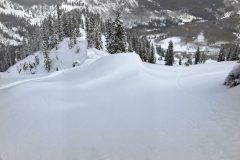
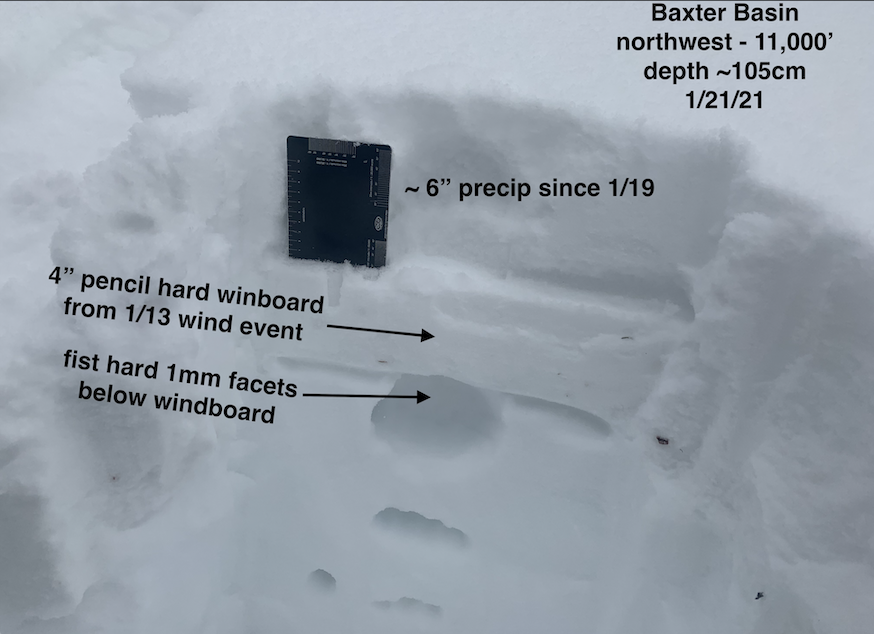
Snowpack: Went for a walk through Baxter Basin and wrapped around past Daisy Pass checking on old snow surfaces below the snowfall from the past few days. On wide-open terrain that faced NW-N-E at 11,000′ there was a pretty even mix of soft facets, thin soft windboard, and pencil hard windboard below 6 inches of recent, low-density snowfall. Variation of old snow surface was significant even on the same features(see photos of variation). On a couple of drifted features, I was able to produce cracks up to 10 feet where recent winds have deposited thin, soft slabs.

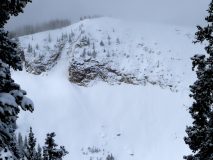
Briefly traveled on some low elevation features with a weak, faceted snowpack (see photo of a below treeline, east-facing slope that is a total weak faceted mess). Old surfaces here were very weak and I would anticipate that it will not take much loading before avalanches start running with the incoming storm. I would expect avalanches to entrain and gouge easily on shady, below treeline slopes.

Photos:


Quick jaunt around near treeline slopes

CBAC2020-21 Observations

Date of Observation: 01/20/2021
Name: Eric Murrow


Zone: Northwest Mountains
Location: Sunny side of Mount Baldy
Aspect: East, South East, South
Elevation: 9,600′ – 11,500′


Avalanches: nothing new to report
Weather: Light snow and mostly cloudy skies in the morning gave way to mostly clear skies by around 11am. At 11,000′ I found around 2 inches of new snow. Observed transport of new snow on the highest terrain from westerly winds but not enough snow to cause a new avalanche problem.
Snowpack: Did not cover a lot of terrain but snowmobiled and skinned around on a number of near treeline features in the area. No signs of instability on machine or foot moving across terrain features that clearly had slabs present. Snow surfaces were a mix of stiff thin windboard capping weak facets, weak facets, or soft thin melt/freeze crusts capping weak facets. Stability test did not produce any concerning results. I was able to find a small, east-facing slope without a stiff, drifted windboard surface, or dramatic scouring, and expected I might get a propagating result on the 12/10 interface, but nope; the slab fractured without propagating. The 12/10 interface remains weak and shows little sign of rounding or sintering. Sunnier slopes showed weak facets sitting below melt/freeze crusts. As you would guess, none of the places I poked around will tolerate a significant loading event without breaking deeper into the snowpack.

Photos: