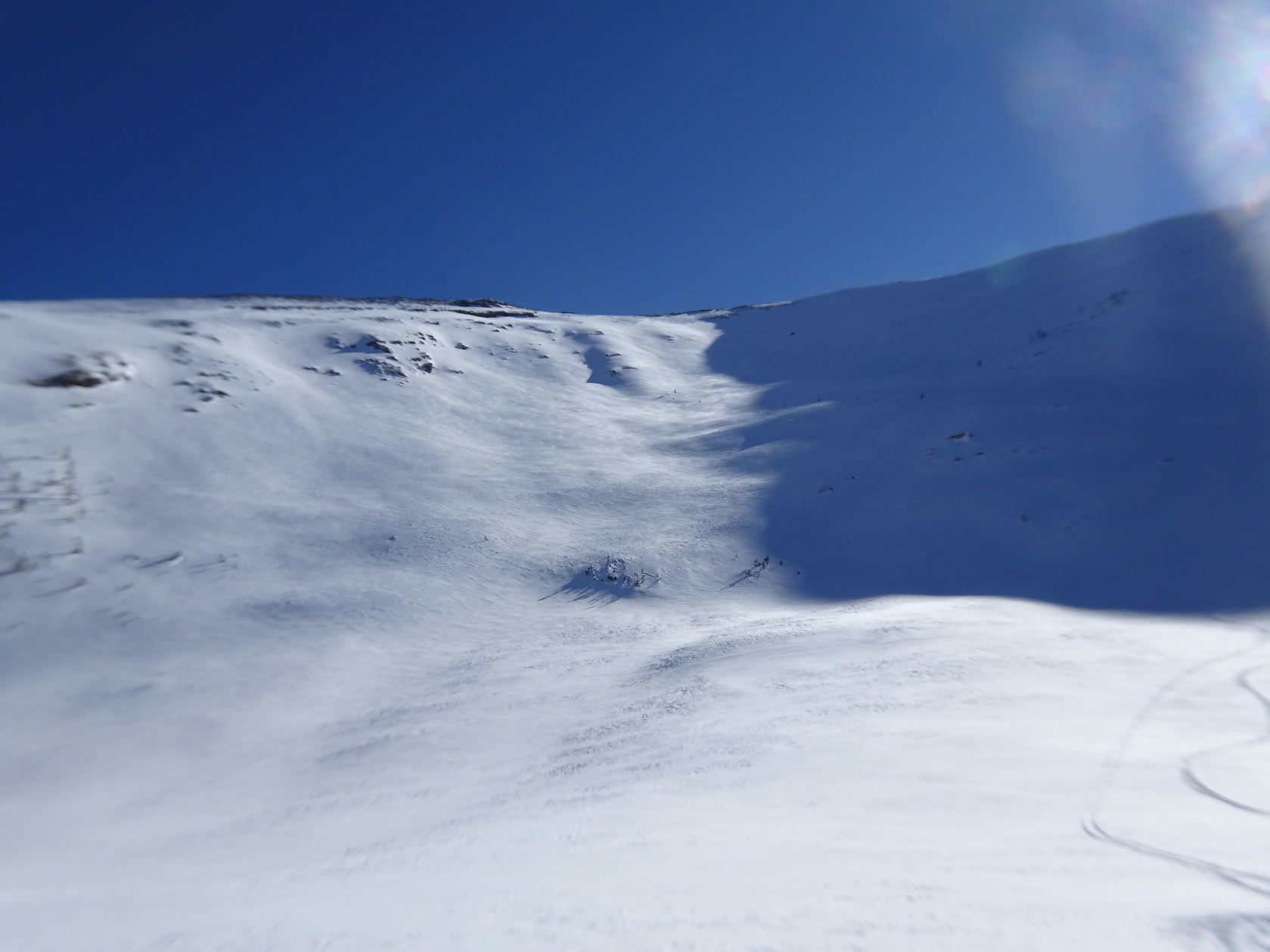
I crashed when I hit my track from last month…

CBACCBAC Observations

Date of Observation: 02/05/2022
Name: Evan Ross

Zone: Northwest Mountains
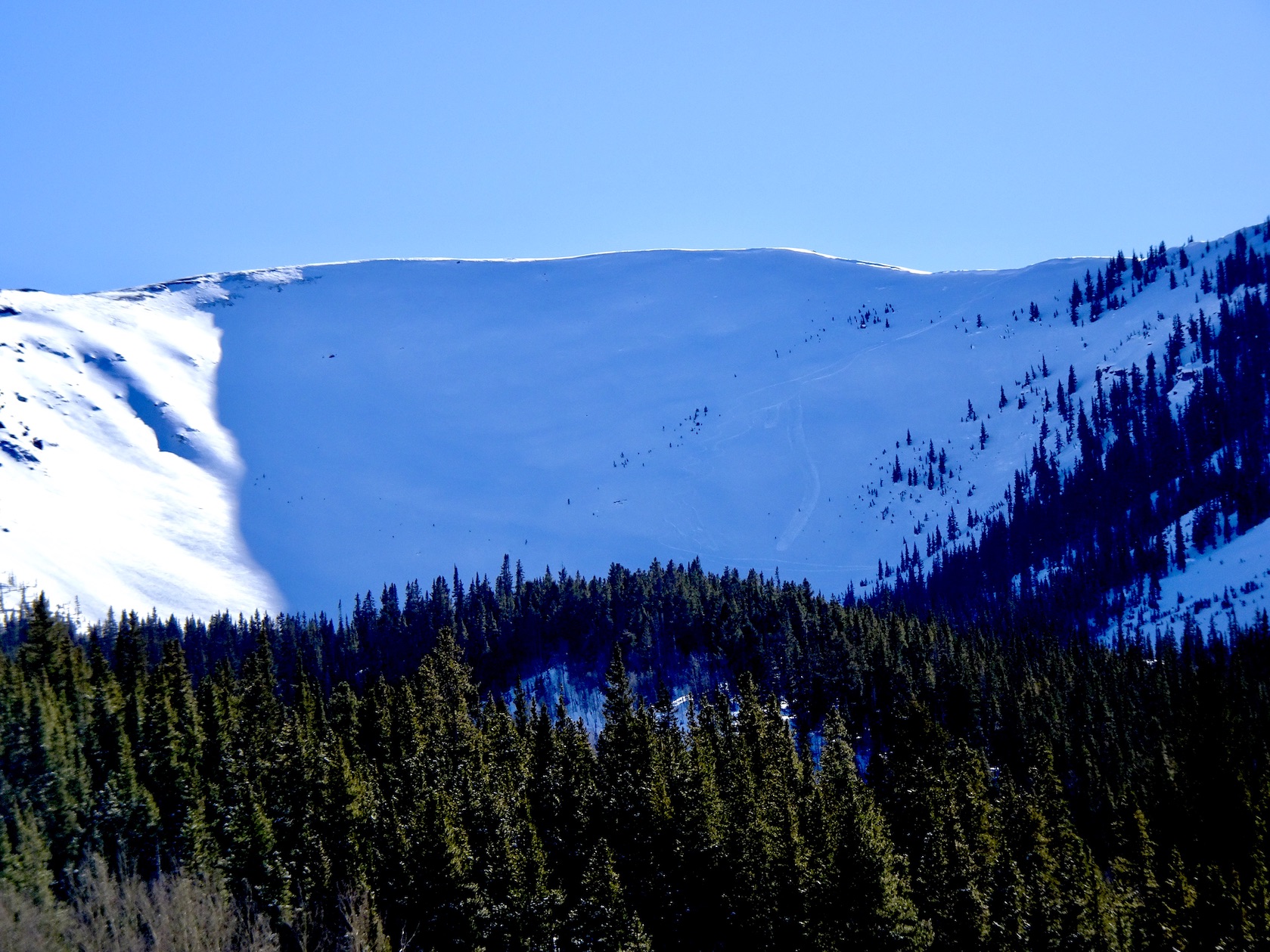
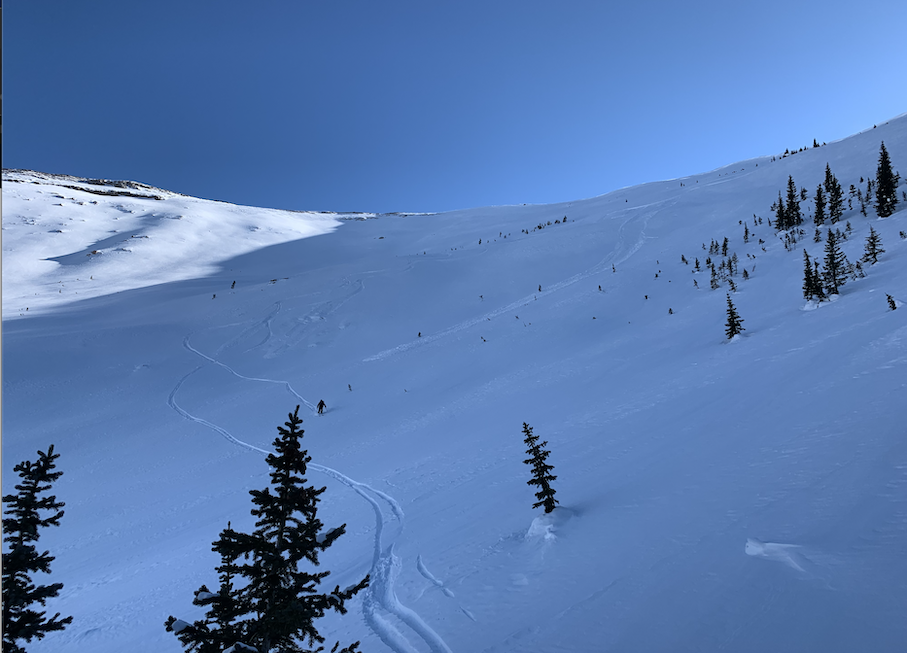
Route Description: Upper Crystal. 9,000-12,600 all aspects. Primary traveling around 11,400ft on north and northerly facing slopes were the best snow was.

Observed avalanche activity: No
Avalanches: Nothing new

Weather: Clear. Steady moderate winds in the alpine. Snow blowing off the peaks but no new slab formation.

Snowpack: 40 miles traveling through a whole bunch of avalanche terrain and avalanche paths without much of anything for an avalanche problem encountered.

Loose Dry Avalanches: Our max slope angles reached into the 40-degree range, while average sustained slope angles through the start zones and avalanche paths were probably in the mid-30-degree range. We didn’t see much for initiation of sluffs, but without average sustained slope angles near 40 degrees, a sluff just wasn’t going to get going. Many of the slopes traveled had previously avalanched back in December at some point and refilled back into a deep and strong snowpack.

Wind Slabs: A couple of shooting cracks, 2 to 3″ deep, near treeline, but dinner table size slabs. In the alpine, the old wind-loaded snow was very hard and we didn’t observe any signs of instability. There was snow blowing in the alpine but didn’t find any new slabs formation.

Photos:

5312

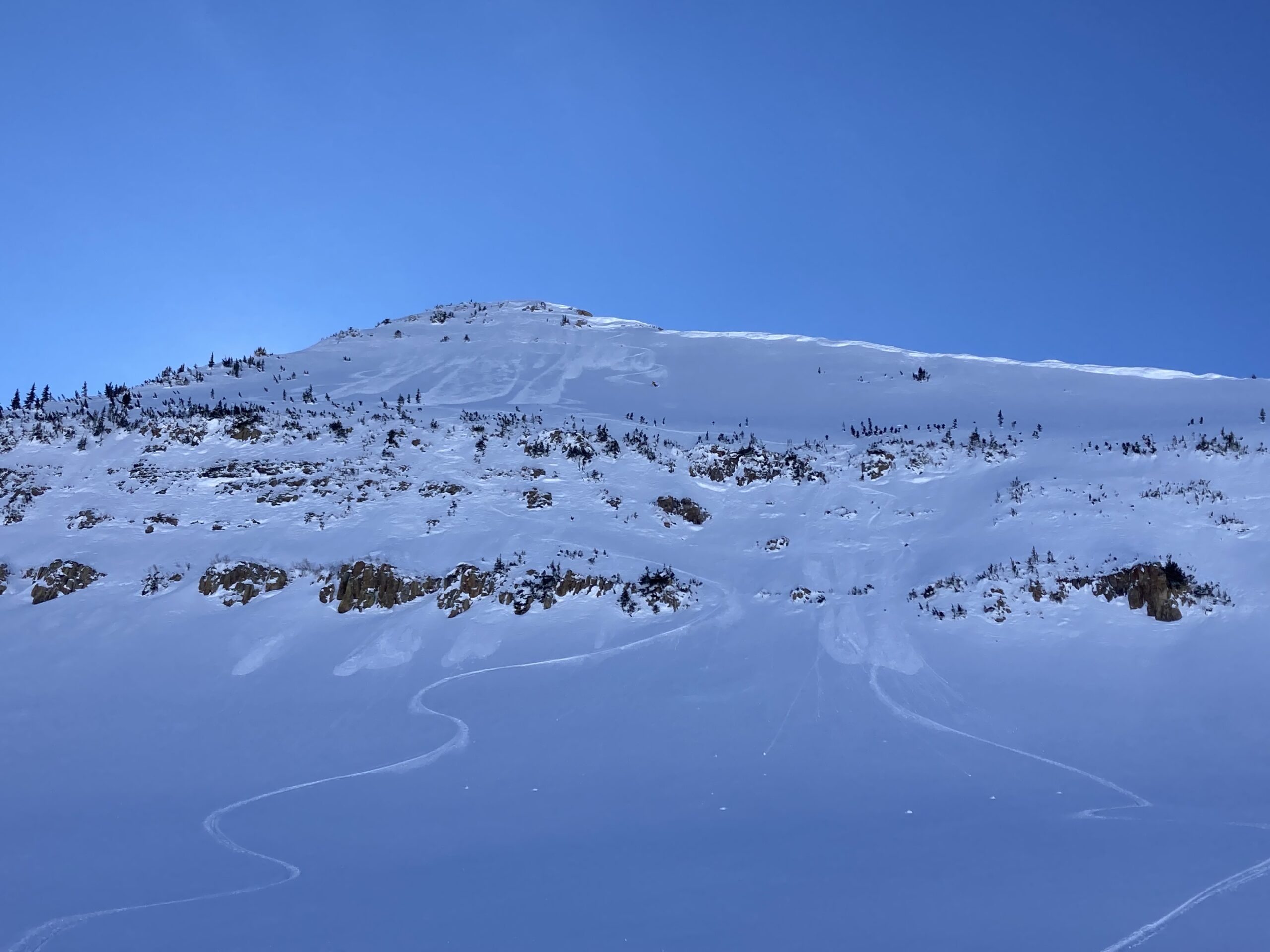
Cement Mountain ski

CBACCBAC Observations

Date of Observation: 02/05/2022
Name: Eric Murrow

Zone: Southeast Mountains
Route Description: Cement Creek TH to Horse Basin drainage up the north ridge. Descended into North Bowl from 12K.

Observed avalanche activity: Yes
Avalanches: Skier triggered a D1 Loose on a north aspect at 11,800′. Observed some minor Loose avalanches from a previous group skiing some near treeline northeast-facing shots, but debris piles looked pretty small.
Weather: Clear skies, very cold valley bottom temps, but mild air temps as we ascended to above treeline. Light winds with moderate gusts in late AM from the west eased by the PM and made for comfortable conditions while above the treeline. Did not observe any wind-loading; an inch or so of soft snow was still sitting on ridge tops waiting to be transported to leeward features.
Snowpack: We traveled on northerly aspects at all elevations. Generally, found 6 to 8 inches of weak surface snow (1-2mm facets) available for Loose avalanche entrainment. I poked into several northeast-facing near and above treeline leeward features and was able to produce shallow cracks about an inch deep, but drifts were tiny and isolated to immediately below cornices or ridgetop. Alpine terrain has held up well during windy periods over the past week. Lots of soft ‘dapple” textured snow in the alpine with a few areas of smooth, thin windboard.

Photos:

5311

More of the same….slufftown

CBACCBAC Observations

Date of Observation: 02/04/2022
Name: Eric Murrow

Zone: Southeast Mountains
Route Description: Southeast end of Whetstone

Observed avalanche activity: Yes
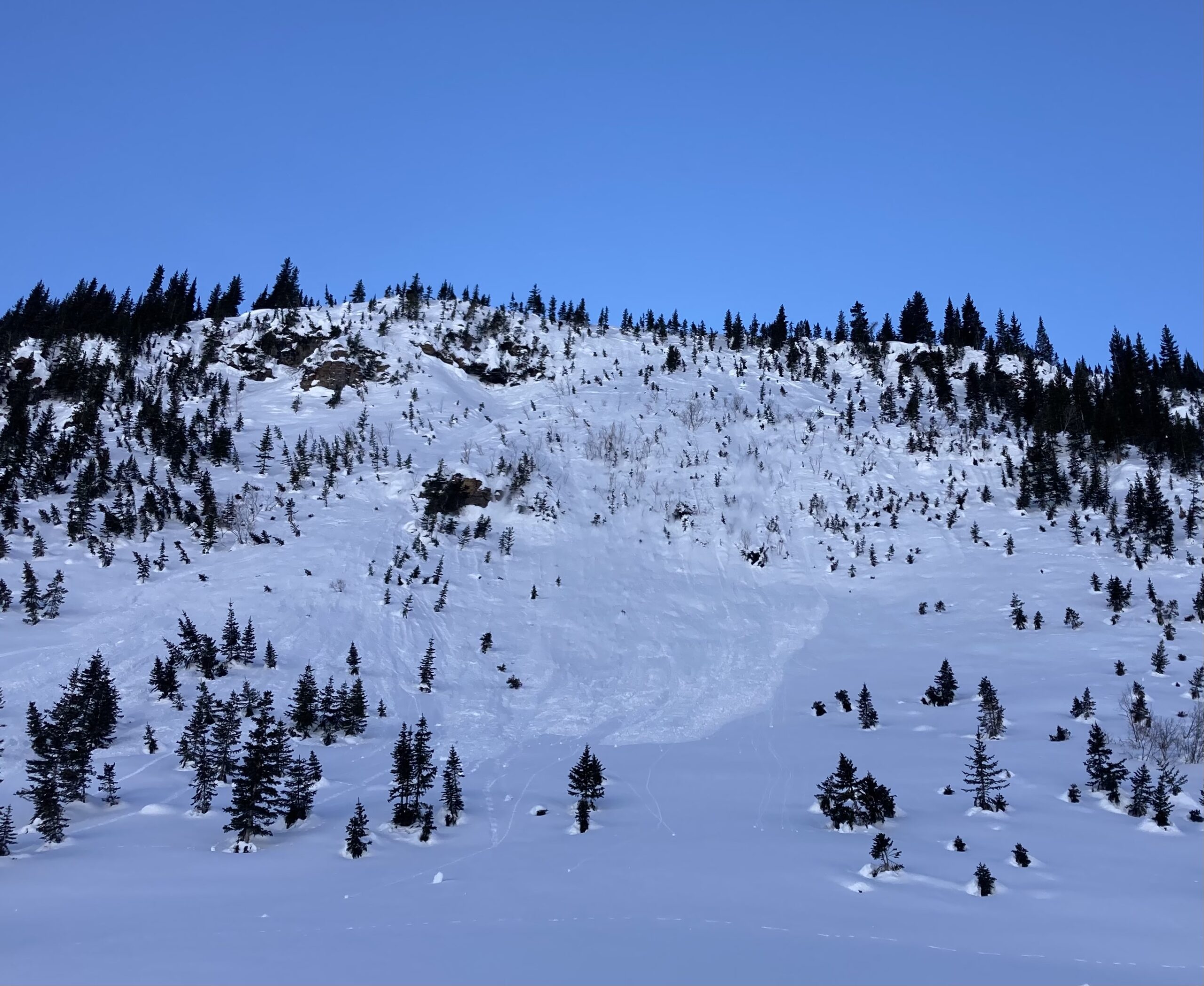
Avalanches: We skier triggered a couple of Loose Dry avalanches on steep northeast and east-facing terrain near treeline. One reached D1.5 in size.
Weather: Cold temps at all elevations and very light winds.
Snowpack: Same ol’ story on northeast and east slopes with around 8 inches of weak surface snow for loose avalanches to entrain. As you move to the sunny side of the east aspect the volume available greatly decreases.
I descended the start zone of a southeast, near treeline feature and found 1 to 2 inches of low-density snow sitting on a supportive-to-skis crust. Surprisingly, the snow surface was more or less dry at 1 pm; cold temps balanced out the solar input to keep the surface dry.

Photos:

5308

Garbage pile of facets on old bedsurfaces

CBACCBAC Observations

Date of Observation: 02/04/2022
Name: Zach Guy

Zone: Southeast Mountains
Route Description: Gothic Mountain, traveled on S to E to NE aspects to 12600 ft.

Observed avalanche activity: Yes
Avalanches: Skier triggered a loose snow avalanche on the east face that ran about 1500 vertical feet through the choke. The slide remained small, but would have been consequential in this terrain if someone were caught in it. The sluff appeared to pull out a few thin slabs (1″ to 4″ thick) within the gulley on its way down.
Weather: Light winds, varying from northwest to northeast. No transport. Clear skies.
Snowpack: South facing terrain has dust on thick crust; good slide for life conditions.
The east face slid to the ground at the end of the holiday cycle, so the snowpack there is very shallow and weak: about a foot deep and made up of large-grained facets (2-3mm). There was enough sastrugi textures and wind crusts at the surface to prevent constant sluffing, but we found one especially hollow spot that got the sandbox moving. The snowpack on the East Face is reminiscent of our early December snowpacks the last two years. Total garbage. There appeared to be some thin drifted slabs in concave terrain features (middle of gullies) left behind by last night’s upslope winds; identified by smooth textures compared to rippled texture elsewhere.

Photos:

5307

Cold day in the alpine

CBACCBAC Observations

Date of Observation: 02/03/2022
Name: Zach Guy and Jack Caprio

Zone: Northwest Mountains
Route Description: Toured from Mt. Emmons to Peeler Basin to Oh-Be-Joyful Basin on various aspects to about 12,000 ft.

Observed avalanche activity: Yes
Avalanches: Skier triggered numerous small, shallow sluffs on very steep slopes facing east to north aspects at all elevations. Sluffs were about 3″ deep above treeline and entrained about 6″ of faceted snow below treeline.
Spotted one slightly larger wind slab on Mt. Afley that ran sometime in the past few days, D1 in size.
Weather: Cold temps, mostly clear skies. Light north winds were occasionally producing light drifting at ridgetop.
Snowpack: Felt comfortable moving through lots of complex avalanche terrain with minimal signs of instability apart from shallow sluffs. We encountered a few thin but hard drifts that produced localized cracking and/or collapses. I believe these formed a few days ago during the strong W/SW wind event. About 2″ of fresh snow was evenly distributed across all aspects; we encountered a few minor drifts involving just the new snow onto southerly aspects that did not produce signs of instability.

Photos:

5306

Feels like Groundhog’s Day

CBACCBAC Observations

Date of Observation: 02/02/2022
Name: Zach Guy and Jack Caprio

Zone: Southeast Mountains
Route Description: Traveled on E and NE aspects below treeline on Mt. Emmons

Observed avalanche activity: Yes
Avalanches: Skier triggered a few small loose avalanches that ran about 200 vert down a small terrain feature.
Weather: Cold temps, very light snowfall, calm winds.
Snowpack: More of the same. Less than an inch of new snow didn’t alter conditions much here. The top 8″ or so is loose and faceted on anything north of due east, making for easy sluff triggering.

Photos:

5303

Faceting snowpack in lower Cement Creek

CBACCBAC Observations

Date of Observation: 02/01/2022
Name: Eric Murrow

Zone: Southeast Mountains
Route Description: Up Walrod Gulch and ascended/descended near the powerline avalanche paths.

Observed avalanche activity: Yes
Avalanches: I intentionally pushed loose snow down several short but steep east-facing slopes. Small size avalanches that entrained down about 8 inches.
Weather: Increasing cloud cover throughout the morning and overcast with very light snowfall starting at 2pm. Calm winds in this low elevation terrain.
Snowpack: I wanted to see how the faceting process has impacted the shallowest snowpack in the CBAC forecast area. East slopes below treeline have around 8 inches of cohesionless surface facets (1-2mm). Once you transition to the sunny side of east surface crusts start to appear. The midpack remains supportive to boots but shows clear signs of faceting. The snow near the ground remains distinctly weaker than the slab above, but CT and ECT produced no results.

A southeasterly feature had a 4cm melt/freeze crust that was pencil hard above weak, well-developed facets with ice columns present in the facets. Supportive, but faceting snow was found at the bottom of the snowpack. The crust looks capable of holding a small to moderate load, but a large loading event could collapse this structure. Slopes very near due south were a mix of melt forms to the ground or starting to melt out.

Photos:


5302

The Weakening continues

CBACCBAC Observations

Date of Observation: 01/31/2022
Name: Eric Murrow

Zone: Southeast Mountains
Route Description: Ascended Red Lady skin track to Gunsight Pass to Scarp Ridge. Descended The Shield into Redwell Basin out to Oh-Be-Joyful Creek. We traveled down the line between the Southeast and Northwest Forecast Zones.

Observed avalanche activity: Yes
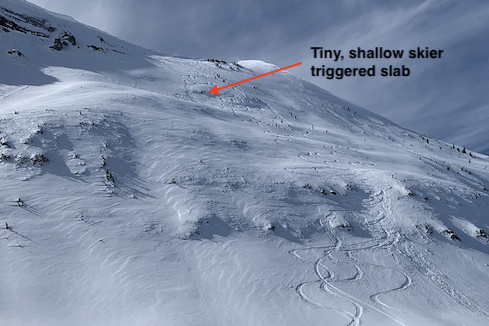
Avalanches: We skier-triggered a tiny, shallow slab above treeline beneath a mid-slope rollover and were able to trigger Loose Dry avalanches below treeline on steep, northeast-facing terrain.
Weather: Cold valley bottom temperatures gave way to milder air temps up high. Thin, high clouds moved overhead mid-morning and departed around 1pm. West-northwest winds blew at moderate speeds transporting some snow, but little effective loading.
Snowpack: On the ascent, I dug a few hasty pits into south-facing terrain on steep slopes, I generally found a stout melt/freeze crust at the surface 3-4 inches thick with ice columns and lenses up to a foot below the surface. Did not travel over southeast-facing terrain, but easterly slopes in the area were completely dry so the stout crusts on the south aspects slowly taper out of existence by the time you hit due east.

Northerly alpine terrain is a mix of wind-board and soft, faceted surfaces. Places touched by the wind, yet still soft, did not produce Loose Dry avalanches, but we did trigger a small slab beneath a rollover. As we descended to near and below treeline terrain on east and northeast aspects the faceting process at the surface became far more significant. Sheltered slopes facing east and northeast have up to 10 inches of cohesionless snow for Loose Dry avalanches with facet grain size commonly at 1mm with some grains nearing 2mm. We traveled on small slopes at lower elevations so triggered Loose avalanches remained D1 in size, but they were fast-moving and gained mass as they ran.

Photos:

5300

Schuylkill Sluffs

CBACCBAC Observations

Date of Observation: 01/30/2022
Name: Ari Lightsey

Zone: Northwest Mountains
Route Description: Schuylkill Ridge

Observed avalanche activity: No
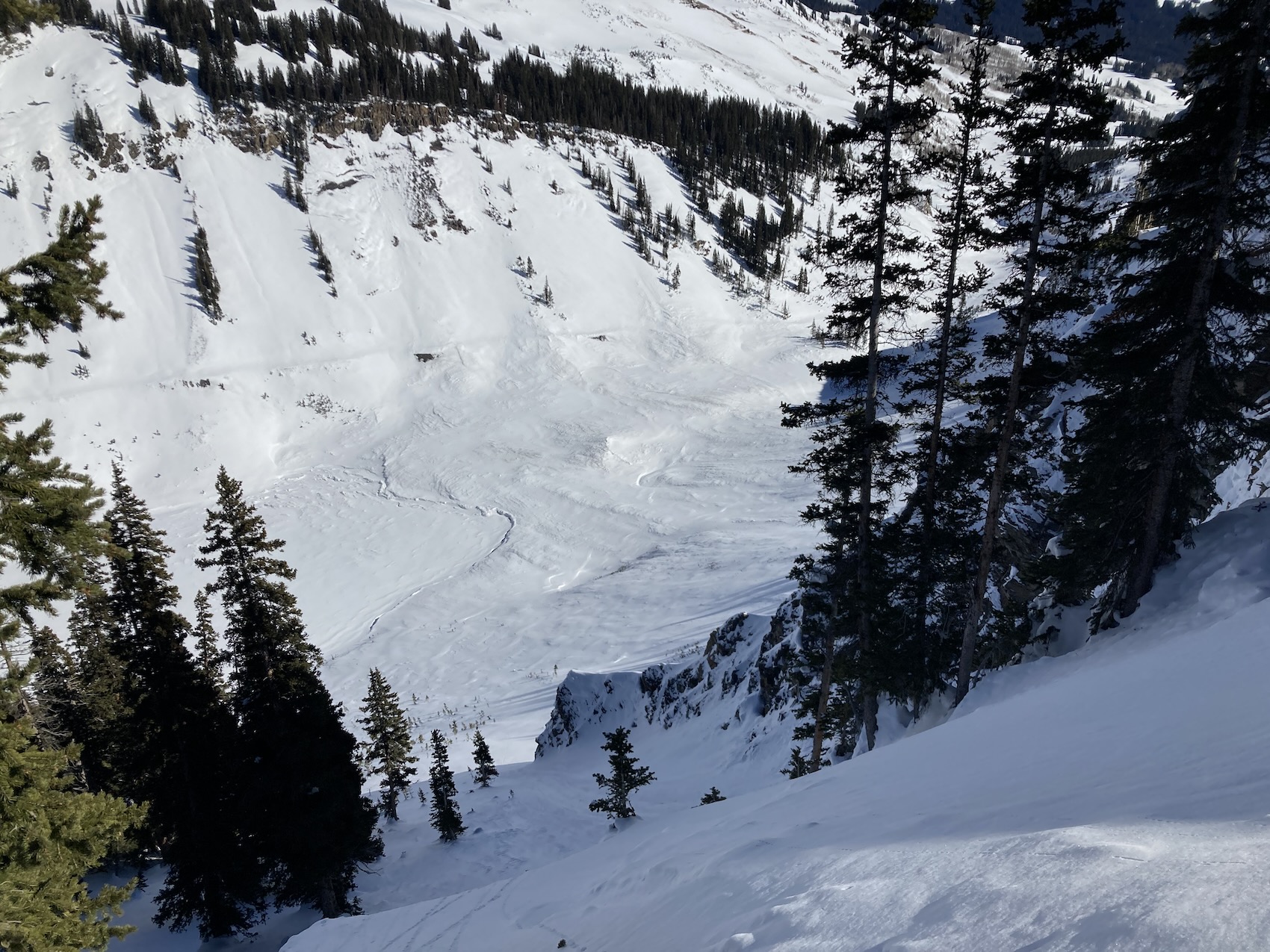
Avalanches: Skier 1 skied across slope near the top of the ridge at approximately 11300′ and triggered a loose dry avalanche 4-8 inches deep (R1 D1.5) that built up enough momentum down the looker’s left gully to do some damage to a person. Skier 2 also triggered a sluff down lower on the ridge at about 10500′ (photo) that due to the steepness of the terrain carried significant speed onto the first bench below the ridge (R1 D1.5). These slides probably would not have resulted in a full burial but would definitely result in traumatic injuries had a person been taken for a ride through the trees.

Weather: Clear and calm, NE facing terrain at 11300′

5297