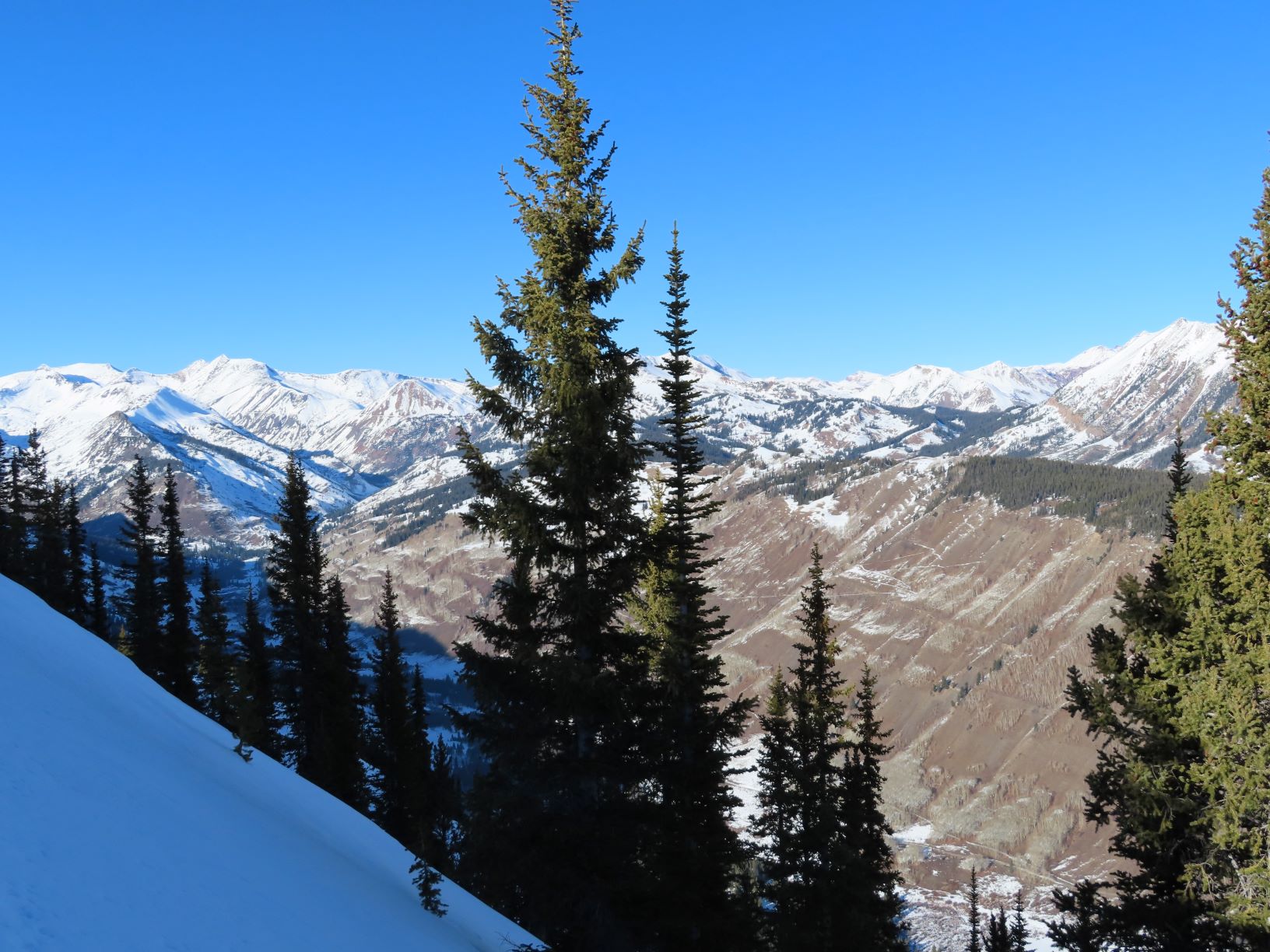
Kebler Area

CBAC2020-21 Observations

Zone: Northwest Mountains

Location: Kebler Area

Date of Observation: 12/06/2020

Name: Cam Smith


Subject: Kebler Area

Aspect: North, North East, East, South

Elevation: 10 – 12k

Avalanches:

Small broken cornice in the entrance to a south facing gully. A few spots where surface facets had rolled down but really nothing to shake a pole at.

Weather: Calm, sunny, but didn’t feel nuclear hot this morning up high.

Snowpack: Skied one narrow NE facing chute that was obviously cross loaded but the surface snow was not cohesive. Top inch or two would stuff off. Just as one might expect with very weak facets on top, total trap door at the bottom, and soft snow between. An adjacent wider N facing chute actually seemed more scoured. The top few hundred feet felt more like a supportable solid wind crust before turning into more the mixed bag we’re all seeing.

Melt freeze crust on a steep high southerly was solid to the ground. All the joys of spring skiing, just with 1-4” of snow.. if you’re into that kind of thing..

Spring sprung early

CBAC2020-21 Observations

Zone: Northwest Mountains

Location: Upper Slate

Date of Observation: 12/05/2020

Name: Zach Guy


Subject: Spring sprung early

Aspect: North, North East, East

Elevation: 9700-12,300′

Avalanches:

Saw a few harmless (D1) dry loose avalanches that ran yesterday or today on east aspects from solar warming near rock bands and one that was animal triggered. Snowboarder triggered a very thin wind slab (D1) on a cross-loaded north-facing gulley, about 10 feet wide.

Weather: T-shirt weather at 12,000′ in the sun.

Snowpack: We traveled in steep terrain and found a generally quiet snowpack with a few small instabilities. At ridgeline there were isolated wind slabs up to 6″ thick from northerly winds earlier this week overlying well developed near surface facets. These produced localized cracking/collapsing in very small pockets in a few locations, and we triggered one small slab in a gulley. The snowpack is generally still supportive on to skis, you can find some terrain features with bottomless facets but the snow depth in those areas is too shallow to produce more than a small sluff, exemplified by the photo of recent naturals.
Surfaces in sheltered areas are generally 1 mm, fist hard facets. In the alpine, more wind texture and some variable wind crusts capping the facets, along with stiffer crusts below the facets from previous wind events: more of an abrupt hardness change.

Photos:

More of the same…dry loose avalanches

CBAC2020-21 Observations

Zone: Southeast Mountains

Location: Climax Chutes

Date of Observation: 12/04/2020

Name: Zach Guy


Subject: More of the same…dry loose avalanches

Aspect: North East, East

Elevation: 11,300′

Avalanches:

Intentionally triggered about 8 dry loose avalanches from ridgeline, generally D1.5 with a few up to D2 in size. The sluffs started in the top 8″ to 10″ of faceted snow and plowed deeper as they ran further. Estimate they ran about 1500′ to 2000′ vert.

Weather: Clear, mild temps, calm winds.

Snowpack: Same old story. Weak faceted snow throughout the snowpack, generally fist hard. Decaying surface hoar in the top few inches of the snowpack produced some minor cracking where there were 2″ wind drifts. Snow gains a little cohesion as you gain elevation, and also is a bit more supportive in sparse trees compared to open chutes. The most reactive sluffing is in open terrain without tree cover. We avoided steep shady terrain because of both pushy sluffs and rock hazards and returned via a low angle ridgeline.

Photos:

Below treeline in Northwest Zone

CBAC2020-21 Observations

Zone: Northwest Mountains

Location: Purple Palace terrain

Date of Observation: 12/03/2020

Name: Eric Murrow


Subject: Below treeline in Northwest Zone

Aspect: North, North East, East

Elevation: 9,600′ – 11,300′

Avalanches:

One small skier triggered Loose Dry avalanche.


Weather: Clear, sunny skies. Calm to light winds.

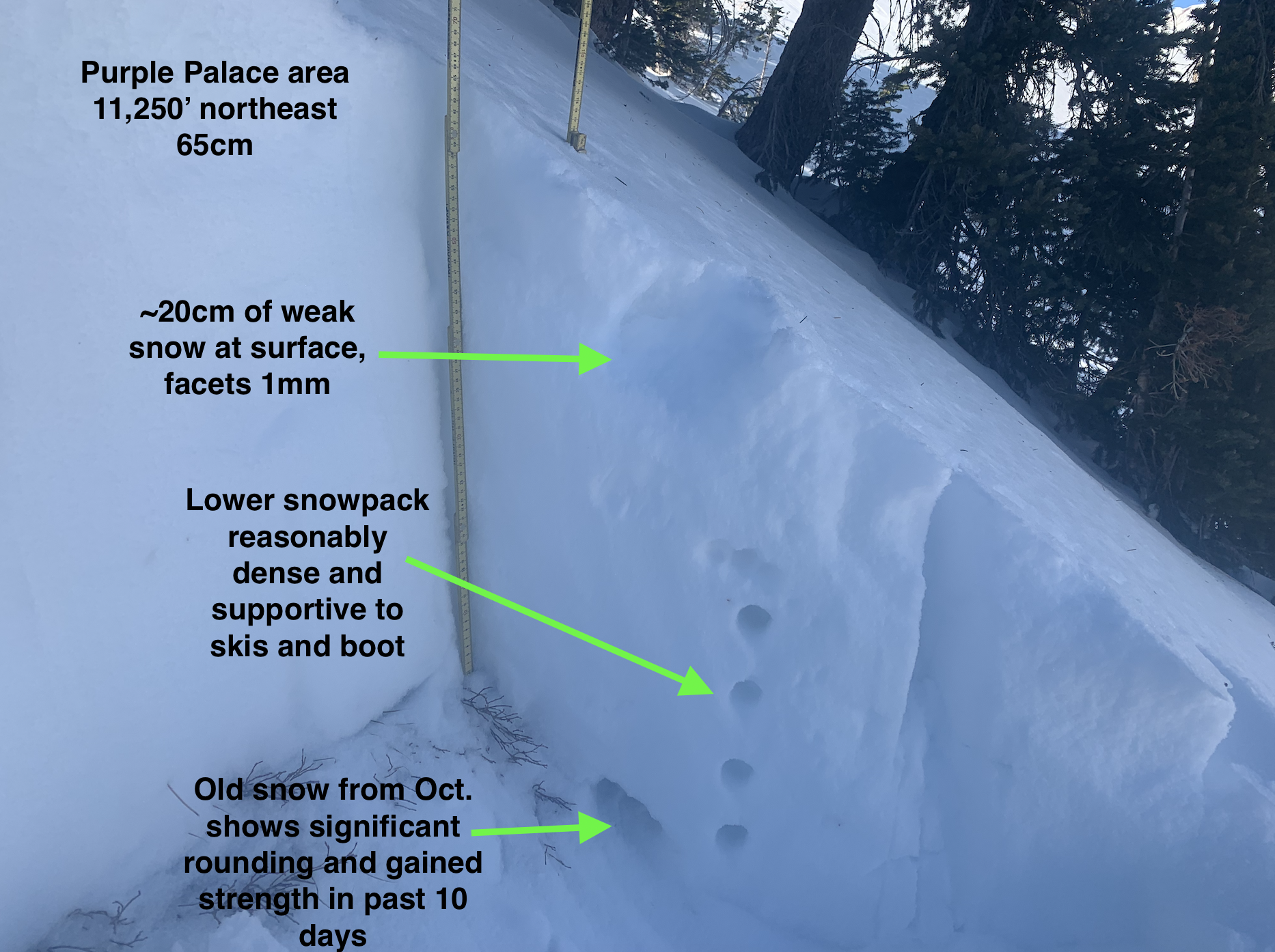
Snowpack: This was just a quick trip to look at the snowpack on shady terrain below treeline in the snow favored part of the forecast area. East facing slopes show very weak faceted snow at the surface resting on a faceting melt/freeze crust – challenging to skin on. Northerly slopes in this area range from 50 to 70 and remain supportive to boots and skis with relatively dense lower snowpack. Surface snow is losing strength each day. Shady, protected slopes over 38 degrees you can trigger small Dry Loose avalanches that do not gouge and entrain the top 15 to 20 cm. Great riding conditions.  The surface hoar that has been observed just beneath the surface in other parts of forecast area was spotty in this area – found two places that had it, but surface hoar was small and sporadic.

Photos:


Unhappy Chutes

CBAC2020-21 Observations

Zone: Southeast Mountains

Location: Happy Chutes, Mount Emmons

Date of Observation: 12/01/2020

Name: Zach Guy and Zach Kinler


Subject: Unhappy Chutes

Aspect: North East, East

Elevation: 9,000 – 10,300

Avalanches:

Intentionally triggered several long-running dry loose avalanches, large enough to drag or carry someone (D1.5). The slides entrained the entire snowpack (about a foot deep) and ran about 1000 vertical feet.

Weather: Mostly cloudy, light northerly winds, very light snowfall.

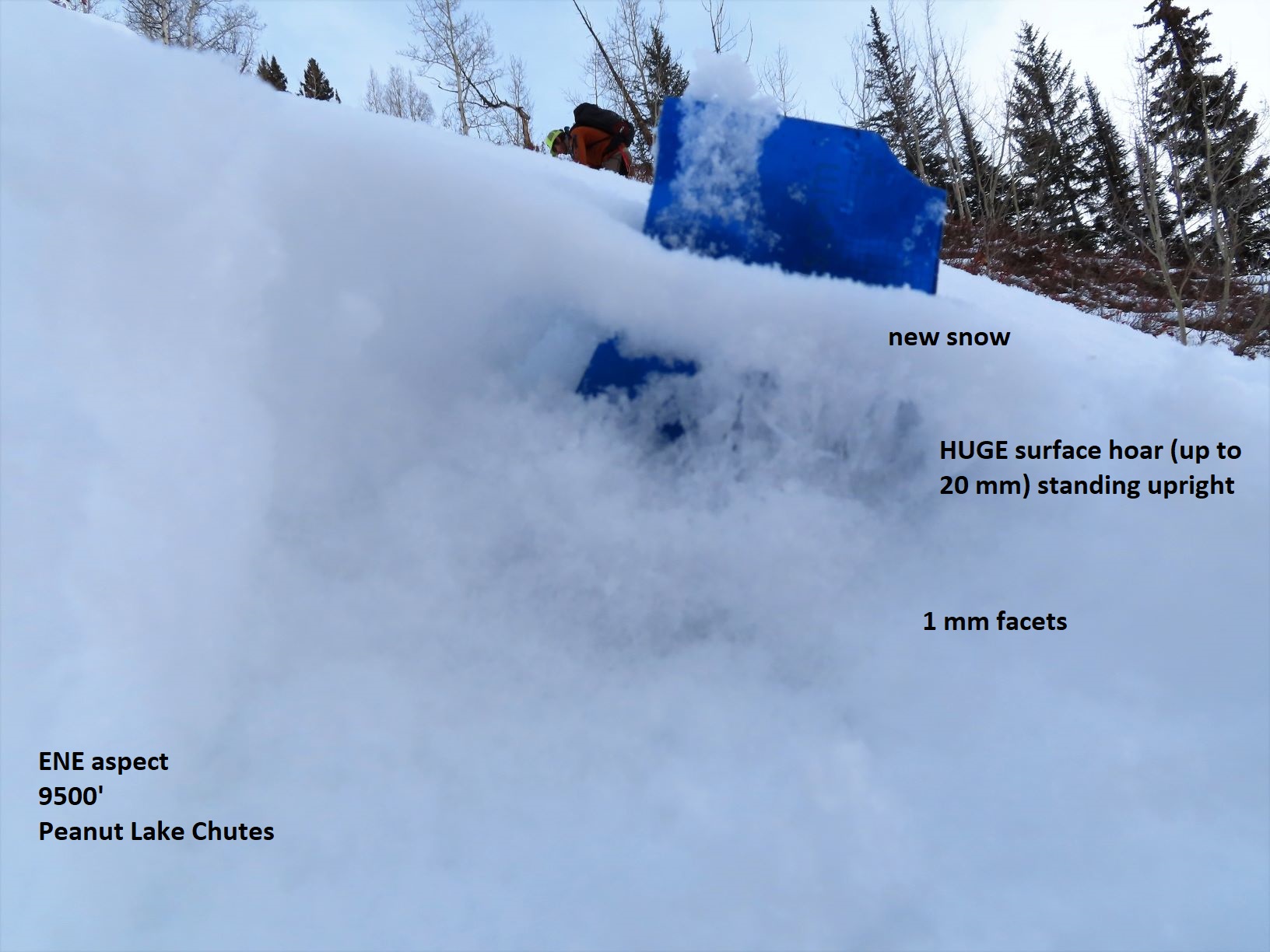
Snowpack: A shallow, weak mess. Snow depth is about a foot deep, almost entirely fist hard, 1 to 1.5 mm facets. The surface is 5 – 15 mm surface hoar (upright and intact) covered by the inch of snow that fell this morning. On east to southeast aspects, there is a decaying melt-freeze crust midpack which disappears as you tilt north. Yep, buried surface hoar on facets on a crust – nasty!

Photos:

Like skinning in a sandbox

CBAC2020-21 Observations

Zone: Northwest Mountains

Location: Hancock

Date of Observation: 11/30/2020

Name: Zach Guy


Subject: Like skinning in a sandbox

Aspect: North East, East, South West

Elevation: 9,600 – 12,400′

Avalanches:

None today.

Weather: Clear skies, mild temps, moderate westerly winds

Snowpack: We found good stability on steep terrain and noted plenty of weak layers on the snow surface for future problems. Several pits on NE aspects targeting persistent slab concerns were unreactive. In previously wind loaded areas(HS~90 cm), the basal facets show signs of being stronger, harder, and smaller grained now, and were also discontinous due to talus on the ground. In previously wind-scoured or shallow areas areas, the snowpack is quite weak (Fist hard, 1mm facets) but no slab. Snow surfaces consist of widespread .5mm near surface facets on northerly aspects, occasionally capped by a thin wind crust that produced clean shears and cracking. On southerly aspects, the surface is melt-freeze crusts of varying hardness with small grained facets above and/or below. It is hard to find a slope where there isn’t a PWL on the surface, except for the ones that have melted out to dirt. No signs of instability today on slopes up to 40 degrees.

Photos:

Groundhog’s day can be fun

CBAC2020-21 Observations

Zone: Northwest Mountains

Location: Upper Slate

Date of Observation: 11/29/2020

Name: Zach Guy


Subject: Groundhog’s day can be fun

Aspect: North, North East

Elevation: 9700-12,200′

Avalanches:

No recent avalanches. Spotted a few more small wind slabs from early last week.

Weather: Awesome.

Snowpack: Continuing the hunt for persistent slab feedback and not finding it. Went to a high, northerly bowl that we documented in early November as a potential problem slope with continuous weak layer coverage across the whole bowl. The 11/14 northwest wind event had clearly scoured back most of the slab, evidenced by reverse cornicing on the ridge, some veg poking out mid-bowl, and pole probing. A representative pit photo is attached, showing a shallow snowpack without the structure for a persistent slab. There were a few small lobes of potentially crossloaded slabs in the bowl that we easily avoided. We rode in steep terrain with no signs of instability.
In general, the snowpack here is weathering the decaying process much better than what I observed recently at Coney’s and Snodgrass: previous wind events and/or a deeper warmer snowpack is maintaining a supportive midpack so far. Near surface faceting is still occurring at all elevations. No surface hoar observed here.

Photos:

Poverty Gulch

CBAC2020-21 Observations

Zone: Northwest Mountains
Location: Poverty Gulch
Date of Observation: 11/28/2020
Name: Evan Ross

Subject: Poverty Gulch
Aspect: North East, East
Elevation: 9,500-12,000

Weather: Another beautiful weather day. Light winds at ridgeline and high temps felt like they reached into the upper 20’s to near freezing.

Snowpack: It’s sad to see the cold clear nights faceting away the upper snowpack. The mid-pack still had good support for now, and the combination of the weak upper snowpack and stronger mid-pack is keeping the skiing good. Unfortunately we are watching or snowpack go its typical Continental direction.

Focusing on the now, and not what we’re going to be dealing with later. Normal caution feels spot on. Or, good group travel techniques, while keeping an open eye out for something isolated that doesn’t look or feel right. It’s getting hard to call a specific or particular increased hazard to manage, but rather the standard general awareness and normal caution seem most appropriate.

There were several old sluffs in the terrain, and fresh skier triggered sluffs in steep terrain. These were to small to pose much of a hazard, but highlight the weakening snowpack all the way up to upper elevations.

Weak layer smorgasbord

CBAC2020-21 Observations

Zone: Southeast Mountains

Location: Snodgrass

Date of Observation: 11/28/2020

Name: Zach Guy

Subject: Weak layer smorgasbord

Aspect: North, North East

Elevation: 9400′ – 11100′

Avalanches: Skier triggered several loose dry (facet sluffs) on steep, shaded aspects, D1 in size, entraining the upper half of the snowpack.
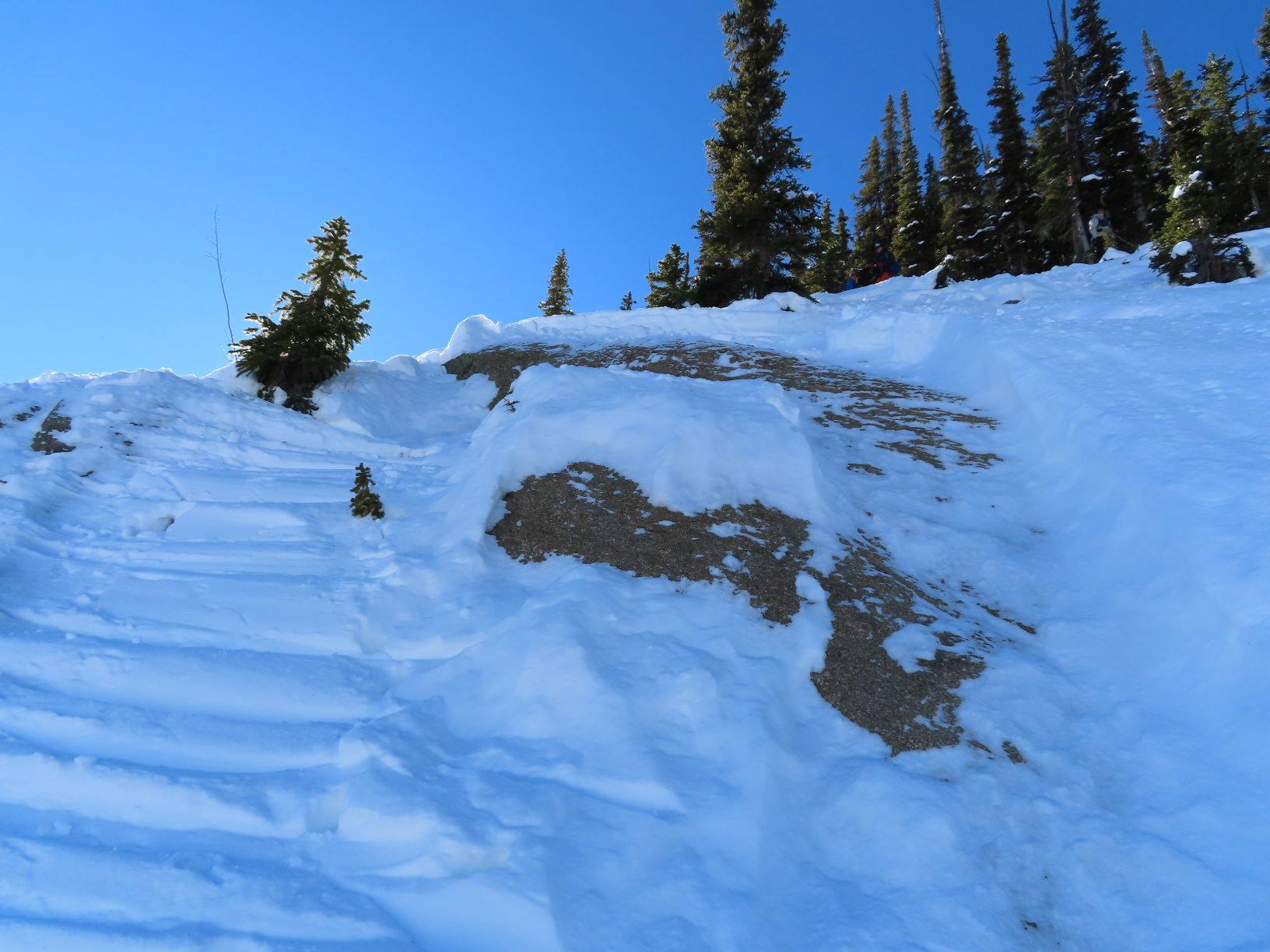
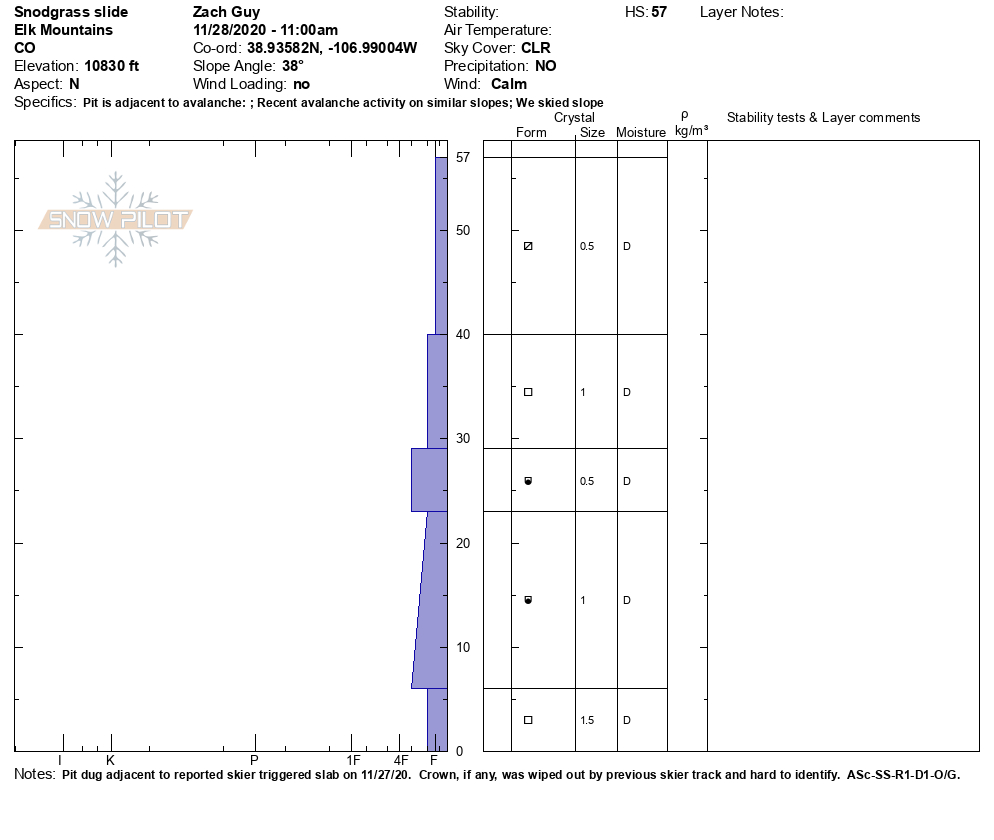
Investigated the reported skier triggered slab from yesterday. The slab was about 10 feet wide, 18″ thick, on a very steep, convex rock feature. It was a soft slab that appeared to fail on 1.5mm faceted grains on the ground. It entrained weak, faceted snow as it ran downhill. SS-ASc-R1-D1-O/G

Weather: Clear, calm winds, mild and inverted temps.

Snowpack: Widespread weak layer growth on all aspects and elevations! 2 to 4 mm surface hoar is developing on shady aspects up to about 10,000′, and pockety above that. Near-surface faceting in the recent snow is rampant on all aspects. The near surface facets are above a melt-freeze crust on SE-S-SW aspects. The entire snowpack is getting noticeably weaker in the past few days, becoming unsupportive and faceted throughout. We did not observe any signs of instability other than facet sluffing today. The current snowpack will become a problematic weak layer when/if we get a significant load.


Photos: