Zone: Northwest Mountains Location: Gunsight road Aspect: North East Elevation: 10,000
Avalanches: Intentionally triggered several road banks and small steeper rolls. All D1-1.5. Persistent slab problem was very reactive today. Poor vis limited obs in other areas. Weather: Warmest in the morning with cold temps in the afternoon. Light snow and light winds throughout the day with maybe an additional inch or two of accumulation. Snowpack: It’s broke. Multiple large booming collapses. Many shooting cracks. Surprisingly some steeper slopes around 35* cracked but did not slide. Snowpack was less reactive in areas that slide last week.
Avalanches: No visibility to see if any slide activity. Weather: There was 10½” new snow with water total of 0.75″ as the snowpack sits at 32½”. Wind is calm now and the snowfall has stopped. Mild with yesterday’s high 24ºF and the current is the morning low of 11º.
Zone: Northwest Mountains Location: Slate River drainage Aspect: North East, East Elevation: 9,000 to 11,200 ft
Avalanches: Decent storm slab cycle last night from Happy to Climax to Schuylkill Ridge along with a few persistent slab avalanches
Happy Chutes: Lots of small slabs and sluffs, mostly D1. A D2 persistent slab
Climax: Debris through several of the chokes, looked like more shallow storm snow instabilities but light was flat, probably D1.5 to D2.
Schuylkill: Numerous storm slabs about a foot deep that ran near to the bench, D1.5 to D2. Two small persistent slabs on lower rollers that either ran last night or today. We remotely triggered two small persistent slabs on small terrain features, about 3 feet thick.
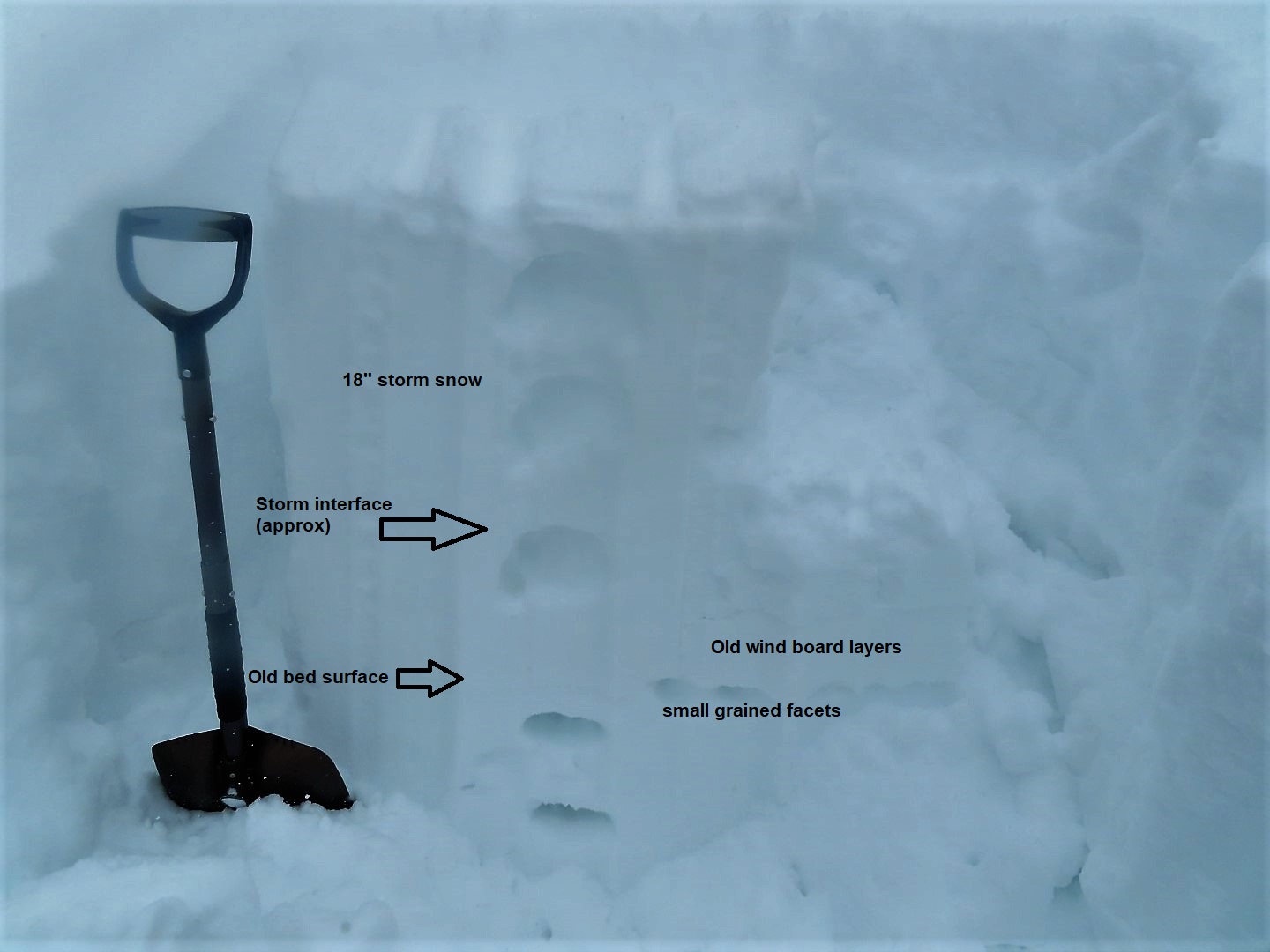
Wash Gulch: Plow triggered persistent slab, D2. Weather: Light snowfall in the morning. Light winds. About an inch of accumulation. Overcast in the Upper Slate, broken skies near town. Snowpack: Numerous large collapses in open slopes on low angled terrain and in small clearings in steeper trees. Storm snow is about 12″ to 15″ below treeline and 18″ near treeline, fist hard. Persistent slab structure is about 3 feet thick below treeline (Fist down to 4Finger). Cracking at or near the storm interface, especially as we gained elevation. We tested for “repeat persistent slab structure” in terrain that slid earlier this month. The structure was not reactive in pits, but there is still a lingering persistent weak layer near the ground, just denser and smaller with less of a slab than a pristine snowpack that hasn’t slid.
Photos:
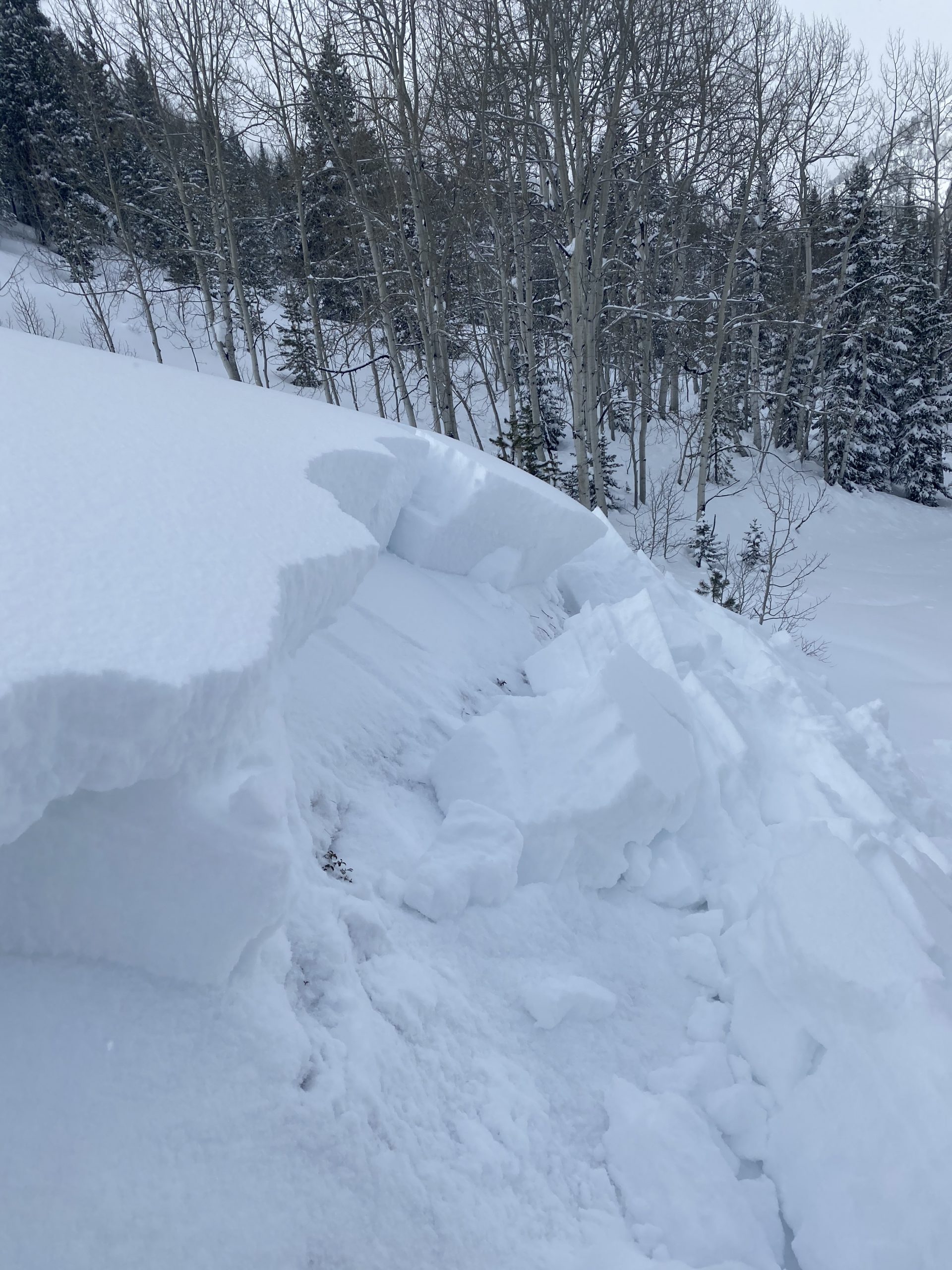
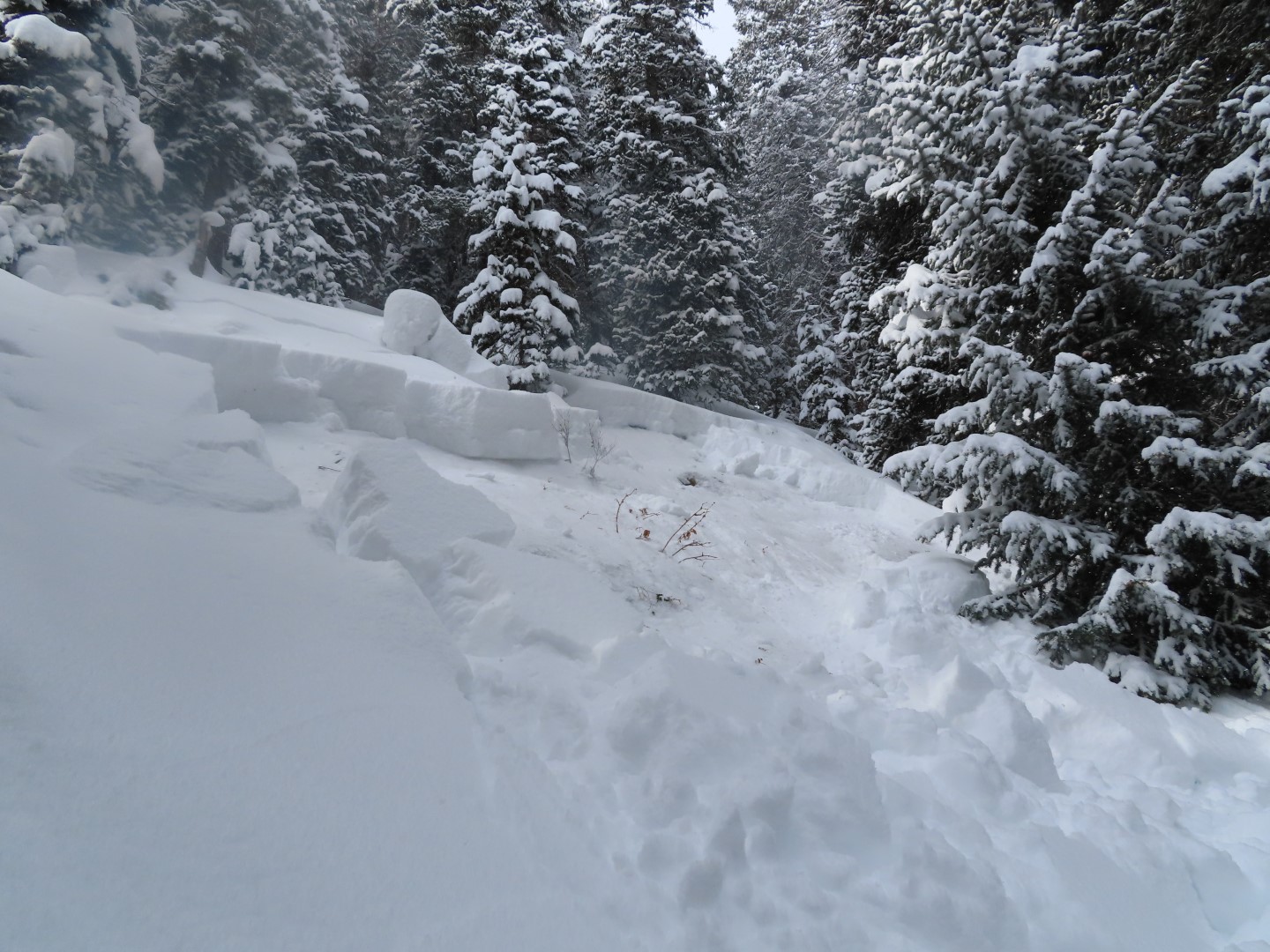
Storm slabs about a foot thick that ran last night NTL
Plow triggered D2 persistent slab today
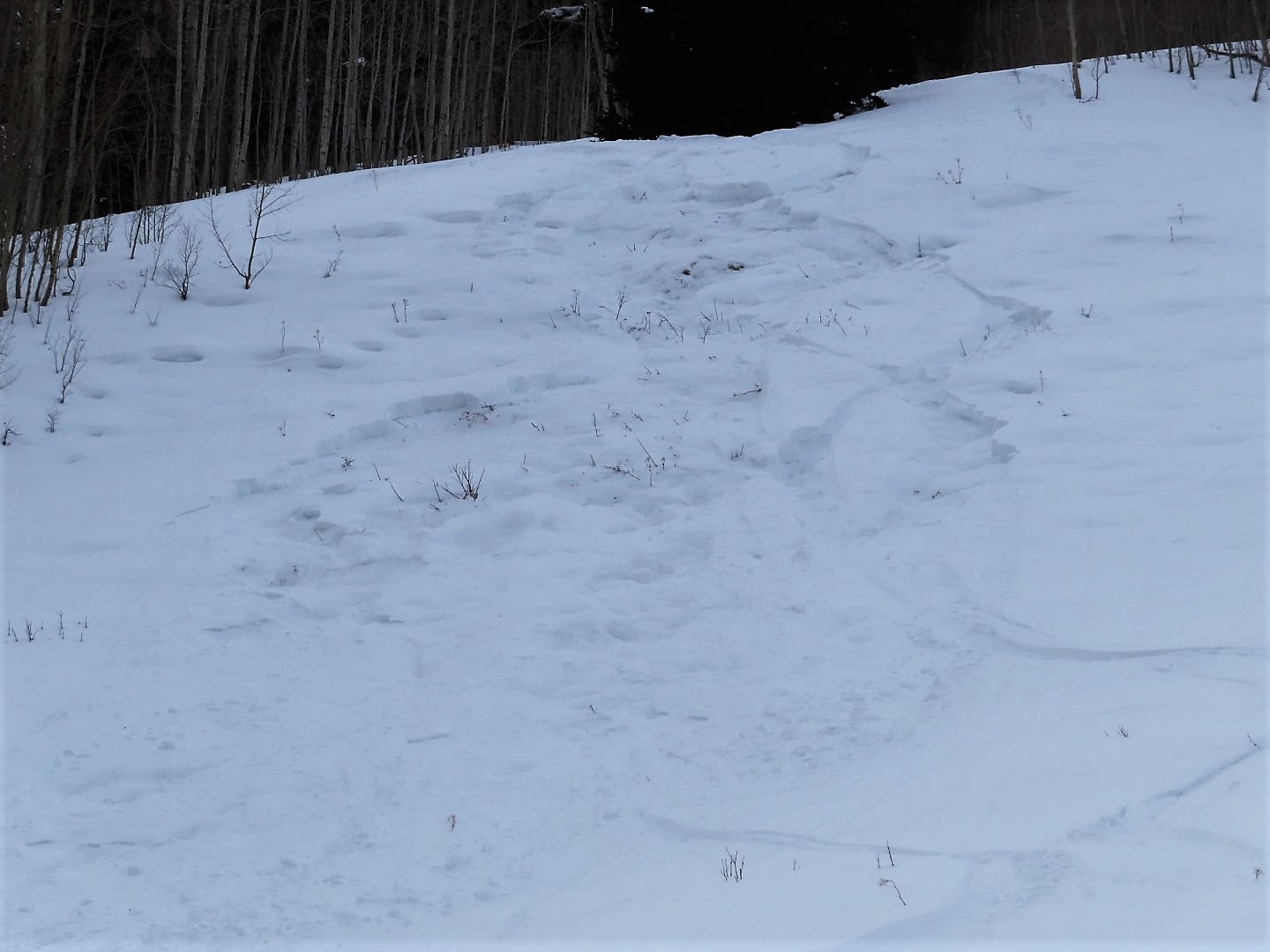
A couple small persistent slabs on Schuylkill rollers
Storm snow cracking
Checking for potential “repeat offender persistent slabs” on a slope that ran earlier this month. The bedsurface is 1mm, 4F facets
D2 storm slab
Two weak interfaces in the snowpack
Remotely triggered persistent slab about 3 feet thick on a small terrain feature
Remotely triggered persistent slab on a small terrain feature.
Zone: Southeast Mountains Location: Lower Snodgrass Aspect: North East Elevation: 9800
Avalanches: None noted Weather: Light snow throughout the day with even lighter winds. Mild temps felt like low 20’s. New snow accumulation of about 3-4” from overnight and through the day. Snowpack: Weak AF. There is about a foot and a half of snow where we were. 4” below the surface is a thin buried weak layer (suspect SH/SF) which popped out in CT tests but did now propagate in ECTs. This will be another one to watch with this incoming storm or the next. Midway through the snowpack is the horribly weak weak layer. 2-4mm facets. This was resting on a 2” thick decomposing crust, with weak faceted snow (just becoming DH) on the ground. Multiple Easy to Moderate CT and ECTP test results on this weak layer, all above the crust.
Avalanches: Intentionally triggered a couple of small persistent slabs, about 15″ thick and up to 50 feet wide on small terrain features, failing on fist hard facets near the ground. Weather: Light snowfall mid-afternoon started picking up in intensity to S2 around 3:30 p.m as we were leaving. Calm winds. Snowpack: About 3″ of new snow so far. Frequent rumbling collapses and shooting cracks traveling about 30 to 50 feet. Slabs were somewhat discontinuous across terrain due to previous wind loading and scouring effects. It was easy to trigger collapses in the transition from stiffer, supportive snow to unsupportive, softer snow or vice versa. Of the few test slopes we poked at, a couple slid, while most just cracked and slumped.
The 12/22 interface is down about 5″ (mix of near surface facets and surface hoar). It was producing cracking underfoot but not shooting past skis.
Photos:
Intentionally triggered persistent slab
Looking up at the crown
This steep slope cracked and moved a few inches downhill
Date of Observation: 12/28/2020 Name: Irwin Guides
Zone: Northwest Mountains Location: Irwin Tenure
Avalanches: SS-ASc-D1.5-O 40cmx5mx100m Thorntons. Remaining persistent slab is notably more resistant to triggers than last week. This past weeks skiff of new snow sluffs easily off old bed surfaces. Anticipate repeat offenders. Snowpack: Continued local collapsing in previously untrammeled areas.
Date of Observation: 12/27/2020 Name: Zach Kinler Zone: Northwest Mountains Location: Evans Basin
Aspect: East, South East, South
Elevation: 9300′-11,000′
Avalanches: No recent activity
Weather: Mostly sunny and pleasant on this afternoon tour. Winds were calm in sheltered areas. Highs remained below freezing.
Snowpack: The snowpack is still grumbling a bit, like a Stubborn old man sending back soup at the deli. There are a few steep slopes that have not avalanched and SOME of them produced collapses and cracking while others did not. The slopes that cracked did not run. Sensitivity has decreased however specific areas require thoughtful evaluation.
2-3″ new snow. Toured mainly on aspects from S through E. HS 60-70cm in sheltered terrain. Recent crusts from 12/22 and 12/26 have welded themselves into one thick crust 2-3 inches thick on steep south-facing slopes. Moving towards east, the crusts taper with faceting around the 12/22 MFcr. Small surface hoar capping facets was found at this interface once on due east.
Mixed feedback from these slopes. No avalanches but still cracking/collapsing.
The 12/22 interface showed easy shearing in tilt tests. East, 11,000′
Zone: Southeast Mountains Location: West Brush Creek Aspect: North East, East Elevation: 9,900-11,800′
Avalanches: Skier triggered a persistent slab avalanche on an east aspect BTL. The slab didn’t propagate widely (about 20 feet) and was about a foot thick, small in size. In steep, sheltered terrain that has previously avalanched, we triggered several small dry loose avalanches to the ground.
Noted a crisp looking crown above East River (east aspect BTL, D1) that seems as if it could have run last night. It was triggered by a sluff from above.
Noted a handful of older slab avalanches that ran during the wind event a few days ago on leeward aspects near treeline. Weather: Clouds increased throughout the day. Light ridgetop winds. A few flakes started falling this afternoon. 1″ of snow last night. Snowpack: Despite the persistent slab structure clearly faceting and losing cohesion, we were impressed by widespread collapses, many of which radiated cracks up to 100 feet away. Most low angle, open slopes that we traveled on collapsed audibly and produced shooting cracks. If there was a pattern to the slopes that produced far-reaching collapses, I would say it was most commonly where there’s a residual crust layered between the basal facets (on slightly sunnier inclines or aspects). The basal facets are evolving into chains of depth hoar here. (3mm, striated, Fist- ) The slab above is about a foot thick, fist hard and faceting. Near ridgelines at treeline, there are lobes of much harder, thicker slabs and areas where the snowpack is wind eroded almost to the ground. Collapsing was less common in the wind hardened areas, but we still got several very loud ones triggered from where the slabs thin.
In spite of what was clearly an unstable snowpack, the instabilities didn’t translate well into the avalanche terrain that we tested with remote collapses or ski cuts (on smaller terrain features). On lower angled avalanche terrain (~30 to 35*), the slopes would crack, perhaps slump a few inches, but not avalanche. On steeper angled avalanche terrain (~37* +) it seemed that almost everything had previously avalanched; the snow depth was roughly 10″ and was facet sluffing to the ground.
The 12/22 interface is a few inches deep and is showing clean hand shears and minor cracking. The interface consists of near surface facets (northern half of compass) or small grained facets below or between crusts turning east or southeast.
Photos:
These slides looked fresh enough to have run last night
Shooting cracks on the road in front of WarPig, CBAC’s road hog
Collapses and radiating cracks
Shooting cracks and collapses
The snowpack structure below treeline
Weak AF
More collapses and cracks radiating across the slope
This is a windloaded start zone about 30 to 32 degrees in steepness. It produced a huge collapse but only slumped a few inches downslope.
Skier triggered persistent slab. Minimal propagation seems to be a result of the slab decaying and losing cohesion.