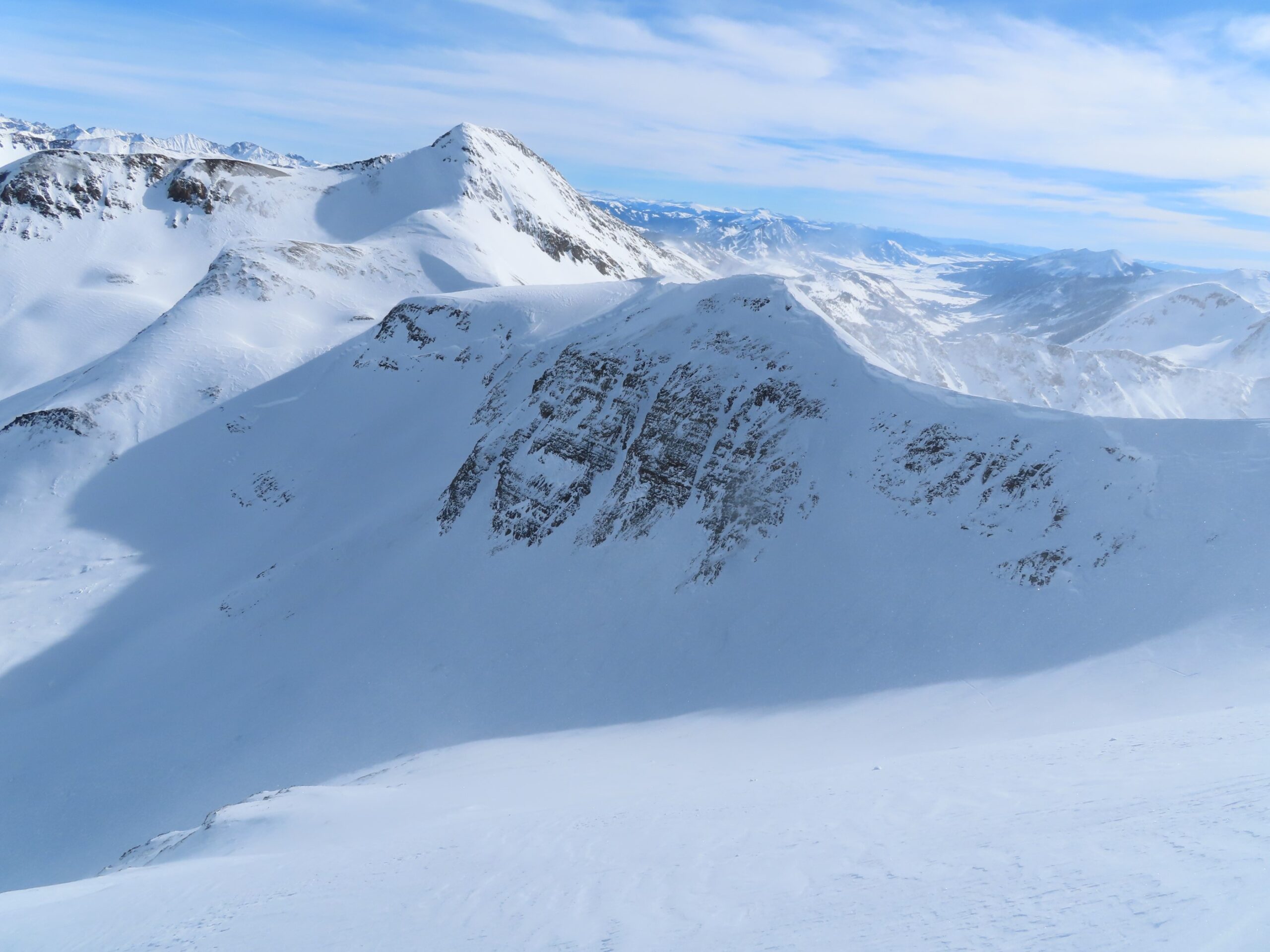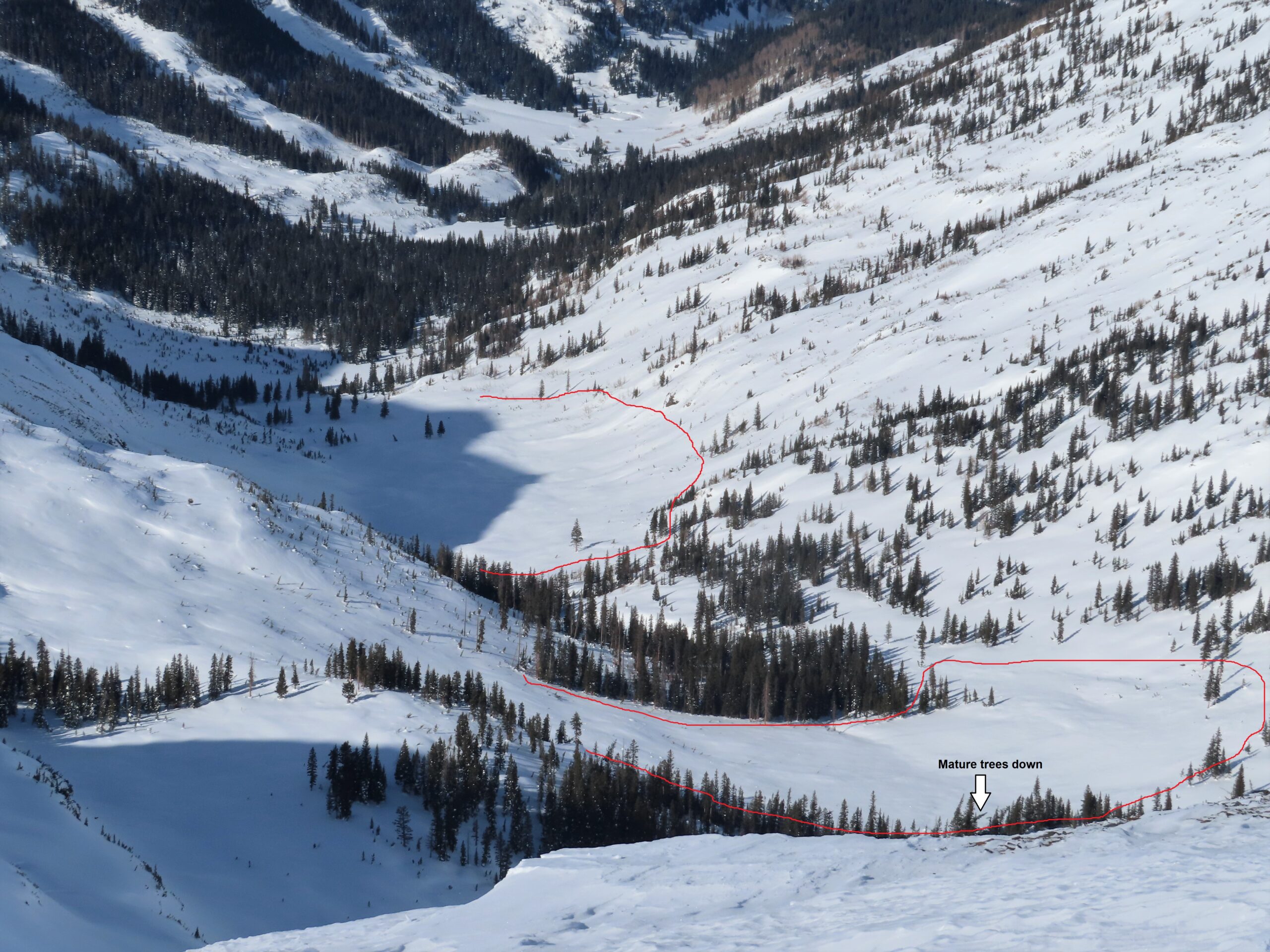

Fun Facts: 3rd and 4th Bowl of Mt. Axtell

CBACCBAC Observations

Date of Observation: 01/17/2022
Name: Zach Guy

Zone: Northwest Mountains
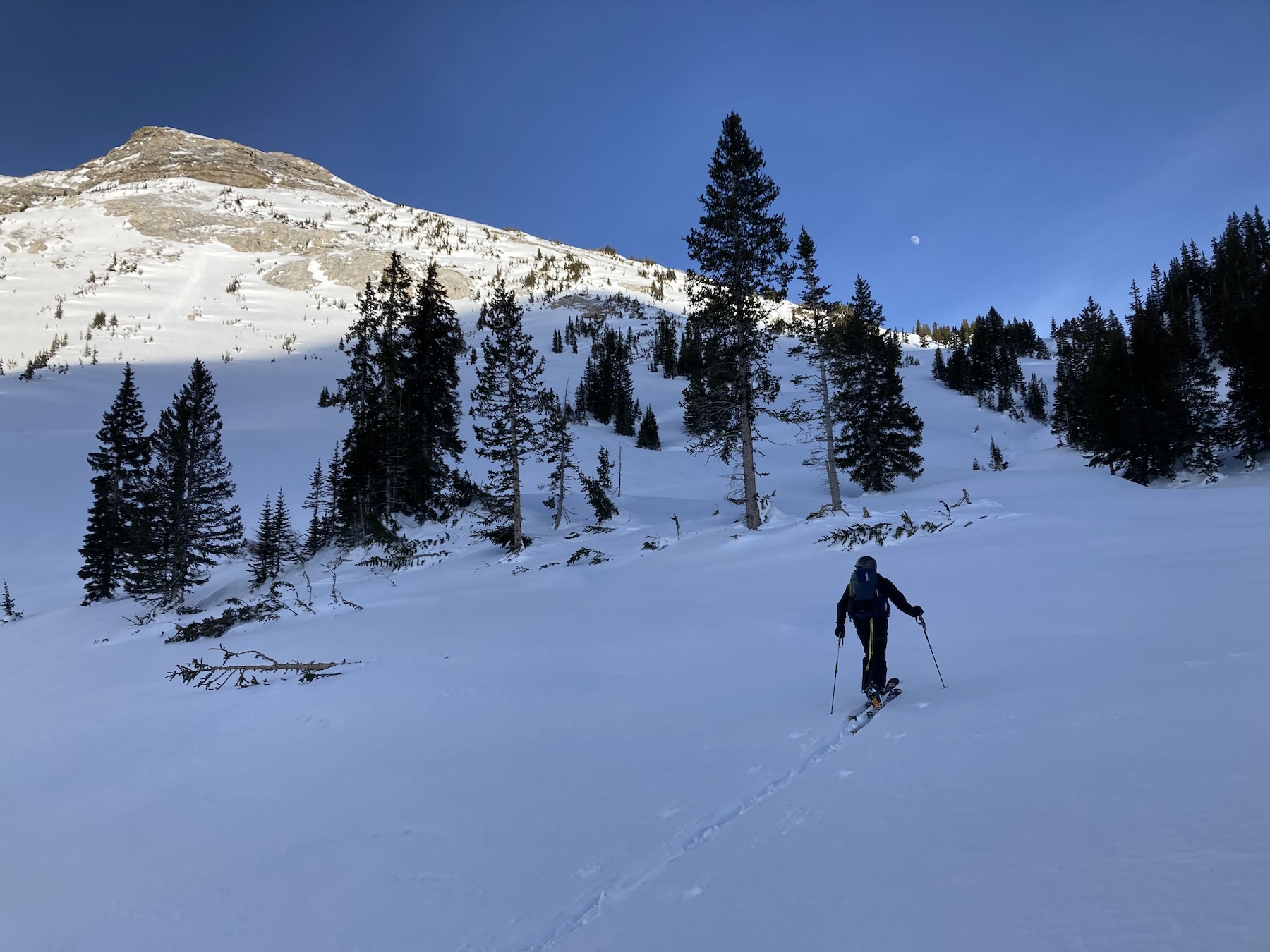
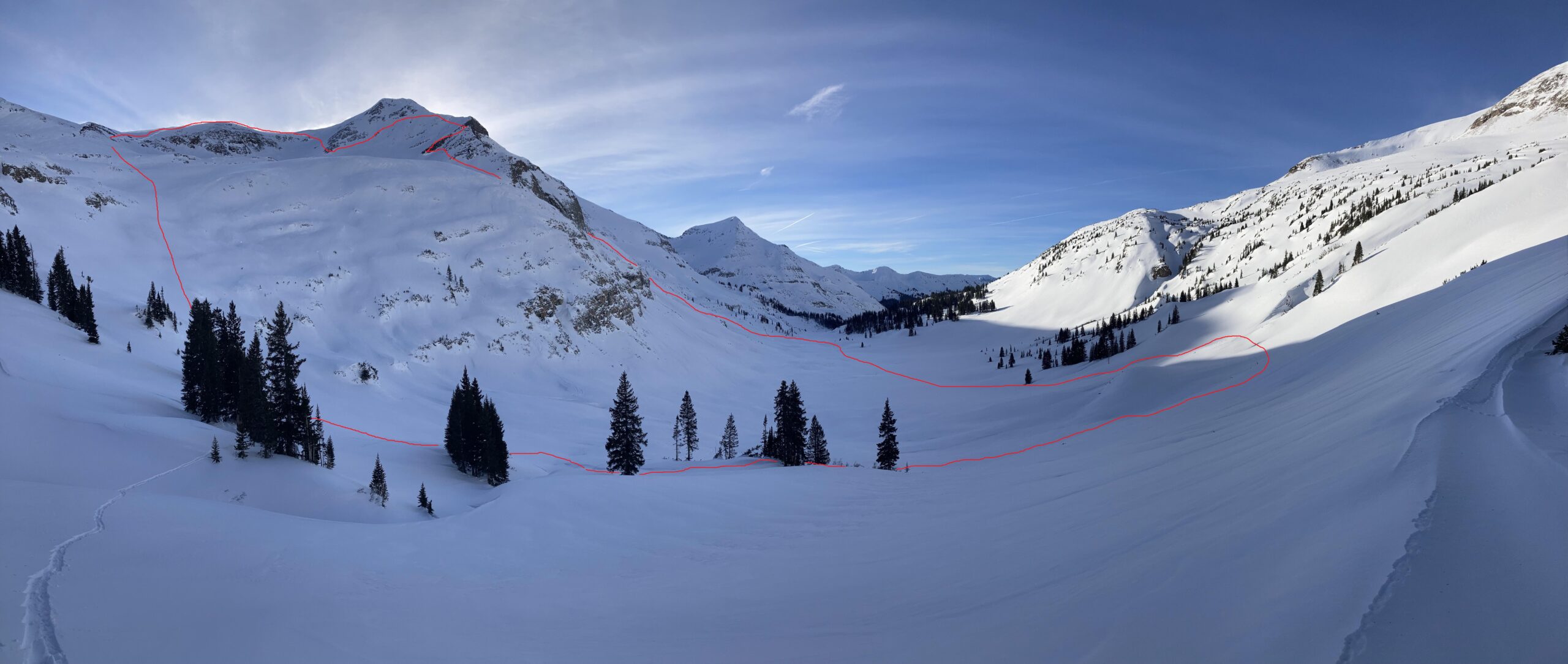
Route Description: Skied northerly aspects to 12,000 ft. on Axtell

Observed avalanche activity: Yes
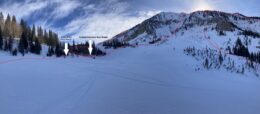
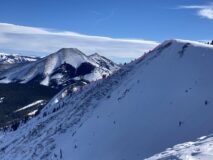
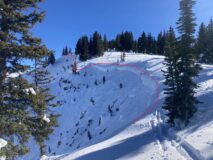
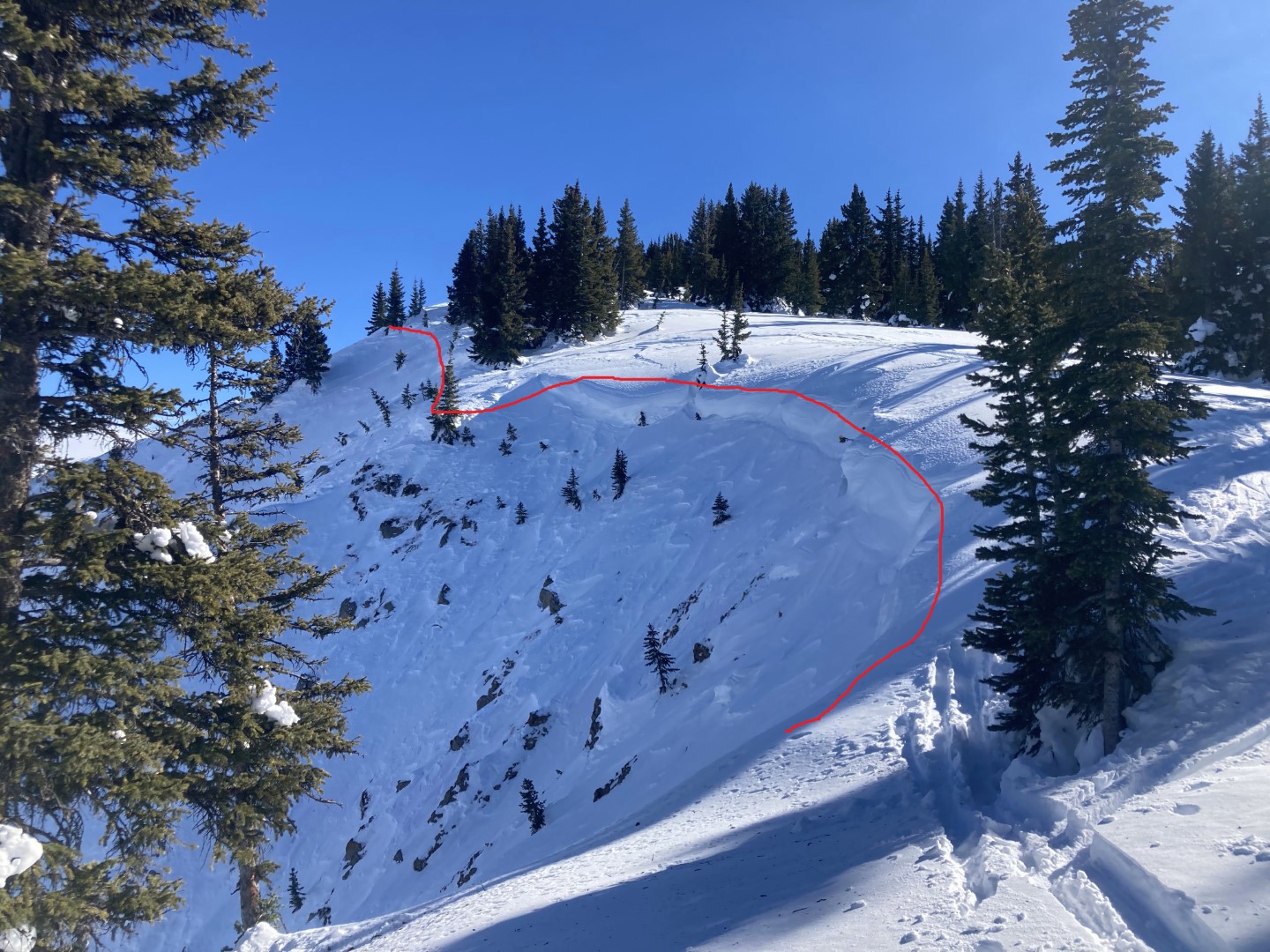
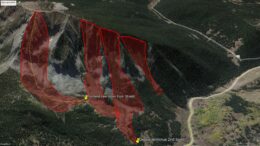
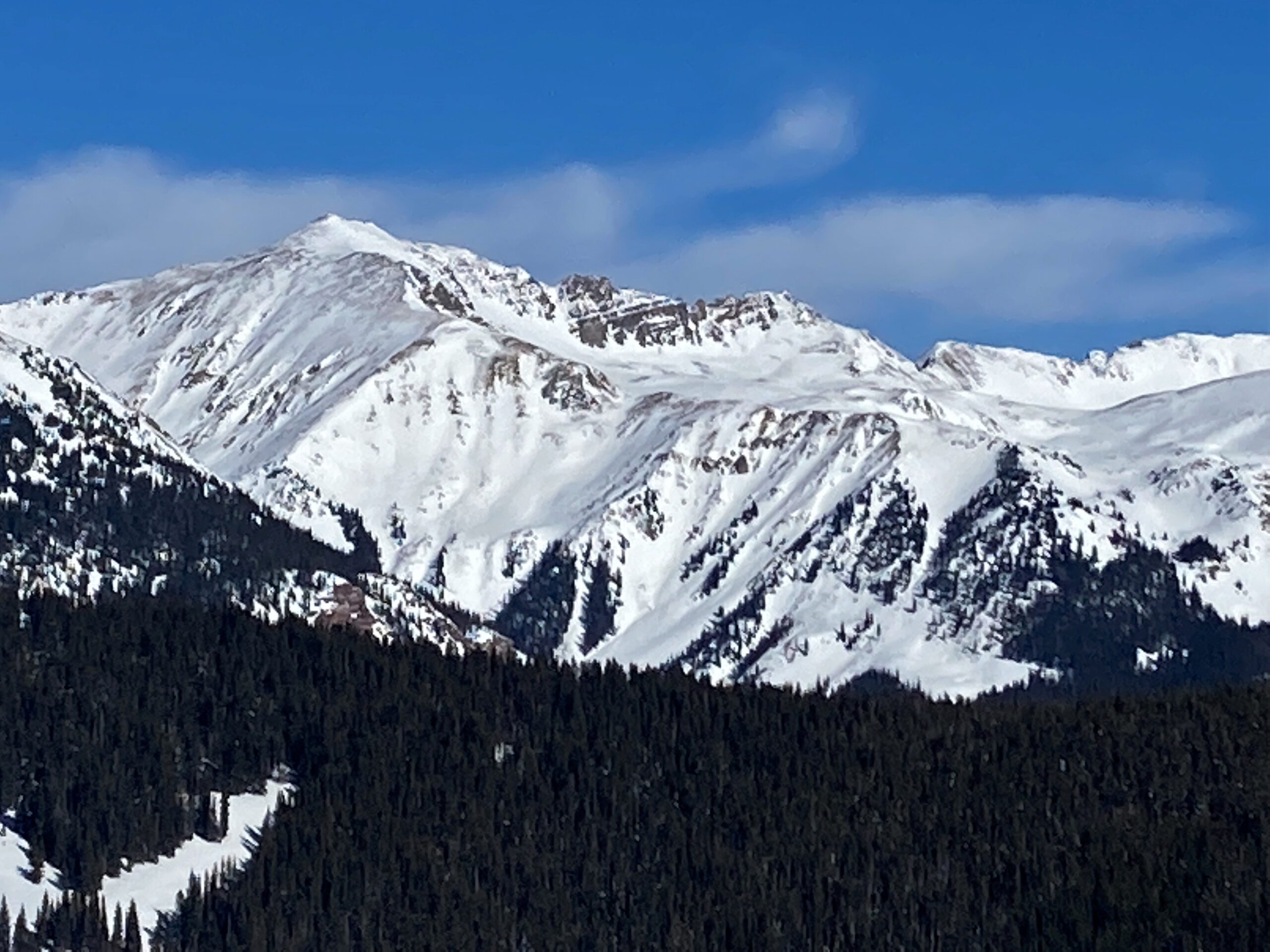
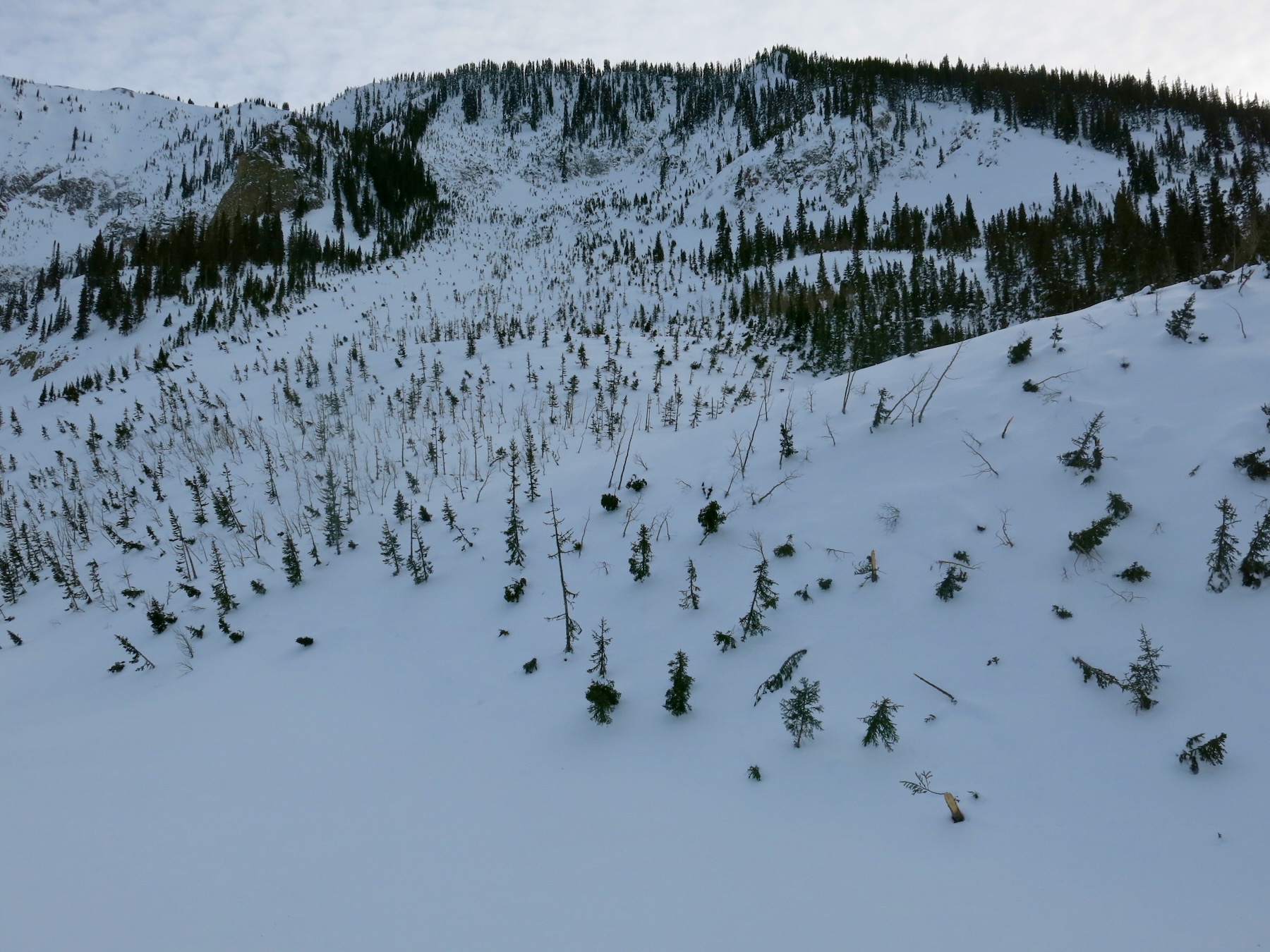
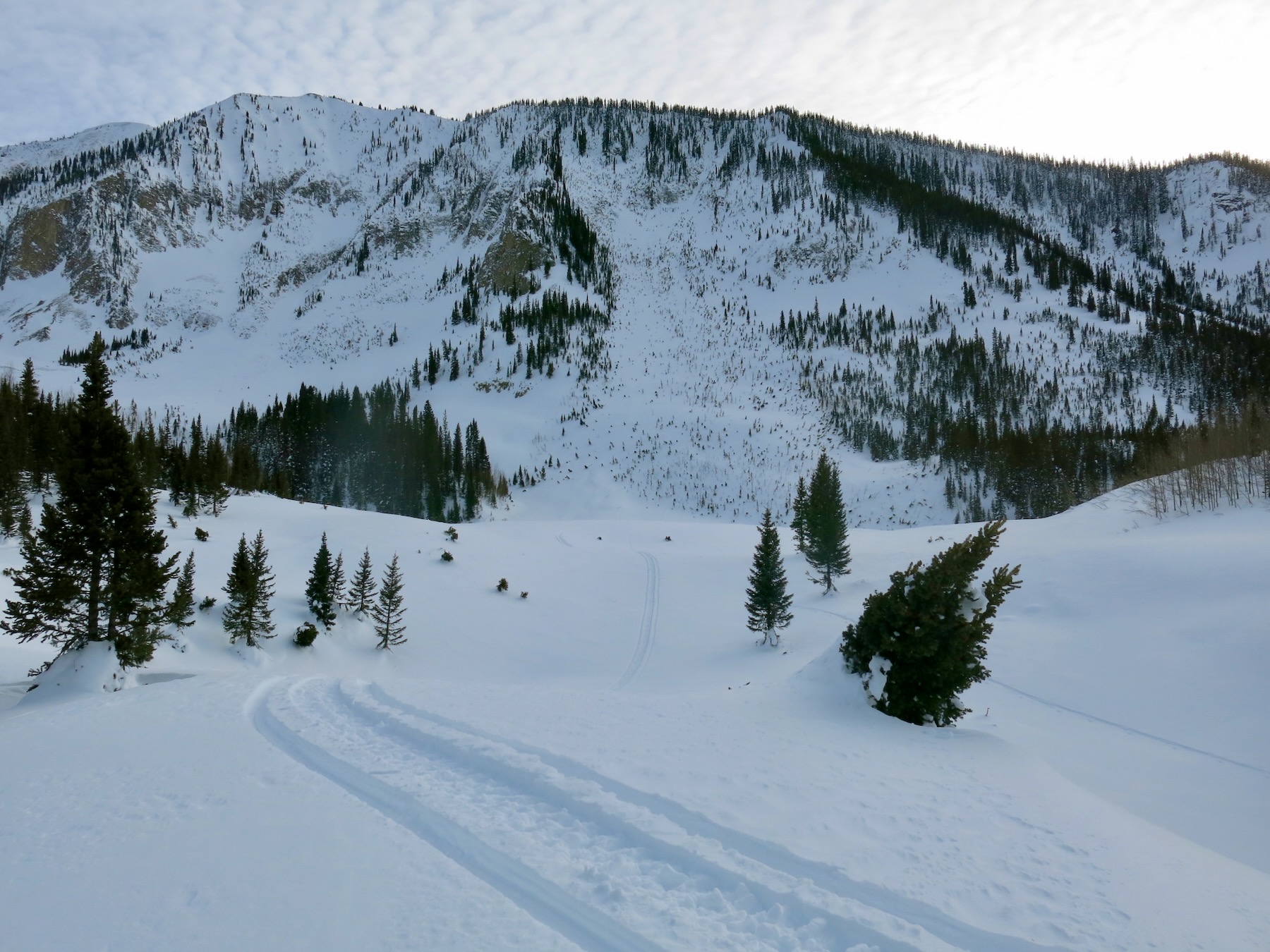
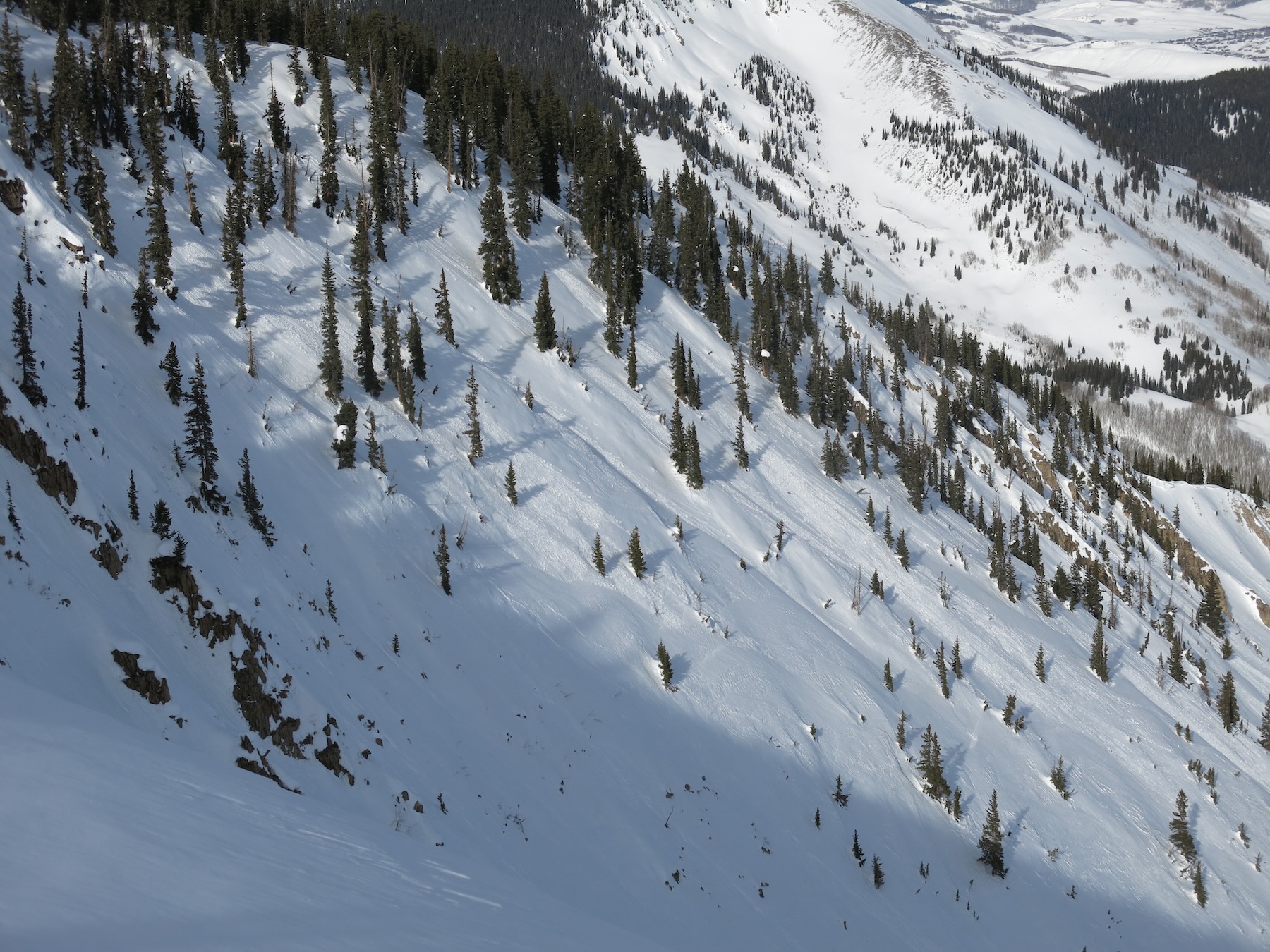
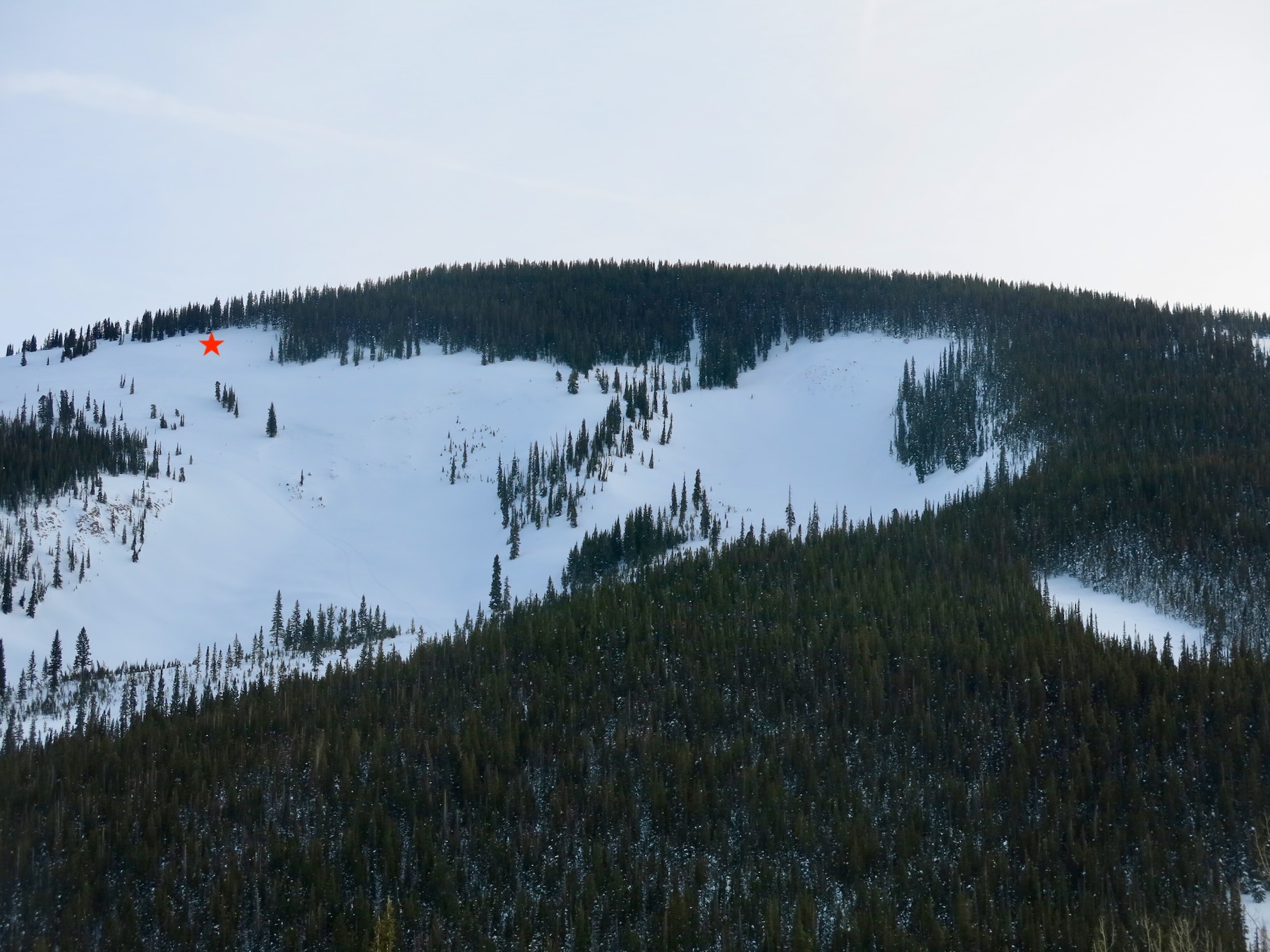
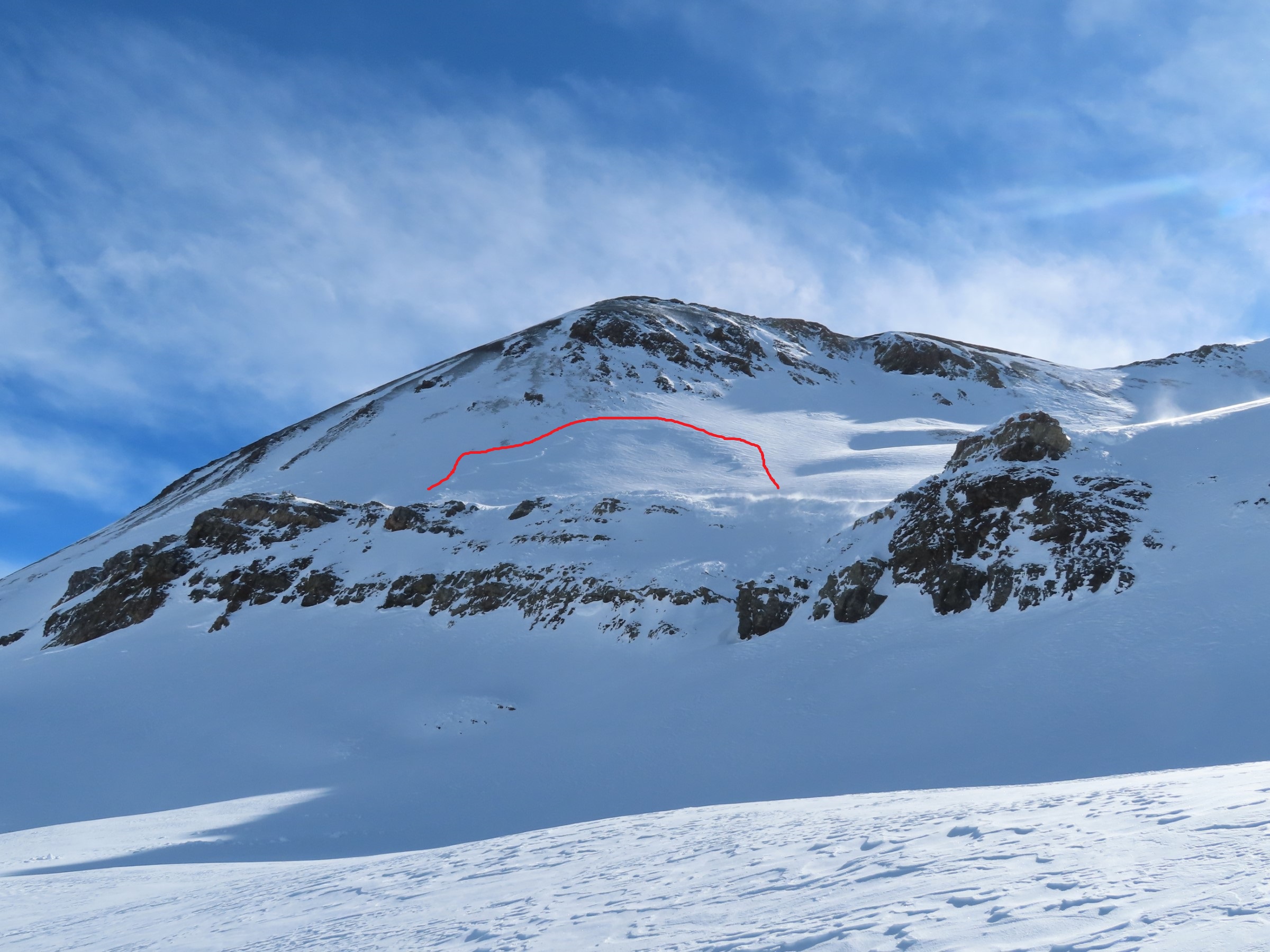
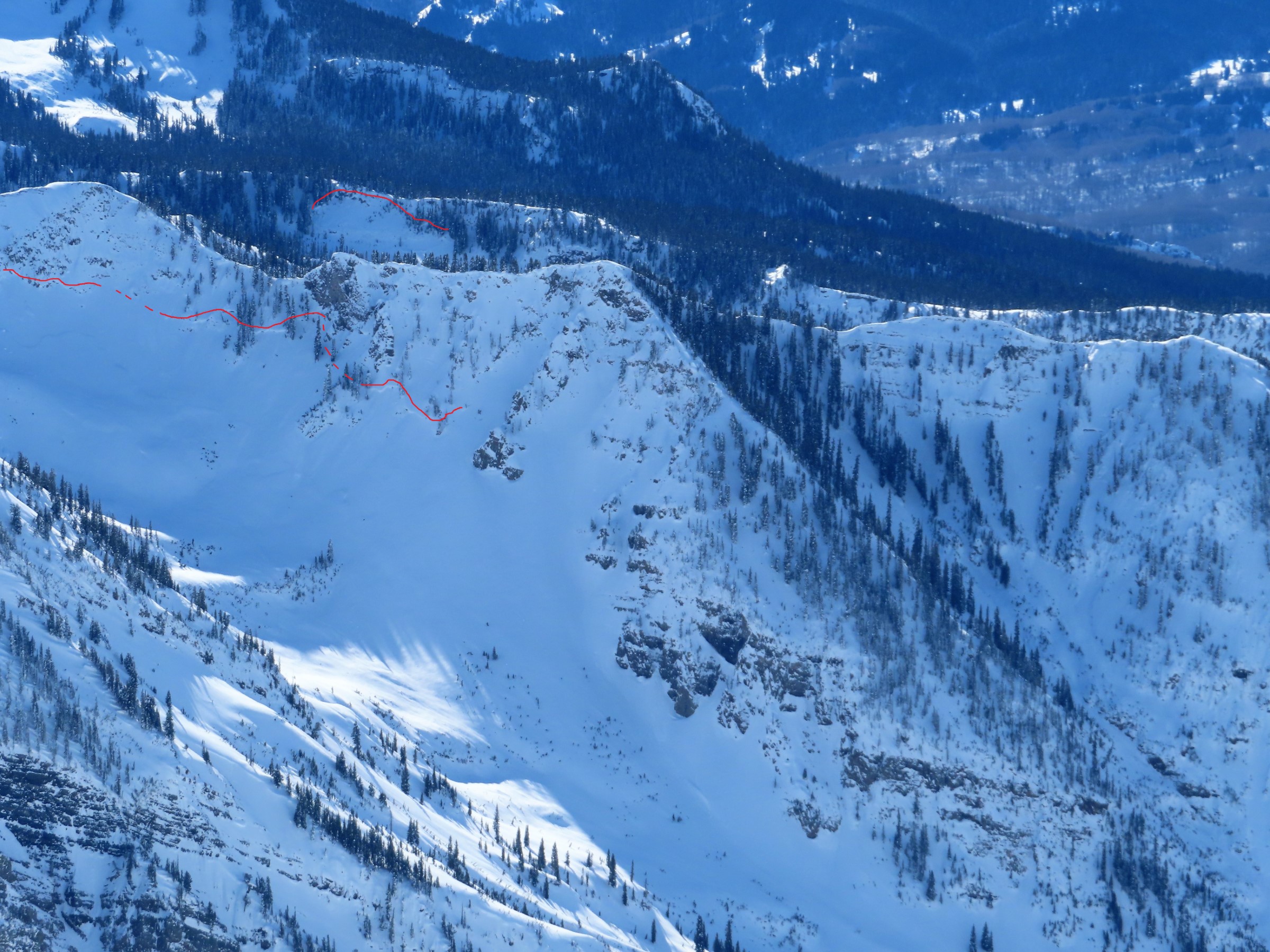
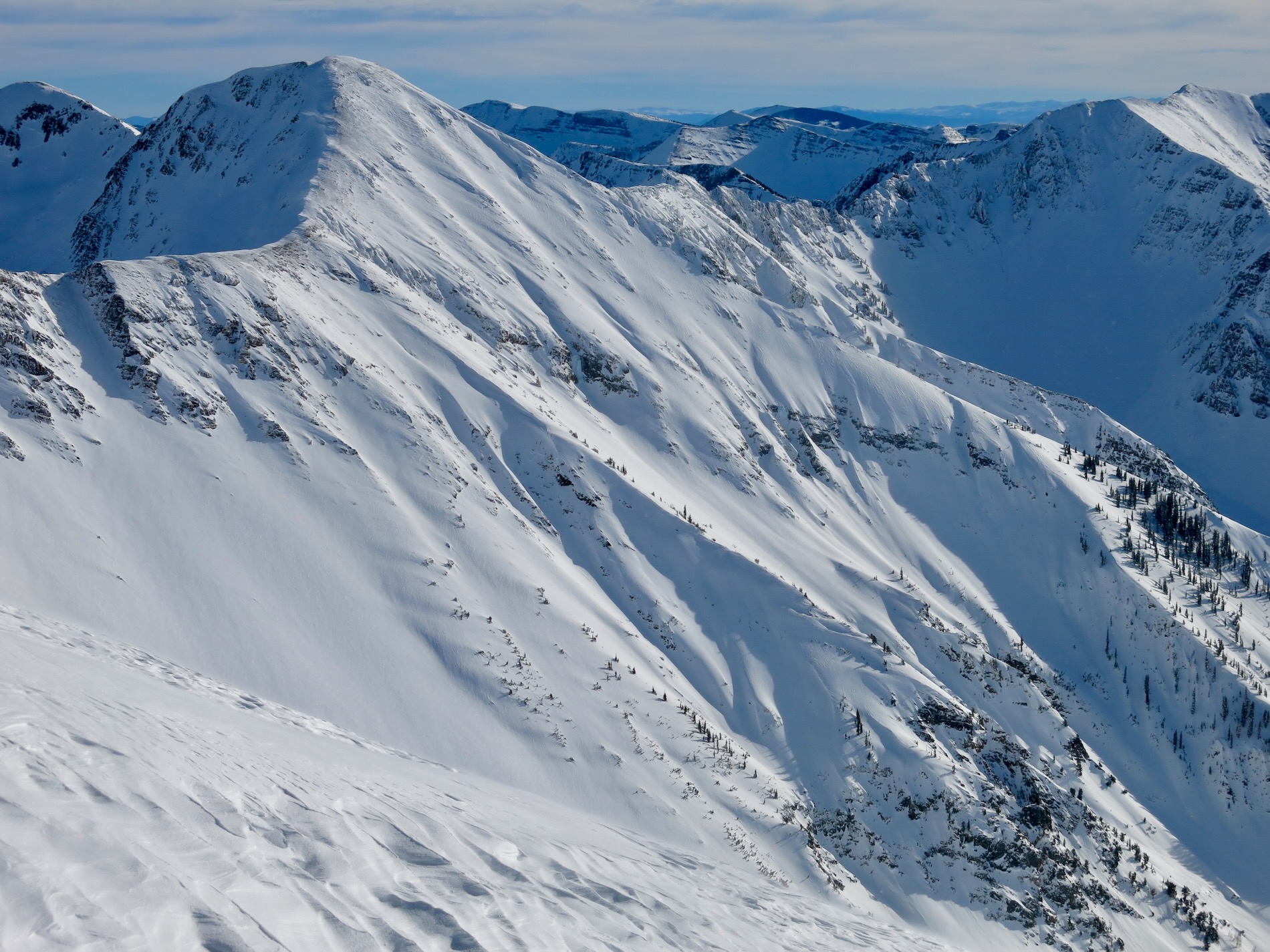
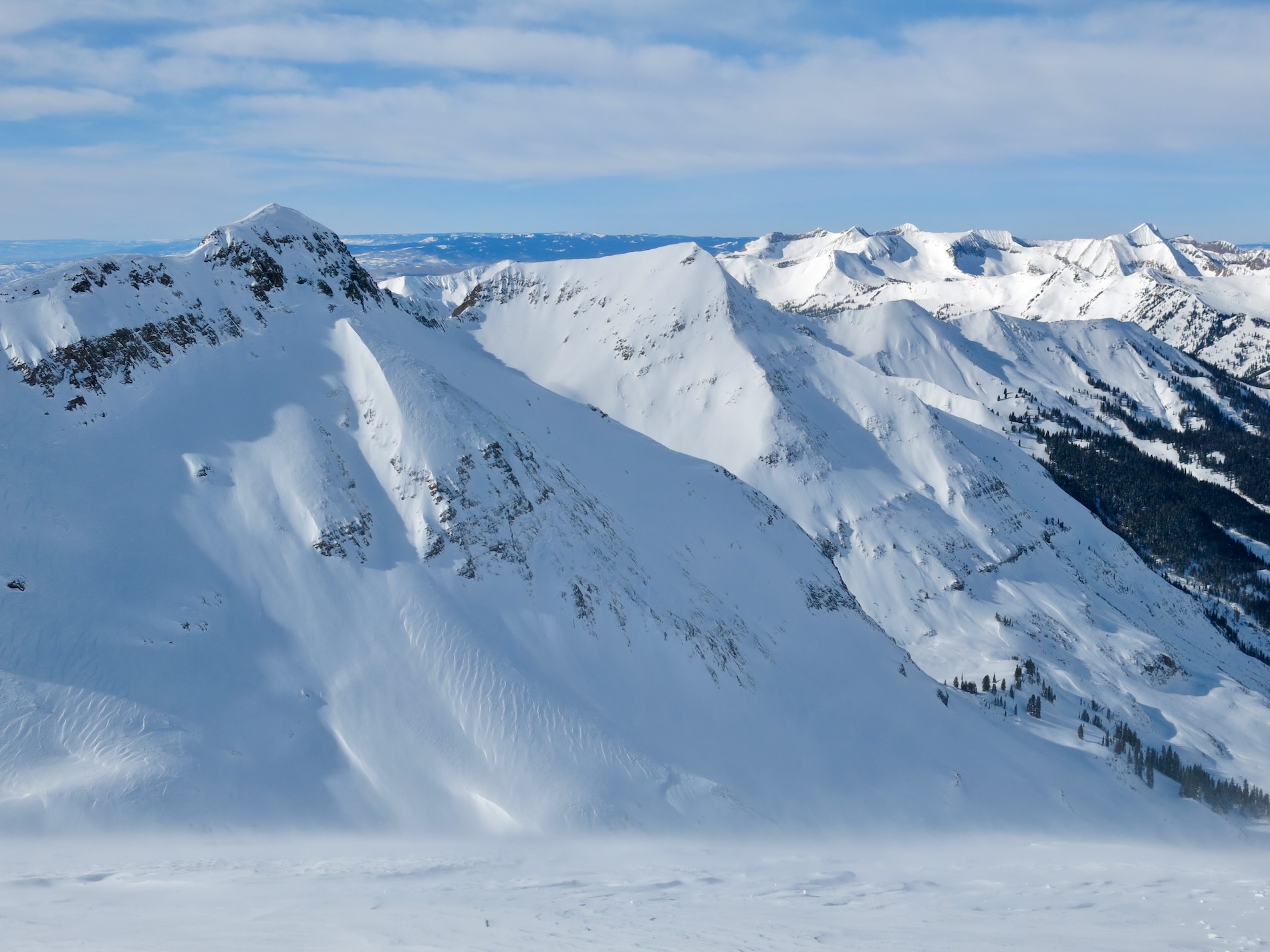
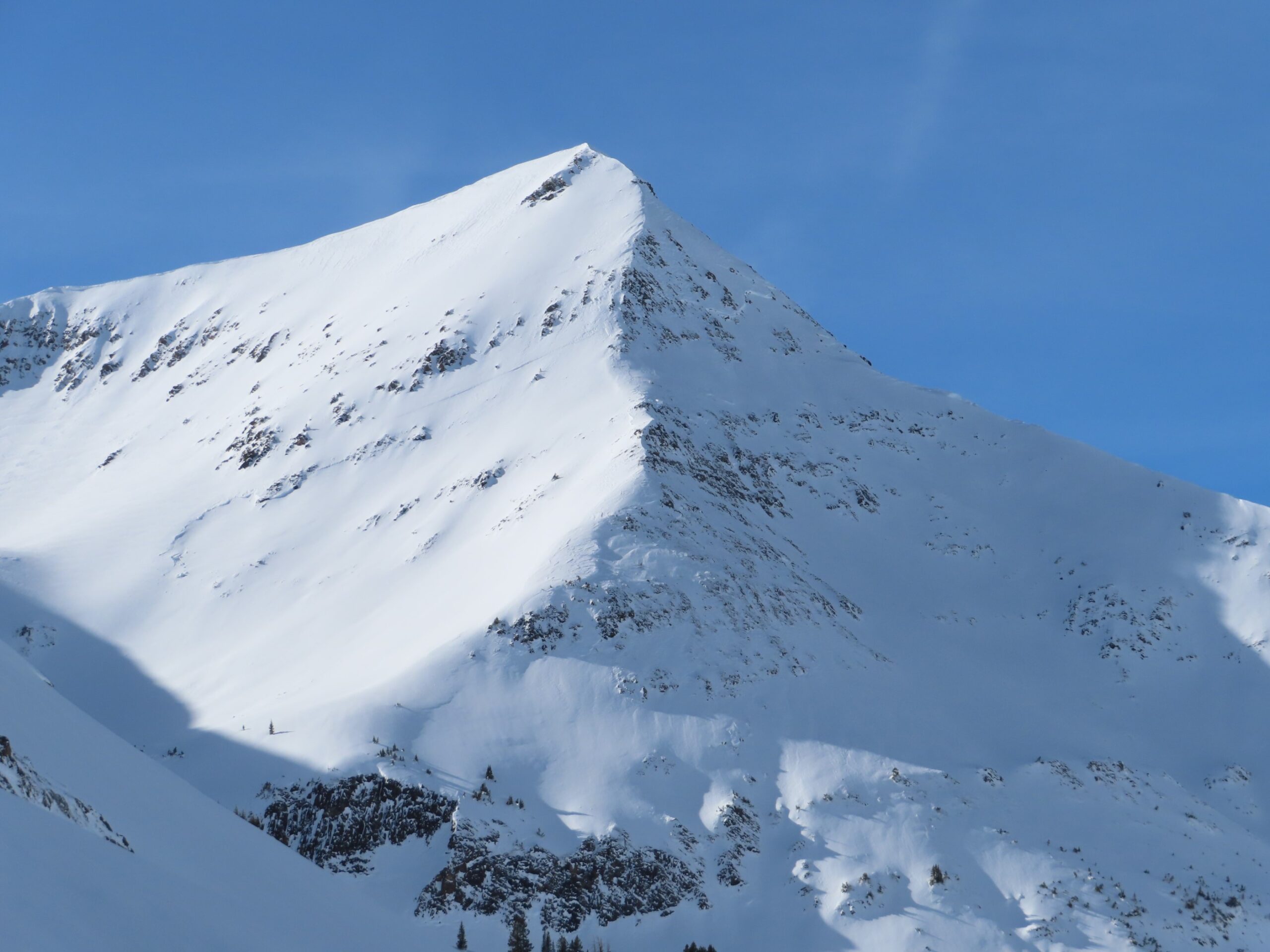
Avalanches: Nothing recent. Got a closer look at carnage from the last cycle in 3rd and 4th Bowl. There is a full-depth crown that runs from the edge of 2nd Bowl to the far edge of the Pencil, but not into Wang Chung. This slide snapped a bunch of trees up to a foot in diameter near its trim line, and the debris merged with 2nd Bowl debris. The crown might have connected to the 2nd Bowl avalanche (previously documented). The slide on the Shield (previously documented) ran just short of a mile, snapping mature trees in its trimline, well out of site of the start zone. The alpha angle from the furthest tree snapped is 19 degrees. There really isn’t anywhere within the runouts of 2nd, 3rd, or 4th bowls that you could have stood safely during December 31st.
Weather: Mostly clear. Inverted temps. Calm winds.
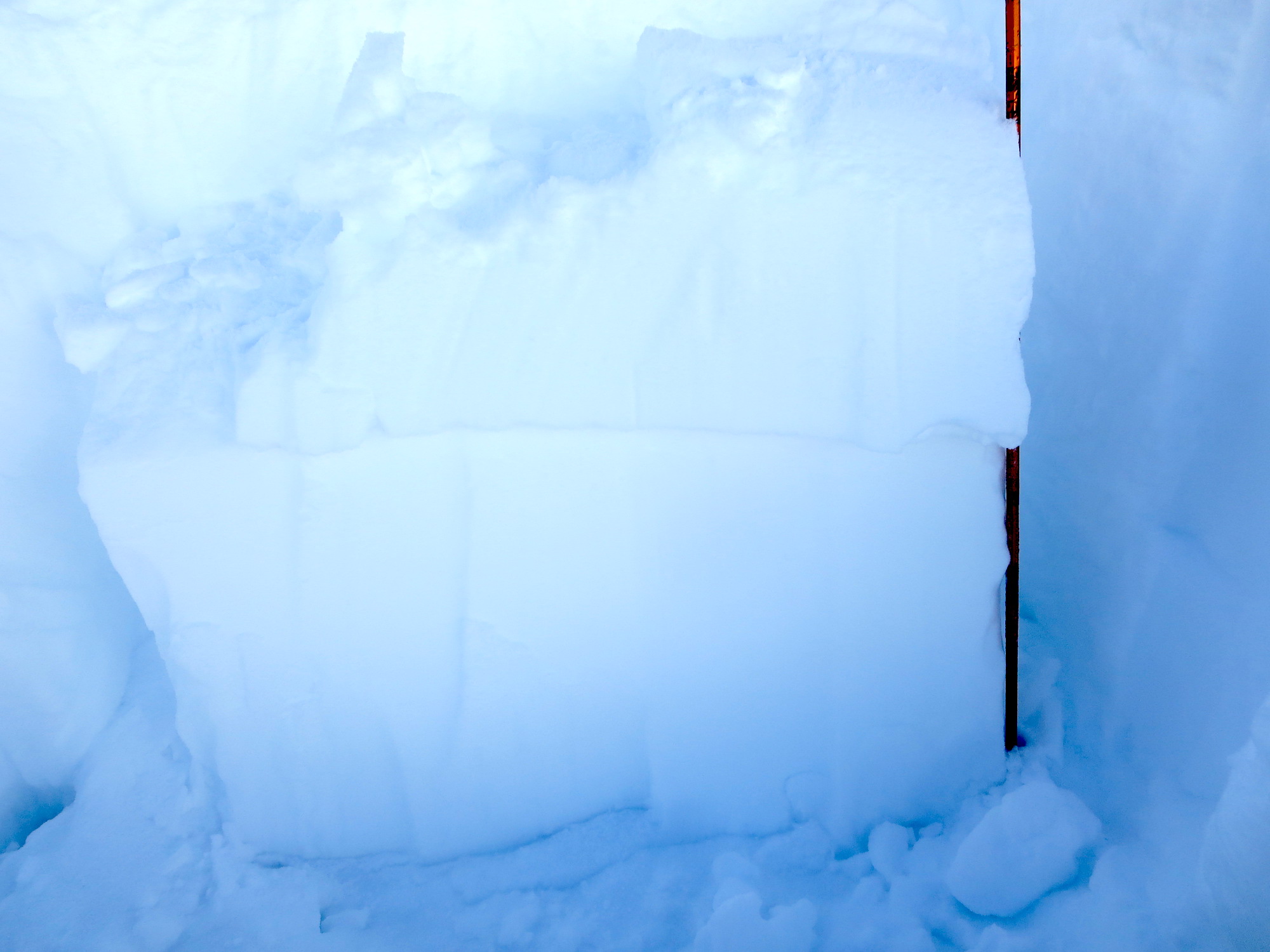
Snowpack: No signs of deep instabilities. Near-surface facet sluffing on open faces, changes to firm wind board in confined terrain where winds get channeled. The Pencil and Shield crowns broke at the ground, so the little snow that is there now is subject to strong temperature gradients. That’s a good recipe for advanced faceting and repeat offenders once the bedsurfaces get reloaded with snowfall. We encountered surface hoar growth as we descended into the inversion, at about 9600′

Photos:

5258

White Rock

CBACCBAC Observations

Date of Observation: 01/17/2022
Name: Evan Ross

Zone: Southeast Mountains
Route Description: Brush Creek to White Rock Mountain. 10,000ft to 13,500

Weather: Beautiful day. Few clouds. Steady light wind in the alpine.

Snowpack: Nice to keep stretching our legs into all parts of our forecast area while getting out to enjoy the sunshine. The alpine in this area is very blown and wind affected once you are above treeline. We didn’t observe any avalanche problems above treeline. Not much to report on really. Lots of ski traffic in the Brush Creek area and it’s great to see everyone out getting some cool lines that finally have a nice snowpack.

5257

Testing deep layers in West Brush Creek

CBACCBAC Observations

Date of Observation: 01/16/2022
Name: Zach Guy

Zone: Southeast Mountains
Route Description: West Brush Creek, generally traveled on E and NE aspects to 11,300 ft.

Observed avalanche activity: No
Weather: Calm winds. A few thin clouds this afternoon.
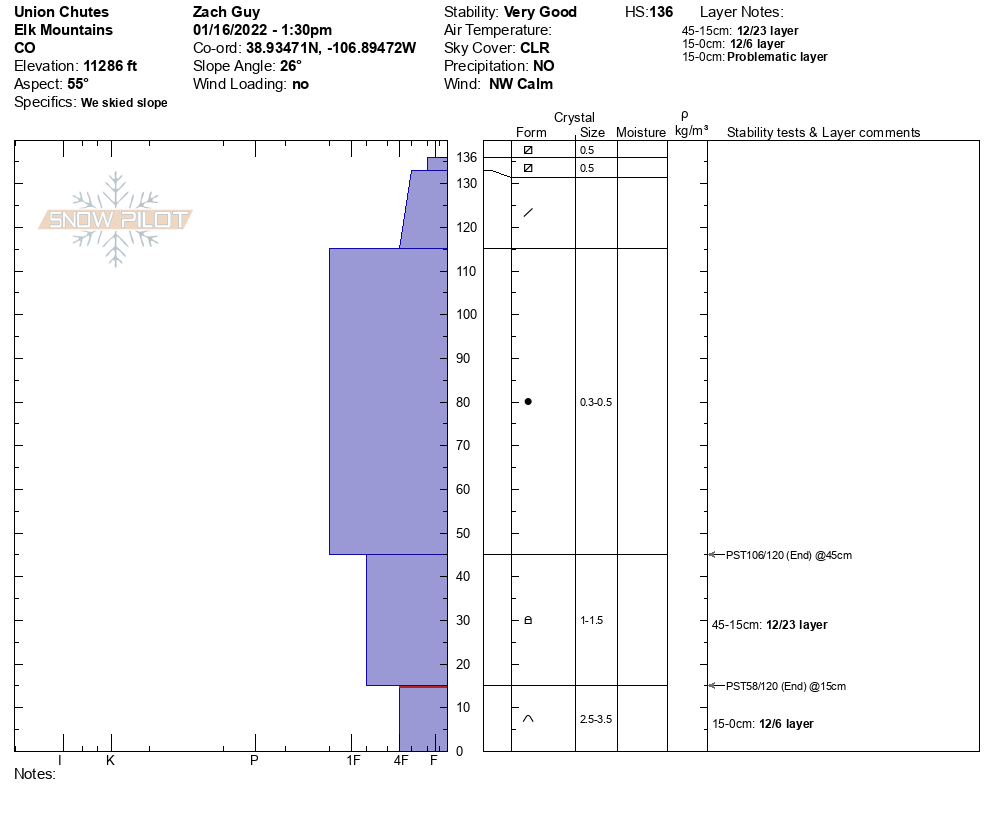
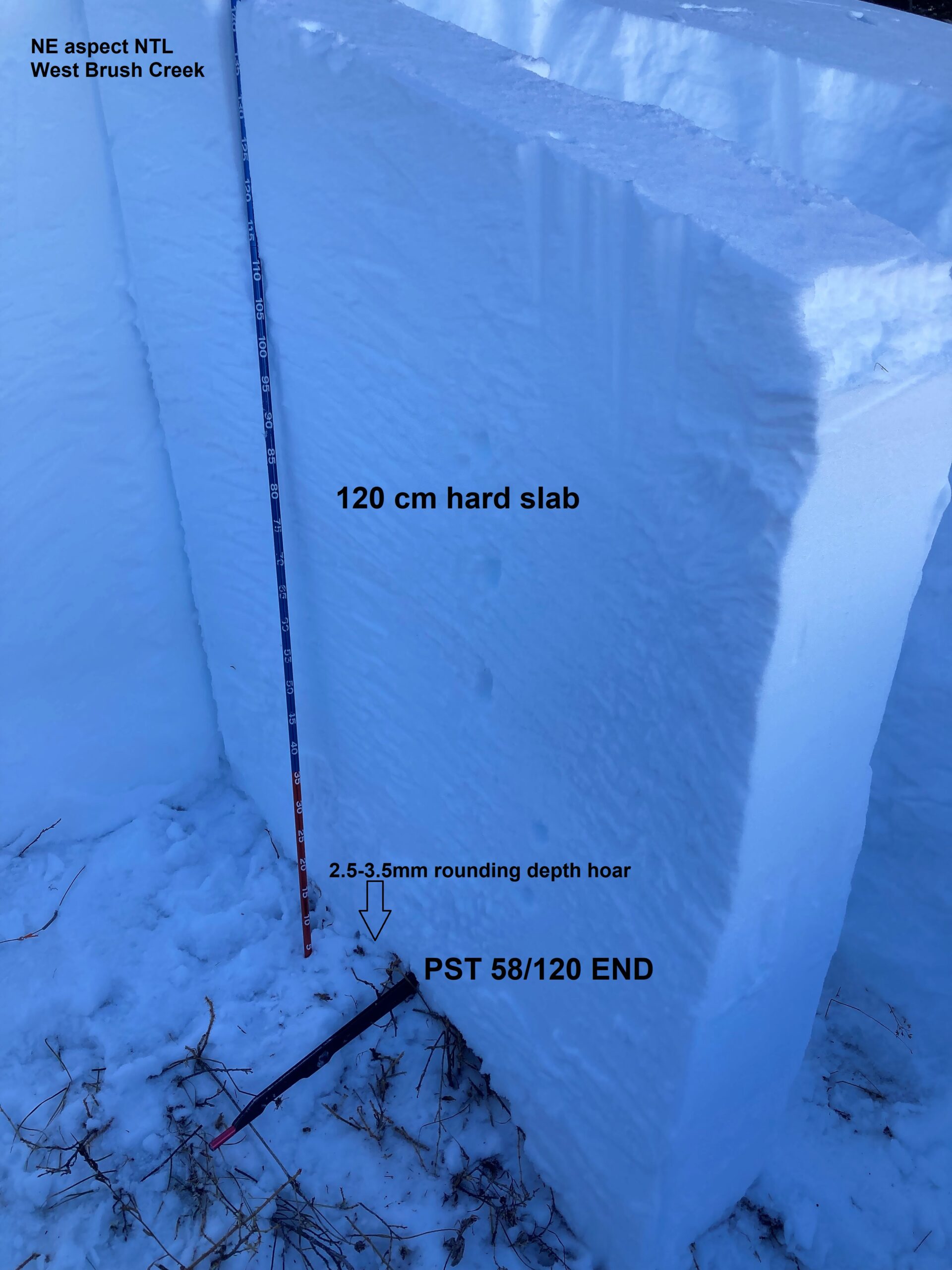
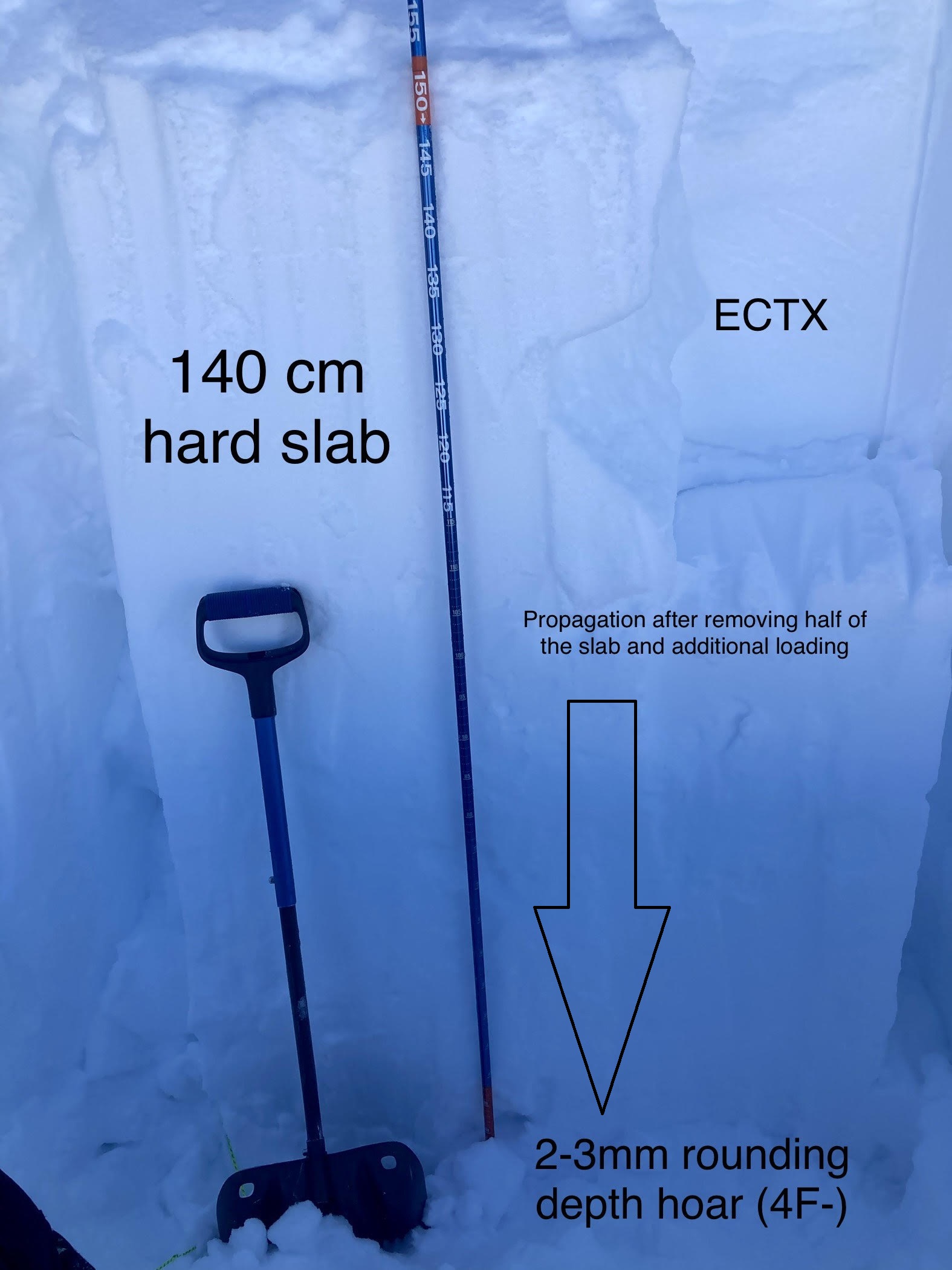
Snowpack: No signs of instability. HS ranged from 120 to 150 cm. PSTs targeting basal weak layers showed an improving trend, with propagation after half of the weak layer was cut (PST 58/120 END down 120cm on 12/6). There were some shrubberies within the weak layer that may have affected the results.  The 12/6 layer (2.5-3.5 mm rounding depth hoar, 4F) shows noticeable signs of rounding and hardening compared to pits at a similar elevation last week.
Snow surfaces are faceting and are currently weakest (and softest) on near and below treeline, wind-sheltered, shaded terrain. Sun crusts have formed on anything with a hint of south of due east. Wind board at higher elevations or on more wind-exposed lower elevations.

Photos:

5255

Poking around in the shallower areas near town

CBACCBAC Observations

Date of Observation: 01/15/2022
Name: Zach Guy

Zone: Southeast Mountains
Route Description: Various E to NE aspects below treeline near town, up to 10,400 ft.

Observed avalanche activity: No
Weather: Clear, cool, calm where we traveled. I could see blowing snow off of peaks near Paradise Divide this afternoon.
Snowpack: No signs of instability except shallow sluffing. Snow depths averaged 150 cm. On a steep, northeast aspect below treeline, a “deep tap” ECT produced propagating results on basal weak layers, suggesting propagation potential is still there if you can impact the weak layer. The weak layer does show signs of improvement compared to a pit in a similar location a week ago; grains are rounding, 2-3mm, and 4F- hard (compared to F hard and no apparent rounding last week). I hunted for shallow spots below treeline, and the only terrain feature with a thinner snowpack was a rocky face on which slab and weak layer are likely discontinuous. Ski cuts on that feature produced sluffing.

Photos:

5252

Fun Facts: 2nd Bowl Mt Axtell

CBACCBAC Observations

Date of Observation: 01/14/2022
Name: Evan Ross

Zone: Northwest Mountains
Route Description: 2nd Bowl Mt Axtell

Observed avalanche activity: No
Avalanches: This avalanche was previously documented during the holiday natural avalanche cycle, but we hadn’t been to the toe of the avalanche to confirm just how far it had run.

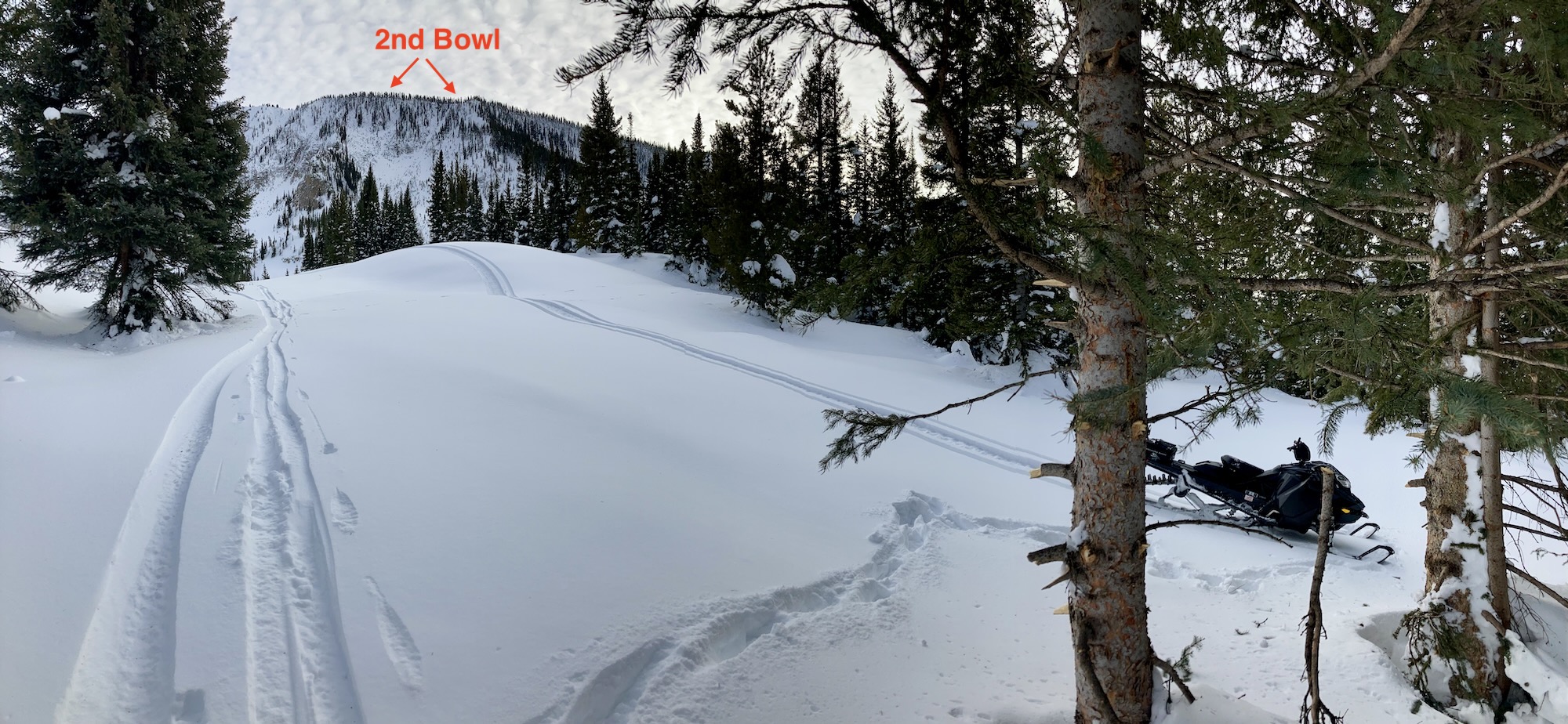
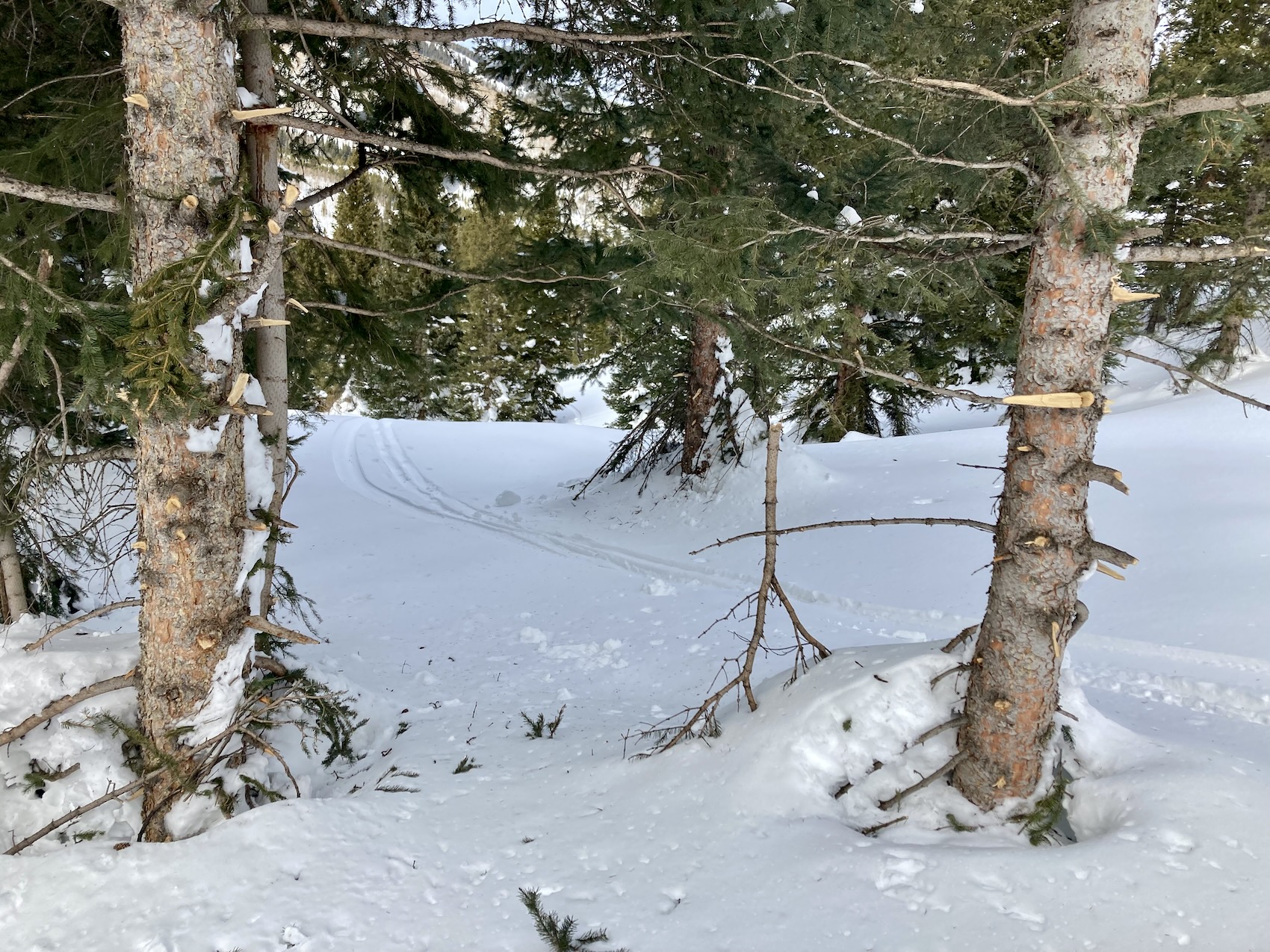
This was a very large avalanche that is estimated to have propagated across the full start zone. It ran to, or through, the historic trim line of the avalanche path. The avalanche ran for just short of a mile in length. It descended close to 1,900ft in elevation, and in the runout it ran horizontally 1,800ft through mostly flat or hilly terrain. Alpha angle around 19.7 degrees. All those junky little trees in the avalanche track that interrupt your ski turns are now nicely pruned.

Photos:

5251

Carbon Peak

CBACCBAC Observations

Date of Observation: 01/13/2022
Name: Evan Ross

Zone: Southeast Mountains
Route Description: Carbon Peak. North. 9,800-11,900ft

Observed avalanche activity: No
Avalanches: Nothing new or notable.

Weather: Calm wind with thin clouds creating partly to mostly cloudy sky.

Snowpack: Headed to Carbon Peak to get more observations from areas that generally hold a shallower snowpack. The northern slopes of Carbon had an HS averaging around 160cm, with some probe strikes hitting 120cm and some hitting 190cm. Of course, no obvious signs of instability. Targeted a shallower area with an HS of 135cm on a 22-degree north-facing slope at 11,400ft. The mid-pack consisted of P hard snow. The 12/6 interface was about 25cm thick of moist 3mm facets that were 4F+ hard. PST and DT tests were inconclusive. 1 PST had no result and while performing the other the cut was interrupted by a hidden rock. While setting up deep tap tests the heavy columns kept breaking in the facets on isolation. Those were irregular rough breaks. This location had scree on the ground and I believe that led to the inaccurate or inconclusive tests. No buried layers of concern were found in the upper snowpack.

The snow quality was great. Fast and surfy.

Photos:

5250

Northern Ruby Range

CBACCBAC Observations

Date of Observation: 01/13/2022
Name: Zach Kinler

Zone: Northwest Mountains
Route Description: Baxter Basin to Angel Pass area

Observed avalanche activity: Yes
Avalanches: Spotted ! D1.5 Wind Slab on SE aspect that likely ran later in the day on 1/12. Several D1 wet loose on steep South from 1/12, 1 that was D1.5(didn’t get picture)
Weather: High thin clouds and light northerly breezes kept it feeling cooler than previous day although temps reached a bit higher.
Snowpack: Surfaces had been worked a bit by wind and sun in alpine areas. Variable crusts on steep S-SE up higher and E at lower elevations. Jumped in a bed surface on a NNE slope that had avalanched around 12/31. There was 75 cm of snow on the old bed surface, up to 1F hard. At this location, the 1/6 interface was 1-1.25 mm facets and produced propagating ECT only after standard loading steps and smackin it a bit harder. The overlying slab was fairly soft(4F).


[/gravityforms]
5249

Old deep slabs from Upper Yule Creek

CBACCBAC Observations

Date of Observation: 01/12/2022
Name: Zach Guy and Evan Ross

Zone: Northwest Mountains
Route Description: Upper Yule Creek

Observed avalanche activity: Yes
Avalanches: Documenting more activity from 12/31 cycle that we missed from the flight

Photos:

5244

Old deep slab crowns on Beckwiths and west side of Ruby Range

CBACCBAC Observations

Date of Observation: 01/12/2022
Name: Zach Guy and Evan Ross

Zone: Northwest Mountains
Route Description: East and West Beckwith and Anthracite Creek as viewed from the Blob.

Observed avalanche activity: Yes
Avalanches: Recording a handful of previously undocumented avalanches that likely ran around 12/30 to 12/31. Viewed from afar, and some crowns have been partially drifted in, so sizes are best estimates.

Photos:

5243

Upper Yule Creek

CBACCBAC Observations

Date of Observation: 01/12/2022
Name: Evan Ross & Zach Guy

Zone: Northwest Mountains
Route Description: We started low at Slate River TH, but mainly traveled in the upper Yule Creek area between 12,800 and 10,800 on W to N to E aspects.

Observed avalanche activity: Yes
Avalanches: No new avalanche activity. A few more old avalanches that have not been documented. With closer inspection, we decided that the previously documented avalanche that spanned between Purple and the Blob was another D4 from the holiday cycle. Just another impressive avalanche from that cycle.

Weather: Thin clouds creating partly cloudy sky. Steady moderate winds in the alpine, primarily from the W-NW in the morning and more NE in the late afternoon.

Snowpack: In the alpine, the wind was transporting snow throughout the day. However those winds were creating more variably snow surfaces and wind effect, then they were actually creating new wind slabs. In those same areas, we were also managing old hard slabs that have been created over the last couple of days by recent winds. These slabs were hard, only a few inches thick, and stubborn, but ready to take you off your feet in terrain that you wanted to stay on your feet.

Between Purple and the Ant, there are few places that the snowpack wasn’t altered by the holiday avalanche cycle. We did travel in steep terrain on slopes that didn’t appear to have previously avalanches, but most of the terrain traveled had previously avalanched or had old avalanche debris, all of which has been covered back up by new snow in January. West and Northwest aspects held more trigger-points or areas that the snowpack would go from shallow to deep abruptly. Surprisingly we made some of our best turns on a steep NW aspect starting below about 12,600ft and just below all the windblown snow surfaces near the ridgeline.

All in all for the deep persistent slab avalanche problem we chose to reduce our risk by managing trigger points vs slope angles.