




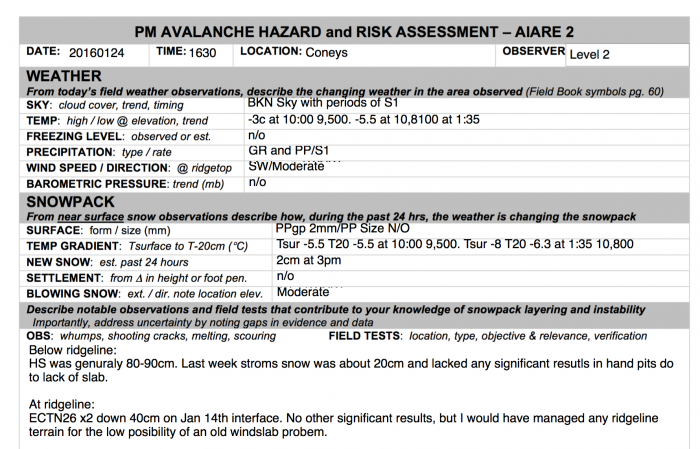
Coney’s Obs 1/20/16
Location: Crested Butte Area
Date of Observation: 01/20/2016
Name: JSJ / Jeff Banks / Geoff Unger
Date of Observation: 01/20/2016
Name: JSJ / Jeff Banks / Geoff Unger
Subject: Coney’s
Aspect: North, Northeast
Elevation:9,300- 11,000
Aspect: North, Northeast
Elevation:9,300- 11,000
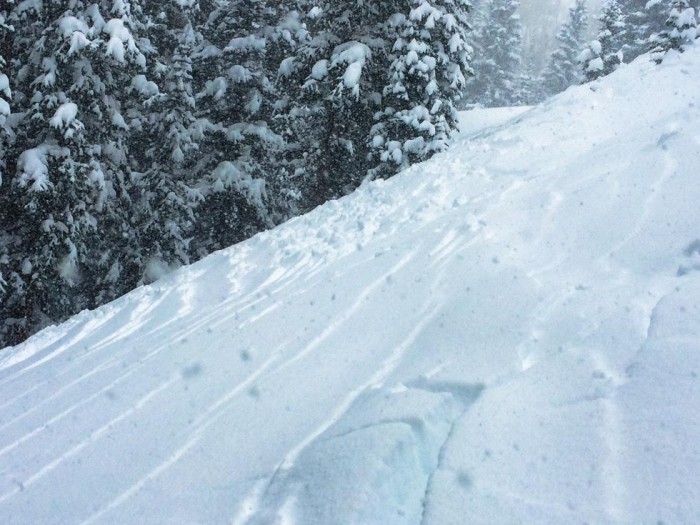
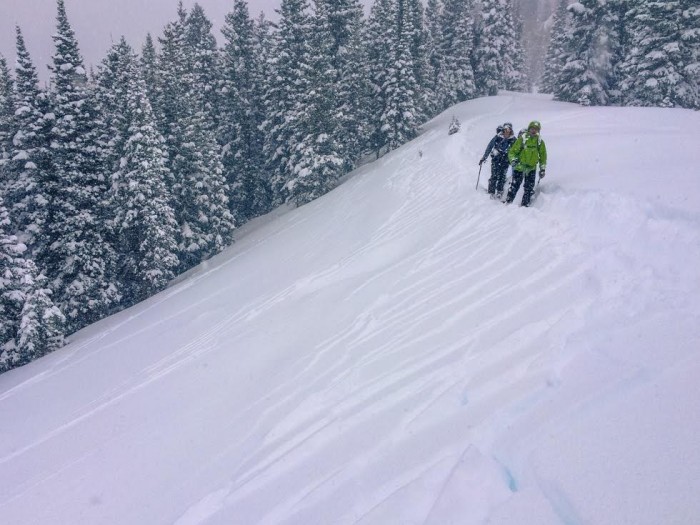
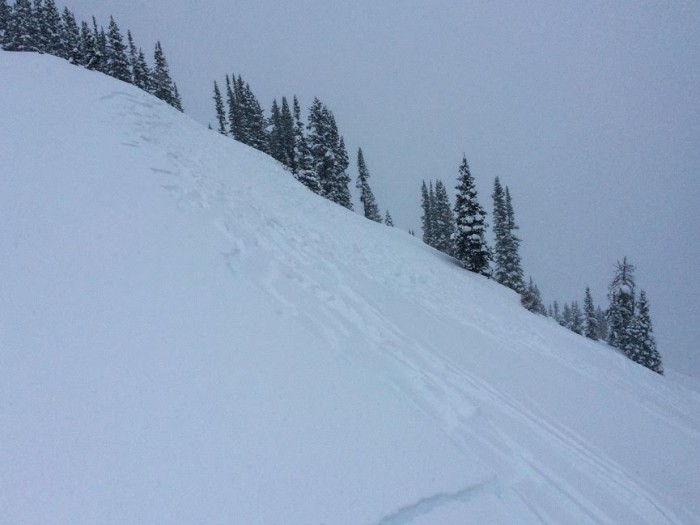
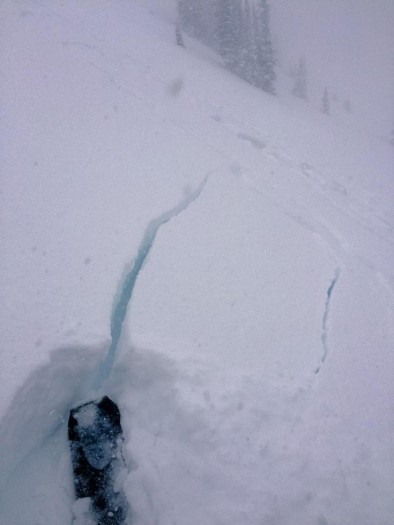
Avalanches: Widespread instabilities with shooting cracks and F hard soft slab avalanches easily initiating, but not getting past the ‘cracking & gliding’ phase on all terrain >35*. Some propagating up to 75M across.
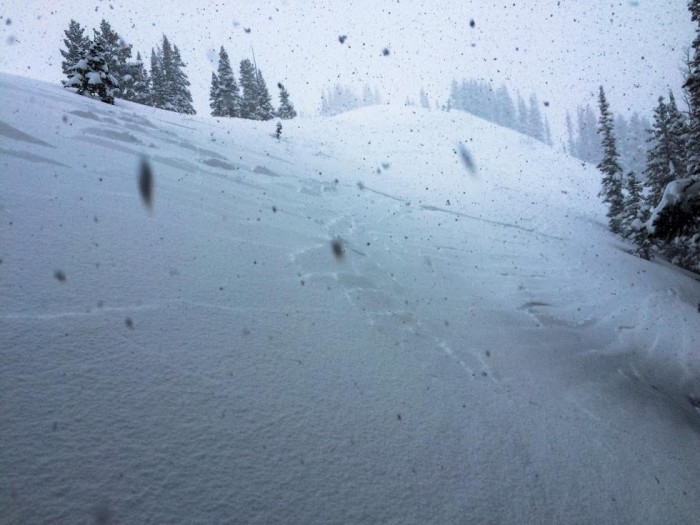
Weather: Overcast to Obscured skies; Steady S1 snowfall with intense bursts of up to S5; Calm morning, with NW / N / NE winds Moderate to Strong at ridge top picking up around 1400. 45cms HST observed, with a window of 15cms in 3.5 hours today.
Snowpack: Failure layer observed was a well preserved layer of stellar dendrites beneath slightly denser storm snow, found 20cms below the surface. Snowpack tests revealed CTMSC and ECTNM failures on the 1/14 buried surface facet layer, but no activity seen stepping down to this layer while traveling through terrain today. Surface slabs were F to F- in hardness, but Mod to Strong winds made an appearance around 1400 and began slabbing up the low density storm snow into a more cohesive slab.
Snodgrass Profile
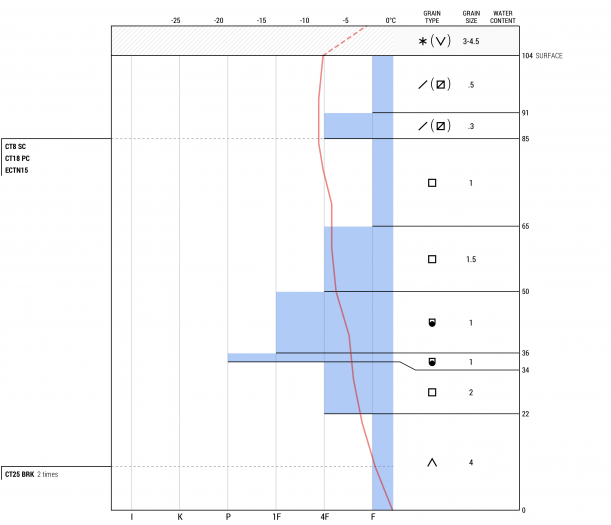
Snodgrass
38.92262, -106.965779,738 ft 18°
45° NE -3.0°C Few2016-01-19 12:30 pm jeff banks
Snowpit depth: 104 cm Snowpack depth: 104 cm
Slab avalanches since Jan 14th, 2016
Produced 1/19/16
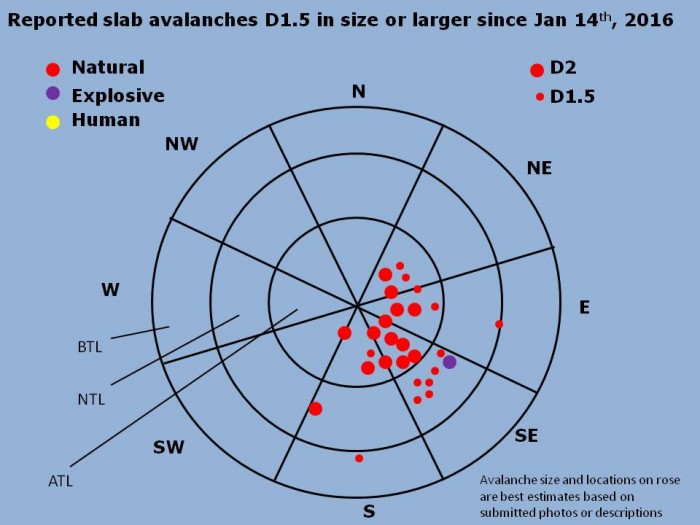
Produced by Zach Guy, based on observations submitted to CBAC.
Observed avalanche activity from Christmas cycle.
Some very heavy caveats come with this diagram.
- Observations are likely biased based on aspects that are visible from easily accessed points within our zone. For instance, we don’t have good views of as many NW facing avalanche paths from town as we do E or NE.
- Frequency of natural avalanches is not necessarily a good indicator of where you are more likely or less likely to trigger an avalanche as a human. Some slopes have the right ingredients for human triggers but didn’t see enough loading for natural release. West facing terrain is a good example of that.

Avalanches observed 12/21-12/28 failing on persistent weak layers. Produced by Zach Guy