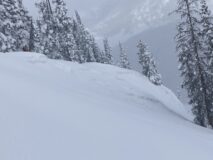
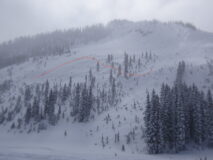
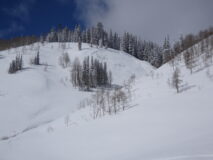
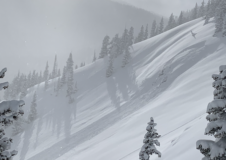
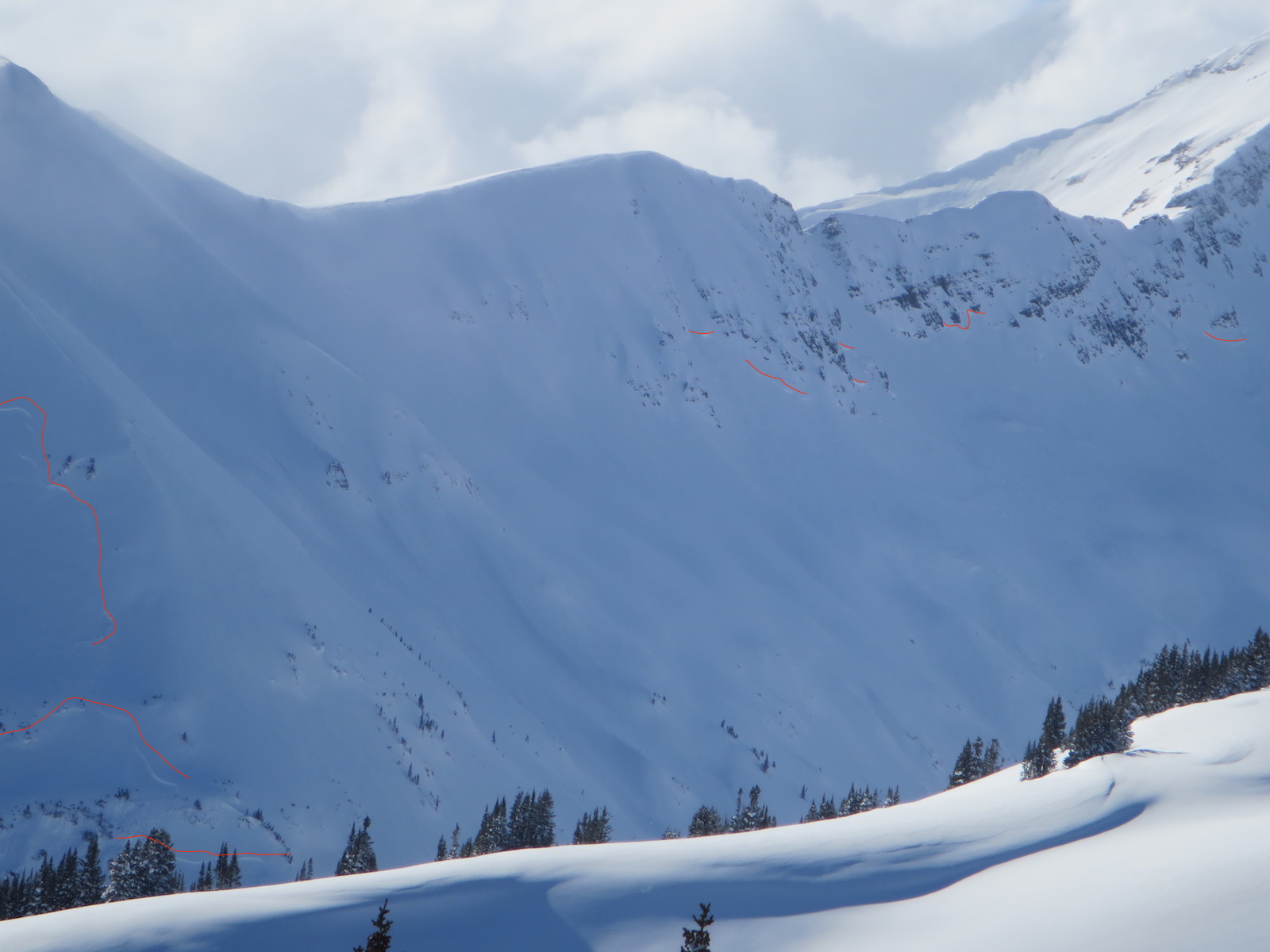
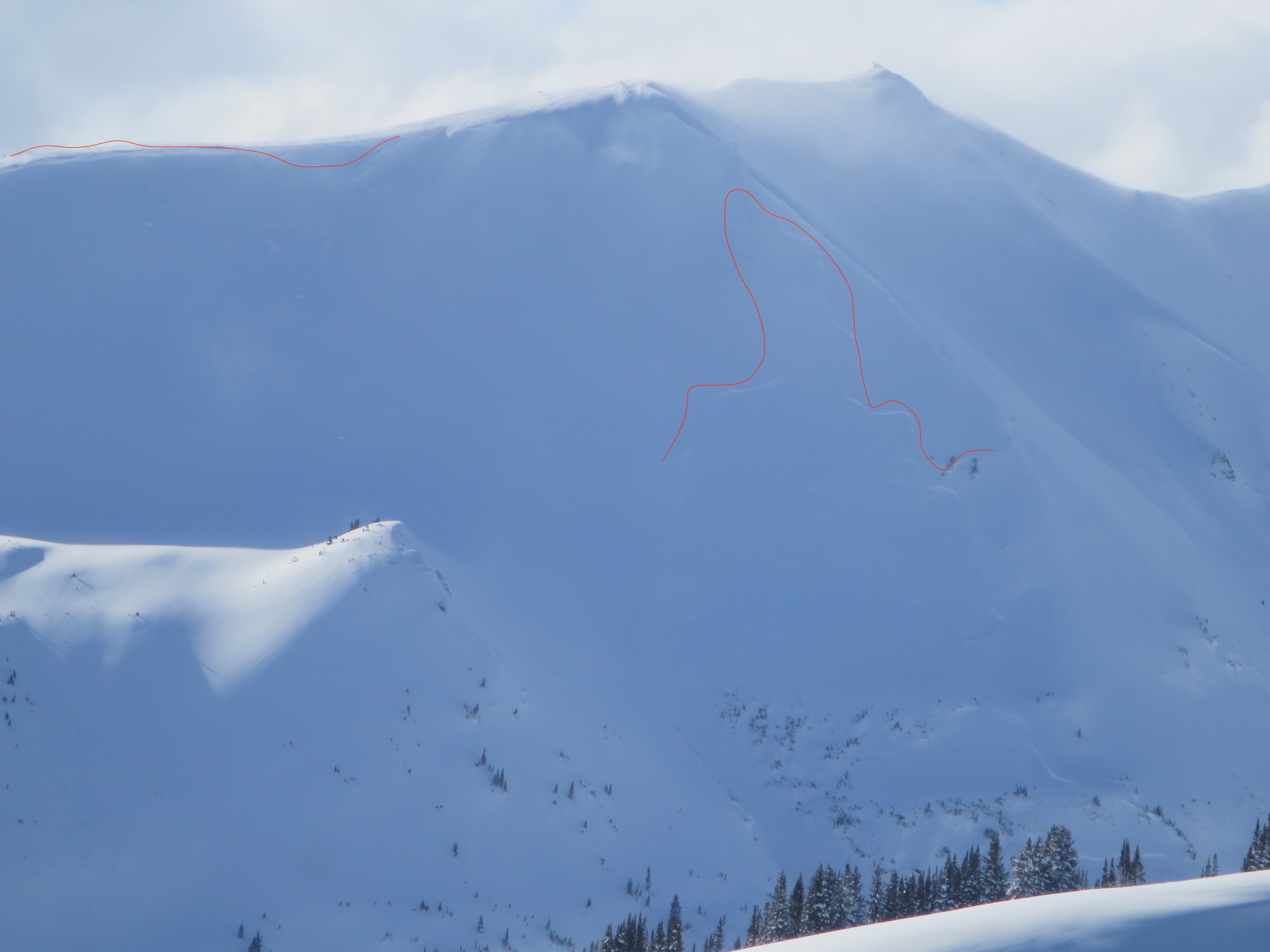
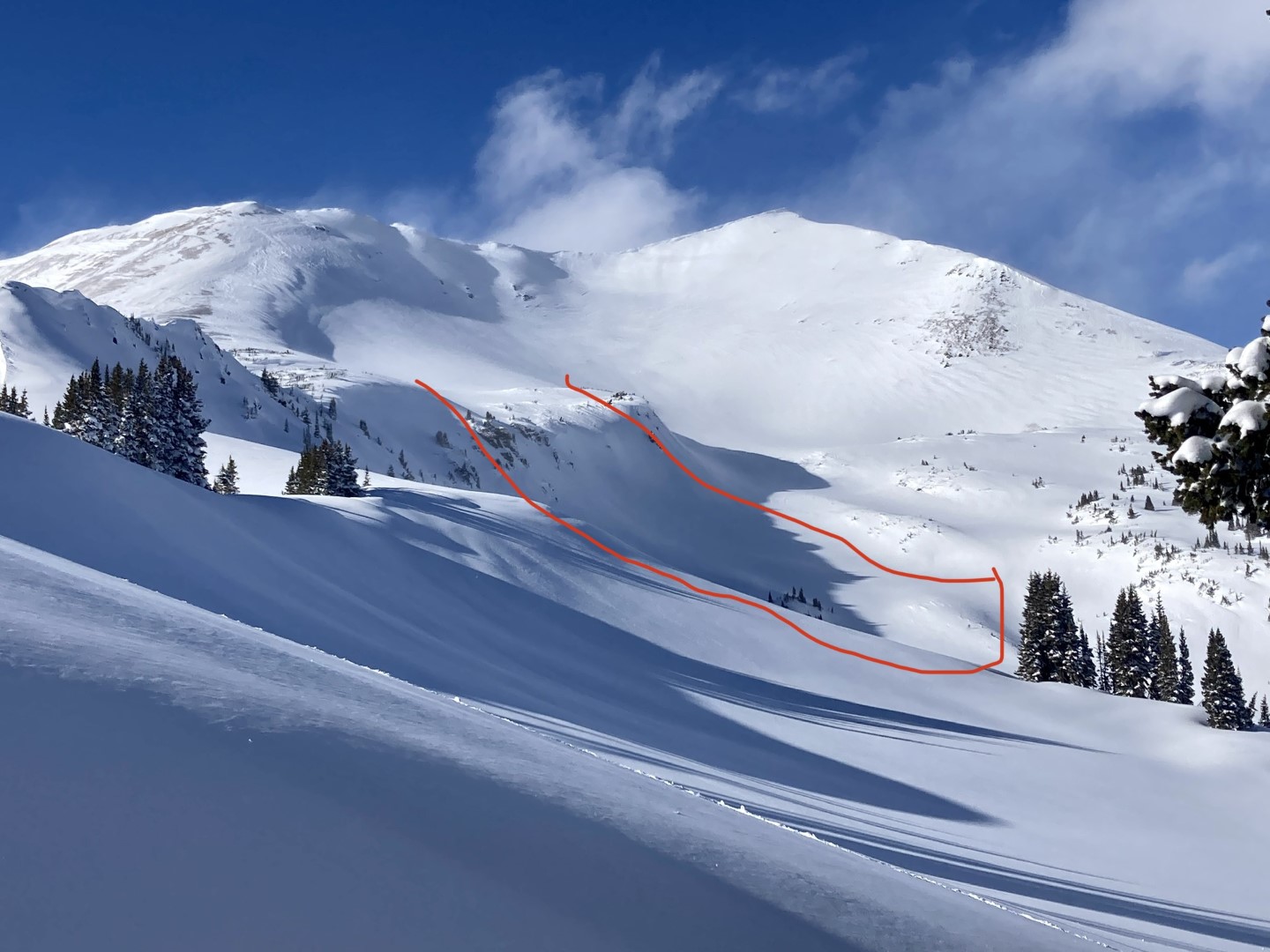
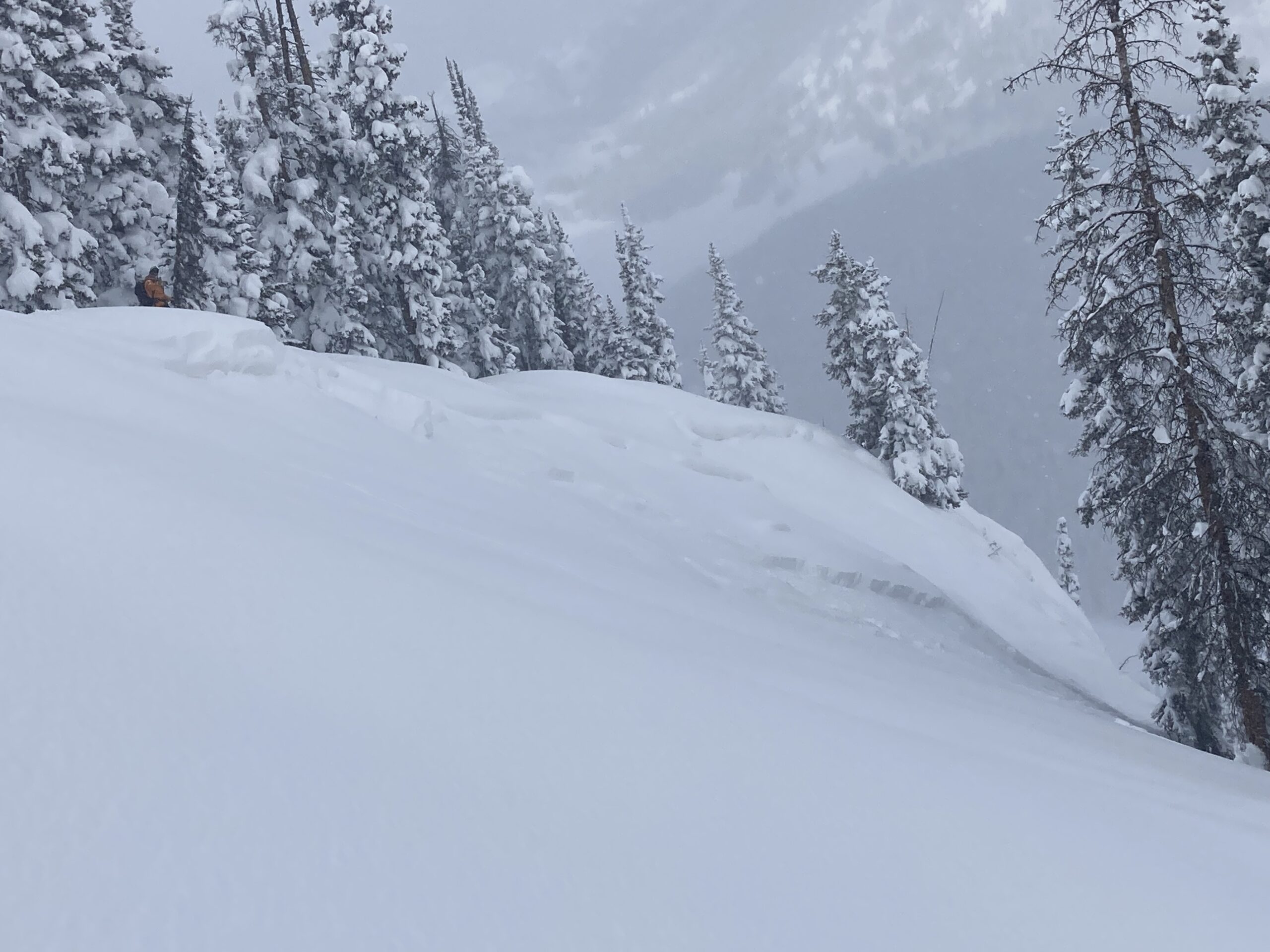
Near/Below Tree line Avalanche obs from Top of the World

CBACCBAC Observations

Date of Observation: 02/25/2022
Name: Zach Kinler

Zone: Northwest Mountains
Route Description: Wash Gulch to Top of the World

Observed avalanche activity: Yes
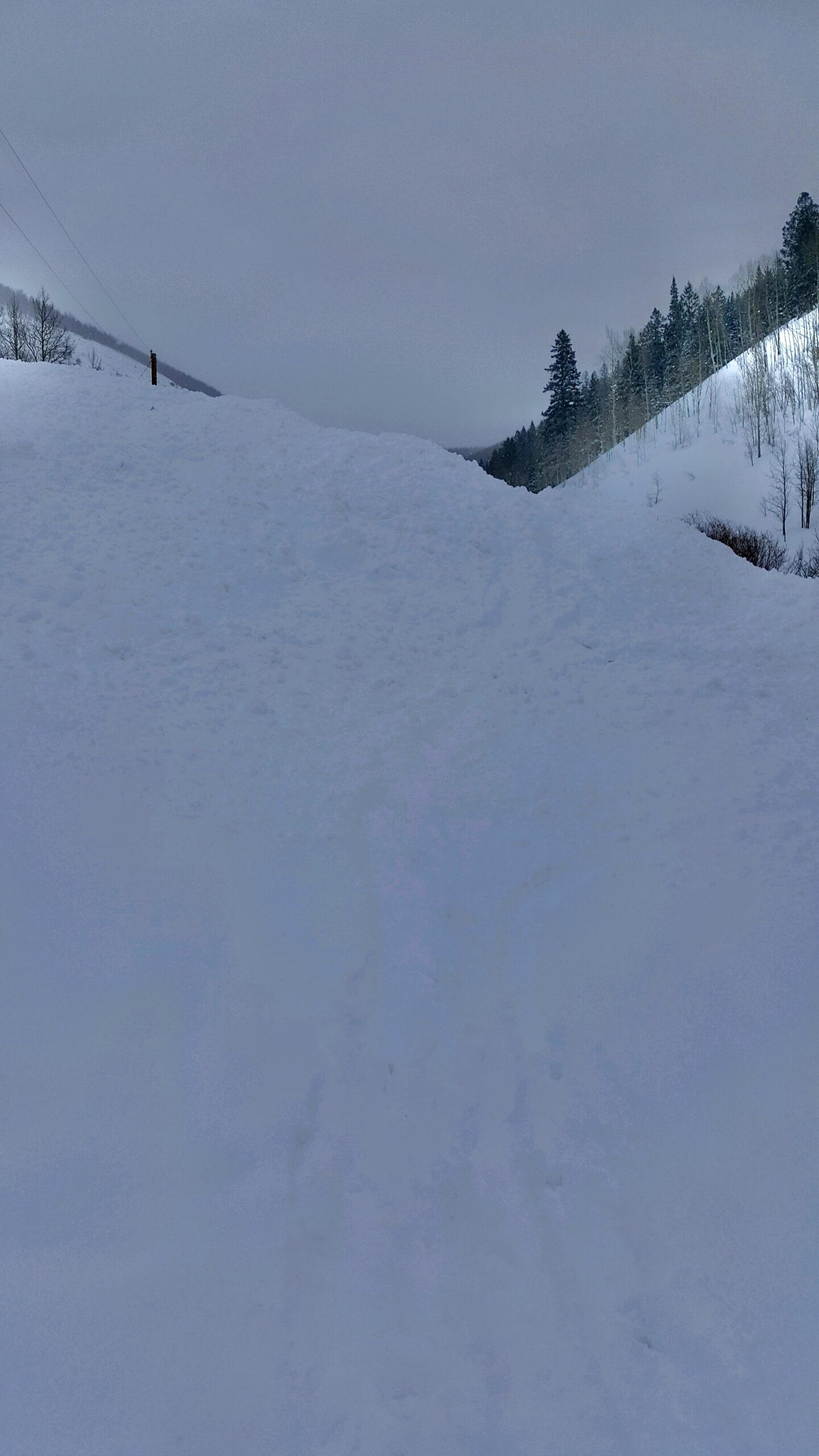
Avalanches: Numerous D2-D2.5 avalanches failing on the mid-February junk show with brief views towards the Ruby Range. Lots of action on E-NE facing slopes. Looking at crowns, most likely failed on 2/22 and 2/23 with 1 very sharp looking crown that likely failed sometime in the last 24 hours.
Weather: Cold and Blustery, clearing skies throughout the day
Snowpack:


[/gravityforms]
5405

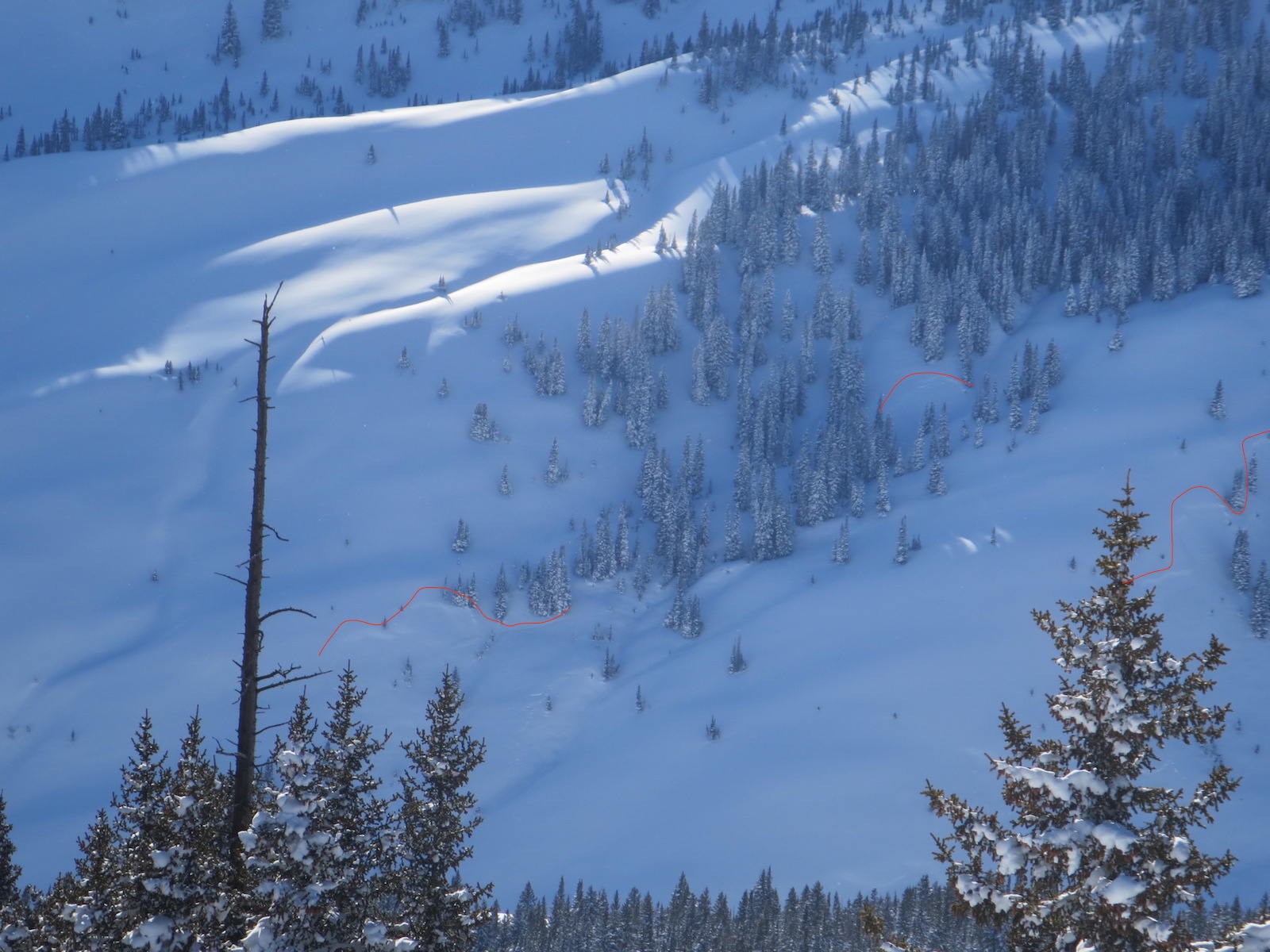
Ongoing naturals, Washington Gulch

CBACCBAC Observations

Date of Observation: 02/25/2022
Name: Zach Guy and Zach Kinler

Zone: Northwest Mountains
Route Description: Snowmobiled Washington Gulch, skied in Rock Creek area. Traveled on low slope angles on east, south, and west aspects to 11,500 ft.

Observed avalanche activity: Yes
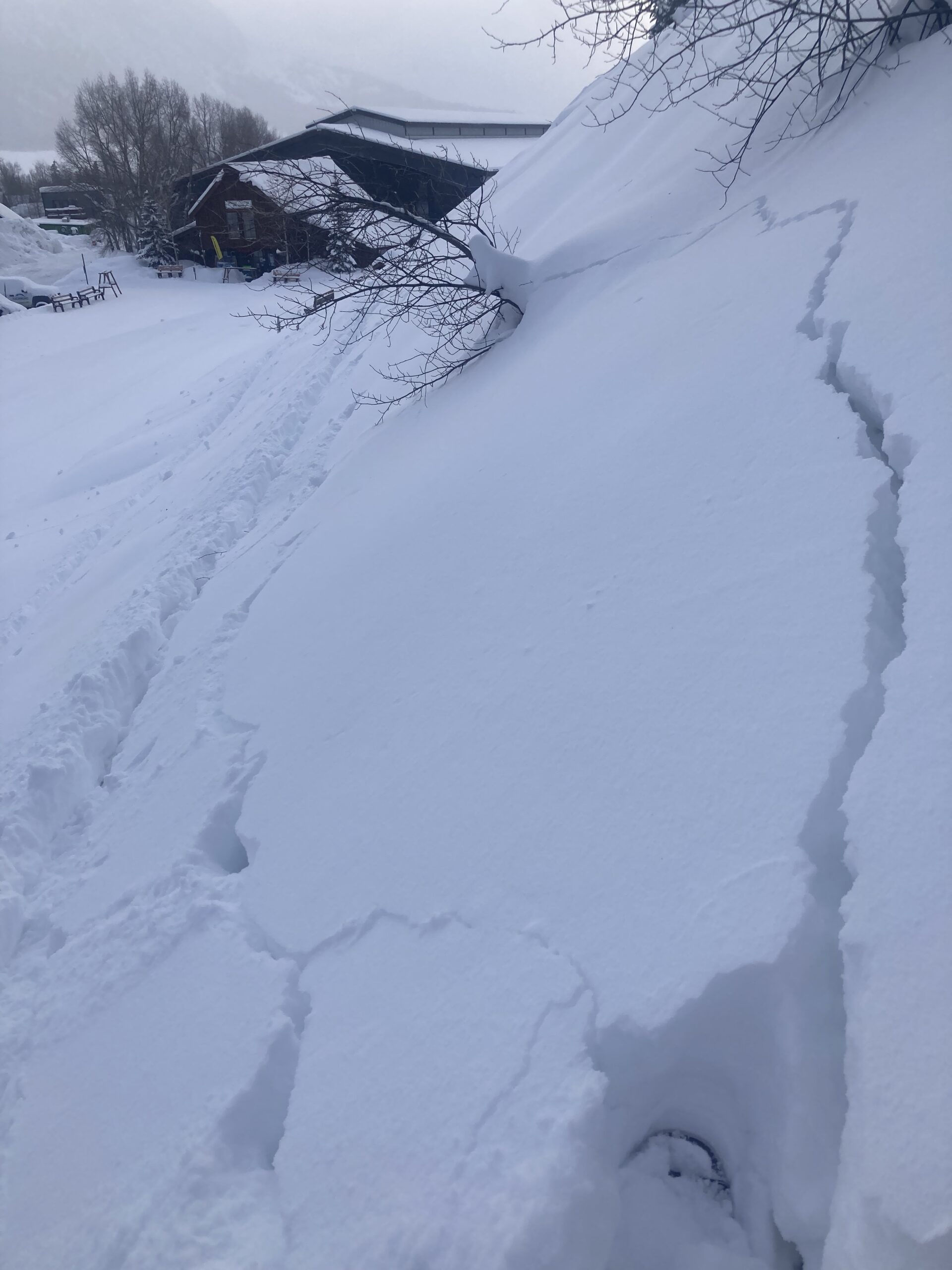
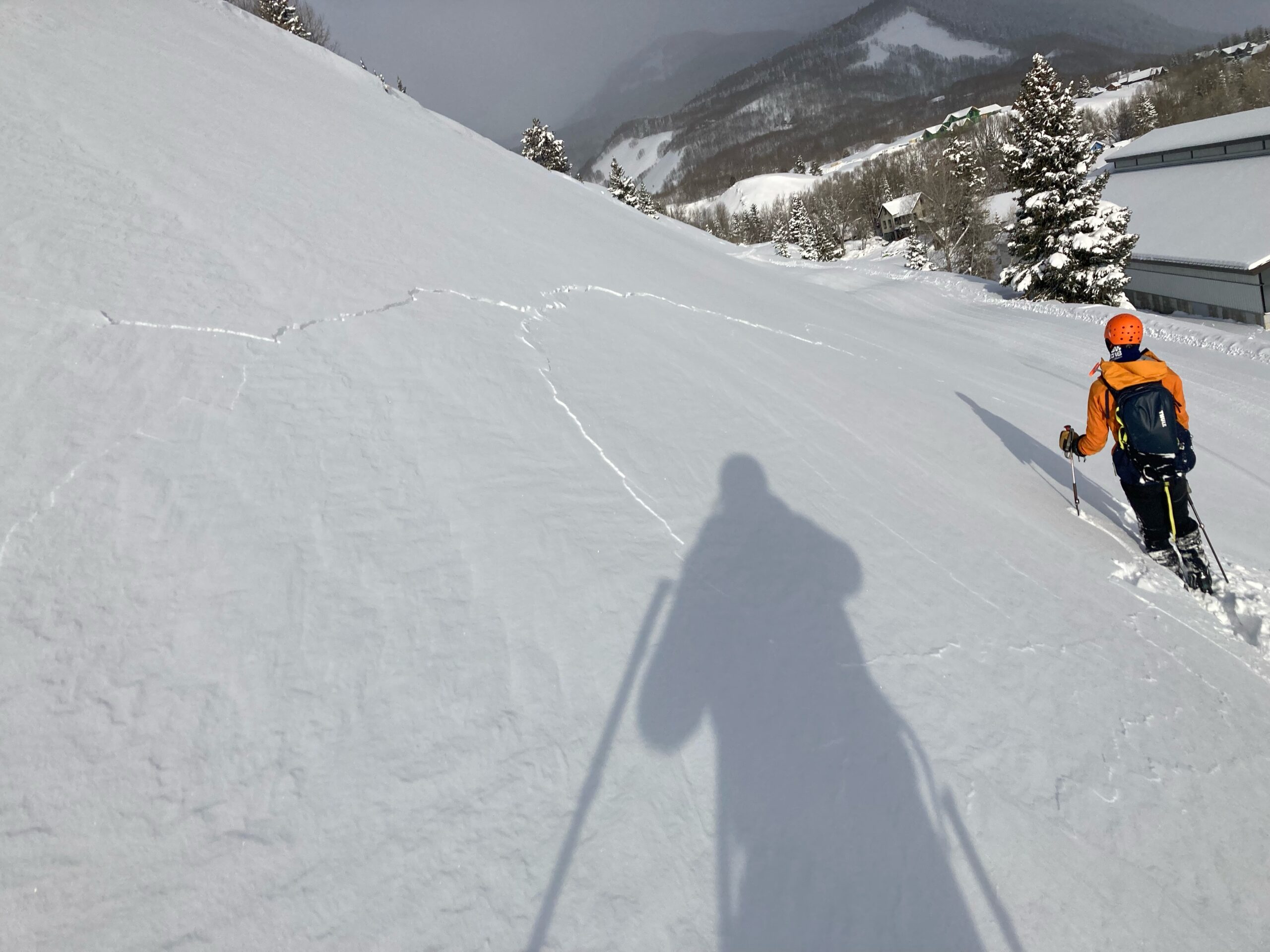
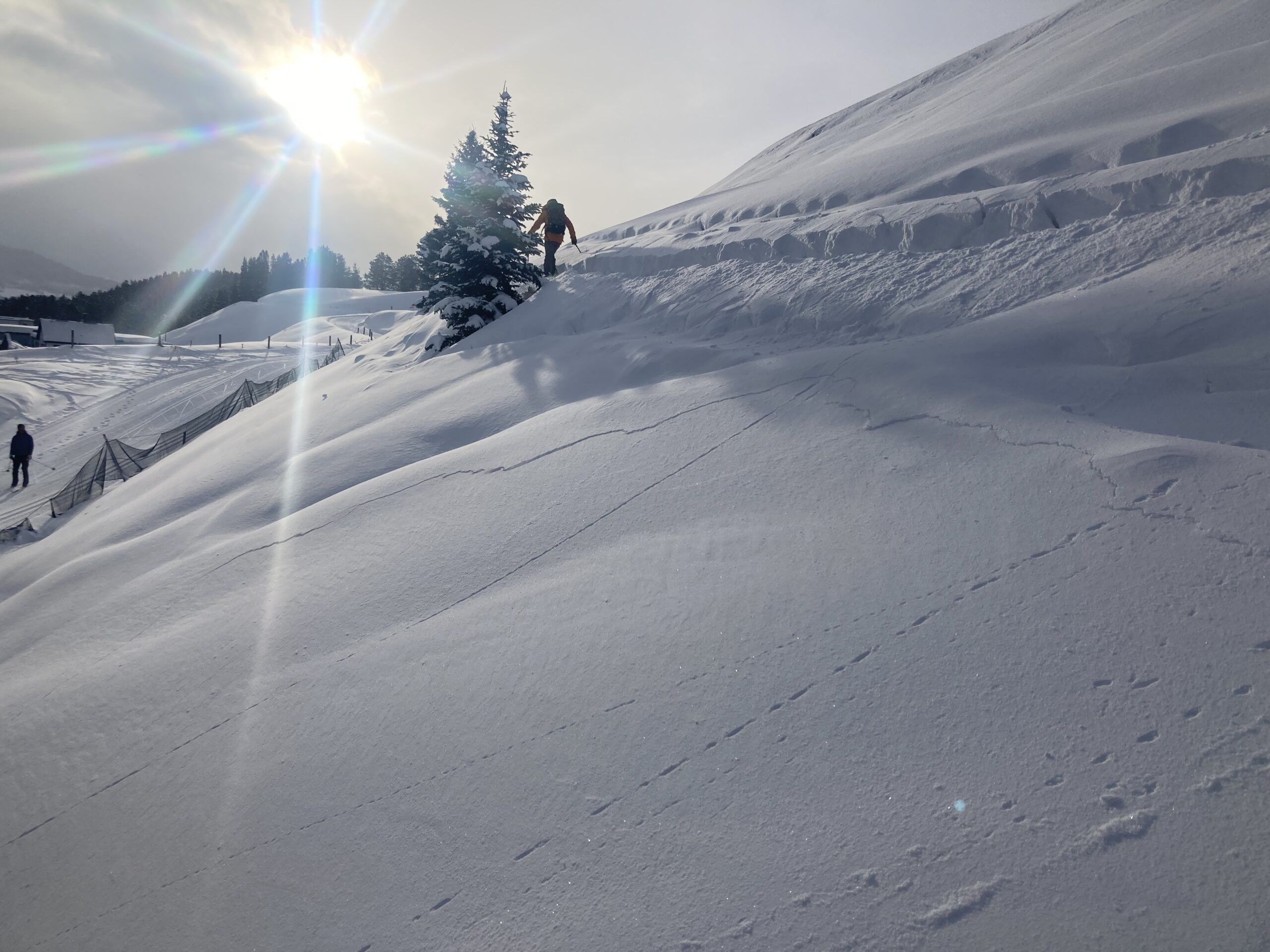
Avalanches: Where to start…. Extensive slab activity on almost every steep bit of E and NE terrain from Meridian Lake to Elkton Knob. A lot of this was previously documented in obs from Eric and Billy. However, I counted at least 3 or 4 slides that looked fresh, likely ran last night or yesterday from wind drifting. These were on E to NE aspects NTL, ~D2 in size. Same story in Rock Creek: extensive activity near and below treeline on E to N aspects. The SE bowl above Rock Creek also ran mid-storm; crown was blown back in but we could see D2 debris. We also got a late afternoon peak of the Ruby Range in poor light and saw a number of large crowns, D2.5 on average, some looked quite fresh. Kinler will submit those in a separate ob.
Weather: Cold temps. We observed periods of light to moderate drifting in the alpine from westerly winds. Clouds decreased through the day.
Snowpack: Measured 65 cm slab in a sheltered, BTL location in Rock Creek. Almost every time I rode into an open slope in Wash Gulch I saw extensive shooting cracks under my sled, some ran several hundred feet. Signs of instability became infrequent as we transitioned to skis near treeline; slabs are stiffer from wind effects and I think we were also traveling in an area where winds had beat up the weak layer. Once we descended to treeline, rumbling collapses became frequent again. In some cases, it was the 2nd or 3rd person to cross the slope that would trigger the collapse.

Photos:

5404

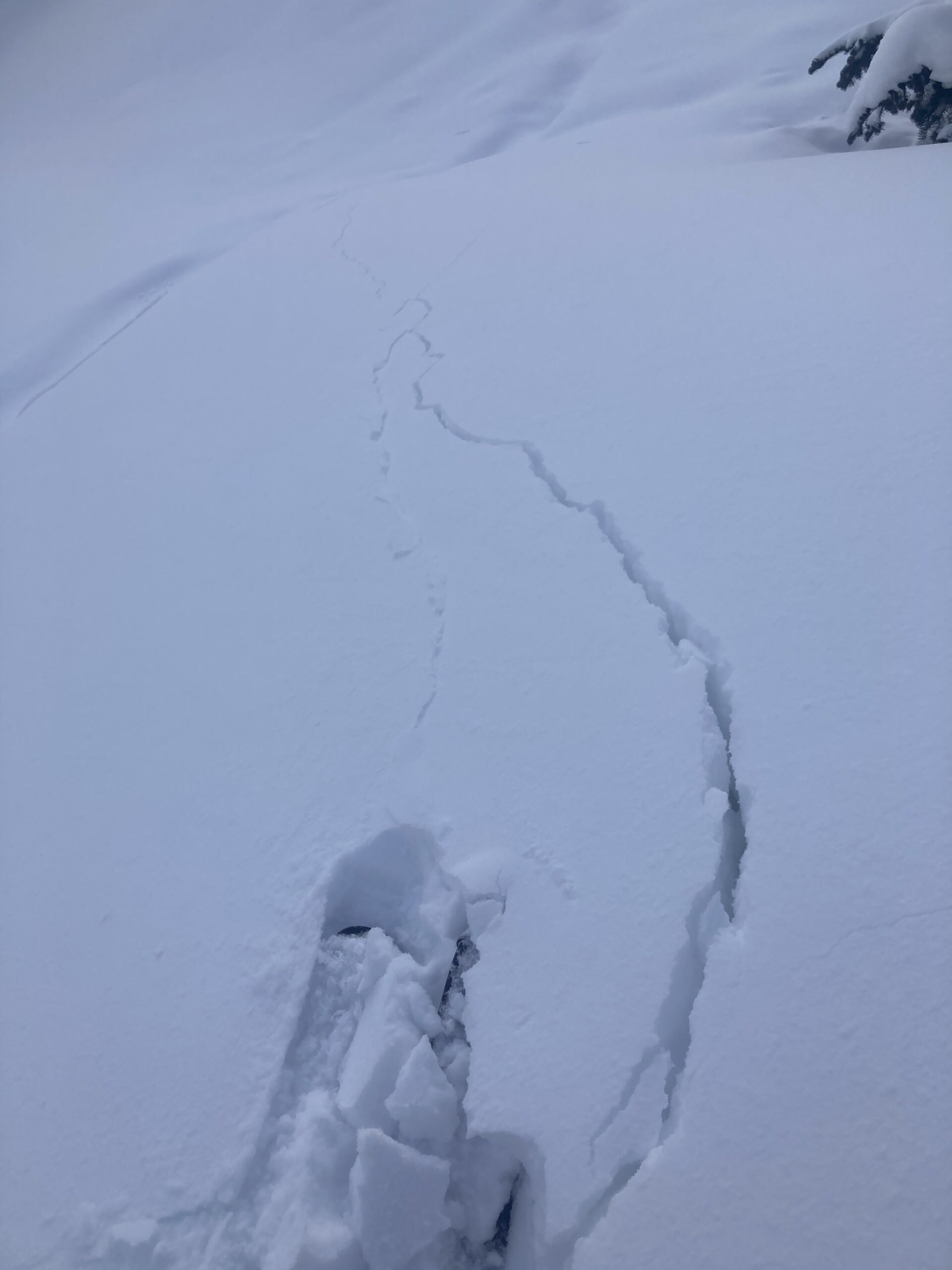
Cracking, Settling, Sliding

CB Avalanche CenterCBAC Observations

Date of Observation: 02/26/2022
Name: Frank Stern

Zone: Southeast Mountains
Route Description: Town Ranch to CBMR — GMT course

Observed avalanche activity: Yes
Avalanches: Frequent settling, shooting cracks. Several small slides, W, E
Weather: Partly cloudy

Photos:

5401

Fresh naturals on Snodgrass

CB Avalanche CenterCBAC Observations

Date of Observation: 02/24/2022
Name: Mary Nolan

Zone: Southeast Mountains
Route Description: Coney’s

Observed avalanche activity: Yes
Avalanches: A couple of fresh slab avalanches that ran today on the northwest side of Snodgrass, BTL
Weather:
Snowpack: Collapse and shooting cracks on a 30 degree slope, NE aspect.

5400

Shady side to the Sunny side

CB Avalanche CenterCBAC Observations

Date of Observation: 02/24/2022
Name: Zach Kinler Eric Murrow

Zone: Northwest Mountains
Route Description: Short tour up Elk Creek via ridge, then up to the Anthracites, standard skin track to ridge.

Observed avalanche activity: Yes
Avalanches: Phew…Most avalanches paths facing northeast and east in Elk Creek avalanched.  Some ran during the middle of the storm and others very recently with just an inch or two on the bed surface, mostly D1.5 with several D2s.  East-facing natural in the 7 sisters area above Kebler Pass road, D1.5.  We also remotely triggered a few small pockets that mother nature left hanging for us, D1s.  At the Anthracites there was a D2 midslope in East Bowl (failed mid storm), a natural D1.5 on a southeast slope that ran Thursday morning (no snow on bed surface, and failed above the crust), and we remotely triggered a D2 at the very top of East Bowl with a little bit of hunting for the trigger point at ridgetop.  Many other slopes near the Anthracite skin track appeared to have avalanched early in the storm and refilled, hard to say for certain but there was slight texture below many steep slopes.
Weather: Blustery, temps in the teens, WNW winds were light with moderate gusting near tree line and on exposed ridges. Peeks of sun here and there but low clouds shrouded alpine areas.
Snowpack:  On shady slopes, in Elk Creek, the storm snow was around 18 inches deep and produced numerous collapses.  Signs of instability were obvious, but most of the steep terrain already avalanched.  At the Anthracites storm snow was 24 to 30 inches deep with the bottom portion of the slab at 4 finger hardness.  Signs of instability were harder to come by here as the slab was thicker, but I would NOT call it stubborn to human triggers…more like the sirens calling you into the rocks on the Aegean Sea.  We poked around on south and southeast features in the area and did not find signs of instability with hasty hand pits that seemed to point at reasonable bonding between crust and storm snow.  Crusts were 4 to 5 inches thick below 2 feet of storm snow.  We did not inspect any drifted sunny features.

Photos:

5399

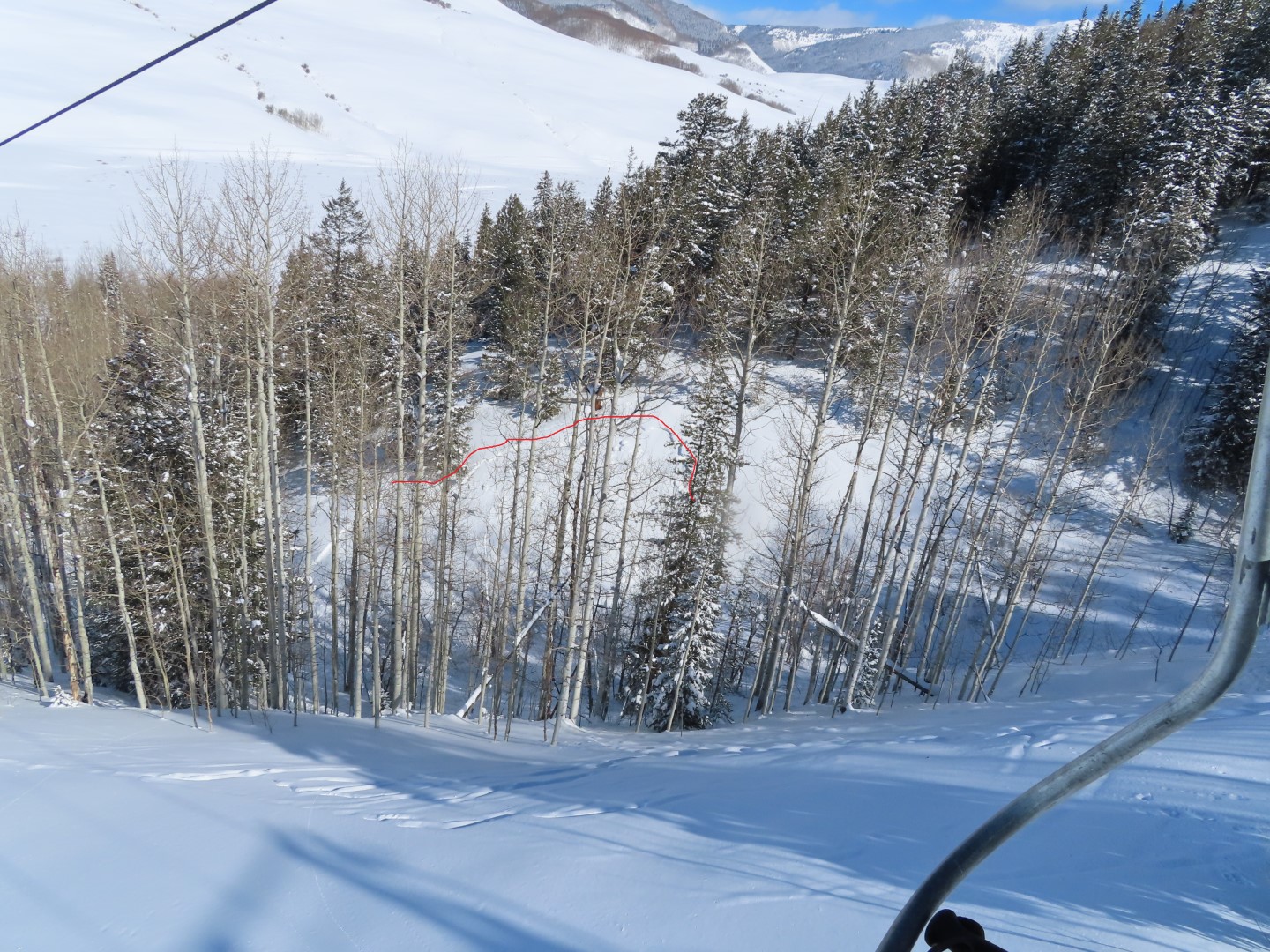
Double Top fresh slide

CB Avalanche CenterCBAC Observations

Date of Observation: 02/24/2022
Name: Drew Holbrook

Zone: Southeast Mountains
Route Description: Double Top

Observed avalanche activity: Yes
Avalanches: See photo. Don’t recall seeing this before.
Weather:
Snowpack:

Photos:

5398

Quick glimpse of some alpine and lots more avalanches

CB Avalanche CenterCBAC Observations

Date of Observation: 02/24/2022
Name: Zach Guy

Zone: Southeast Mountains
Route Description: From CBMR, I had brief visibility this afternoon of some alpine terrain around Copper Creek, Deer Creek, and Gothic Peak. Most of the peaks remained socked in. Could also see some terrain around Peanut Lake Road, Washington Gulch, etc.

Observed avalanche activity: Yes
Avalanches: Widespread D1 to D2 cycle BTL on NE to E aspects. Every bowl on the east side of Gothic Peak ran (SE and E aspects). I could see a handful of slides on west aspects BTL out by Brush Creek. Good views of south and southwest facing terrain above Copper and Deer Creek and that terrain didn’t produce naturals (combination of thicker crusts and windward aspects).
Weather: Periods of steady transport at the summit of Mt. CB. Clouds started clearing in the donut hole.

Photos:

5396

Unusual weak layer

CB Avalanche CenterCBAC Observations

Date of Observation: 02/24/2022
Name: Zach Guy

Zone: Southeast Mountains
Route Description: CB Nordic Hill. NE aspect

Observed avalanche activity: No
Snowpack: The “2022 total BS drought sandbox layer” continues to show unusual behavior. On the Nordic Hill, we systematically trafficked and sluffed that layer before the storm, and got numerous shooting cracks, collapses, and mini slabs when we worked it Tuesday afternoon halfway through the storm. This morning, we got repeat collapses in some areas that had already been worked. Cracks were shooting along old ski tracks and doing some wild things I haven’t seen on that slope before. This is the worst mid-winter near surface facet layer that I can recall in my career, based on what I’ve seen the last few days. The slabs aren’t extraordinary, but the weak layer is. I think Evan’s ob from Tuesday of a quarter mile wide avalanche under a 12” soft slab really captures the challenging nature of this layer.

Photos:

5394

Walrod natural avalanches – third hand report to CBAC

CBACCBAC Observations

Date of Observation: 02/23/2022
Name: Eric Murrow

Zone: Southeast Mountains
Route Description: Walrod Gulch out Cement Creek.

Observed avalanche activity: Yes
Avalanches: Two natural avalanches occurred while a person was walking dog(s) out Walrod Gulch in Cement Creek. Large in size; depositing a dangerous amount of snow onto the summer road up Walrod Gulch near the Caves Connector trail. See photos. This is likely the same avalanche reported in this observation from earlier today – https://cbavalanchecenter.org/walrod-2/
Weather:
Snowpack:

Photos:

5393

Washington Gulch Avalanches, signs of instability, and snowpack tests

CBACCBAC Observations

Date of Observation: 02/23/2022
Name: Eric Murrow

Zone: Northwest Mountains
Route Description: Washington Gulch TH to Elkton area and lap near Coneys.

Observed avalanche activity: Yes
Avalanches: Numerous avalanches in upper Washington Gulch. Many slopes greater than 35 degrees on the north half of the compass ran naturally. Only observed 2 D2 size avalanches, but the terrain I was able to see were all relatively short hills. I remotely triggered a drifted southeast slope above Elkton from a couple hundred feet away while snowmobiling. Crowns ranged from 30cm to 80cm. The largest avalanche was the east bowl off Elkton Knob.
Weather: Cloudy skies with generally light SW winds (some moderate gusting). From 1 pm to 330 pm snowfall rates increased dramatically around S2 with brief periods up to S5.
Snowpack: At 300pm in Elkton, I measured 30 inches of storm snow with 2.4 inches snow water equivalent. Ski pen was around 12 inches and boot pen was nearly full storm depth. While traveling around I regularly produced moderate collapses and cracking with a few of the rumbling variety. On drifted features, it often took a slight bounce to produce the collapse; the stiffer the snow the further cracks and whumping traveled. We experienced even a few localized collapses in forested terrain near Coneys. The only slopes in this area that did not collapse and shoot cracks were south and southwest around 11k in elevation.

East and southeast slopes in this area had thin, soft melt/freeze crusts capping the facets below. The remotely-triggered avalanche from the drifted southeast slope had a 4cm melt/freeze crust that collapsed. Stability tests on east and southeast features produced easy and moderate propagating results.

The couple of south and southwest features I traveled across around 11,000 feet did not show signs of instability. Some cracking that ran up to a ski length, but it only broke down about 12 inches into the top of the storm snow. The south and southwest features I looked at had strong melt/forms to the ground beneath the new snowfall. Stability tests did not produce results on the interface between the old crust and the recent snow.

Photos:

5391