Zone: Northwest Mountains Route Description: As viewed from Gothic Peak
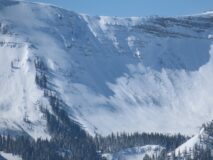
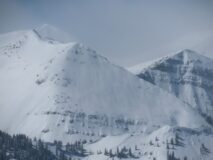
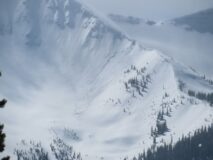
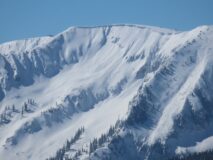
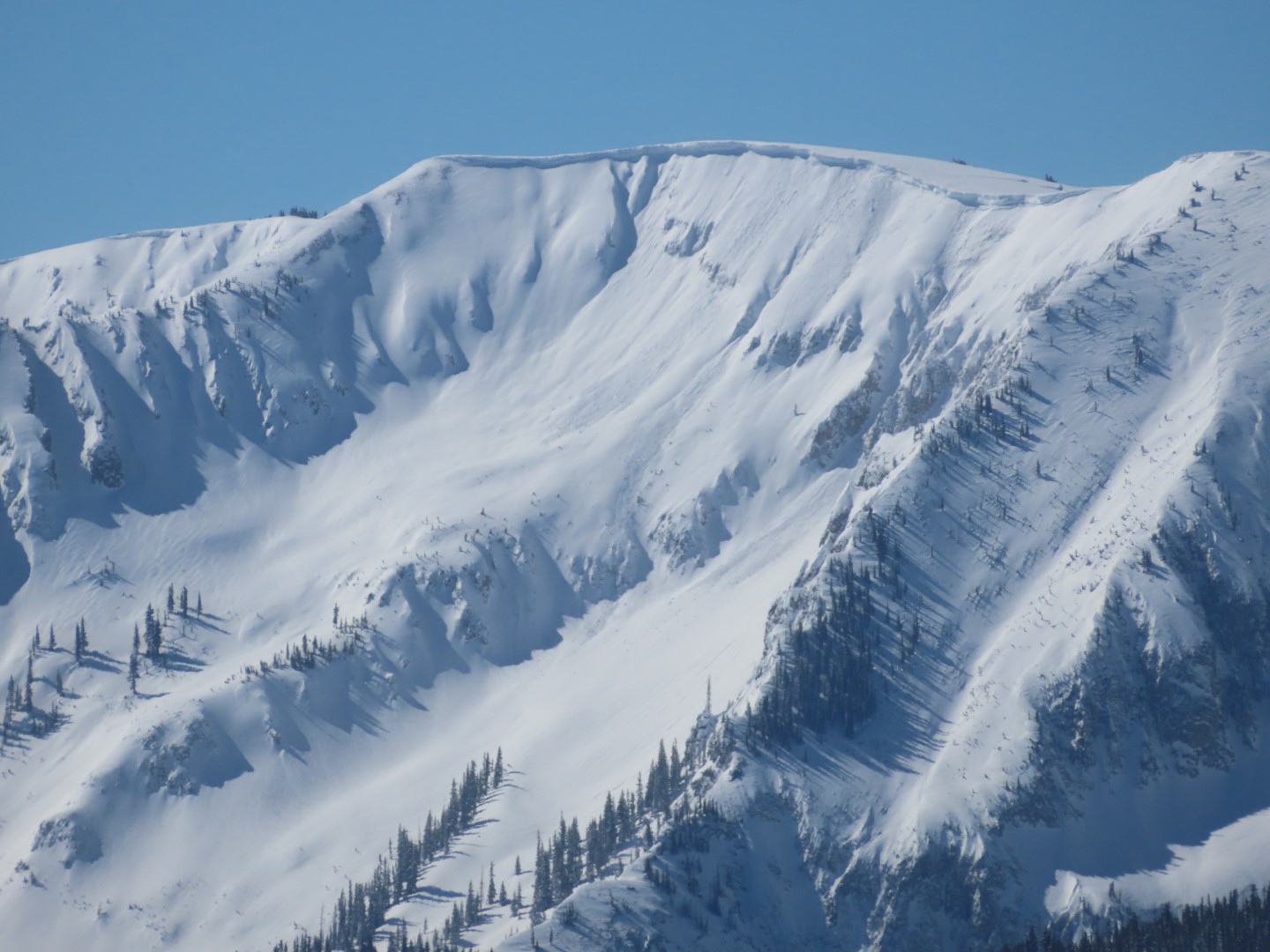
Observed avalanche activity: Yes Avalanches: A handful of D1 to D2 slab avalanches in wind drifted terrain that failed recently. Most looked like wind slabs failing within the storm snow. One appeared to be a large persistent slab below Scarp Ridge. See photos.
Relative Size: R2 small Destructive Size: D2 – could bury, injure, or kill a person Avg. crown height (inches): Avg. width (feet): Avg. vertical run (feet):
Involvements
# of people caught: # of partial burials: # of full burials:
Additional comments: Not sure if this is a thick wind slab or if it broke into old layers.
Relative Size: R1 very small Destructive Size: D1- Relatively harmless to people Avg. crown height (inches): Avg. width (feet): Avg. vertical run (feet):
Involvements
# of people caught: # of partial burials: # of full burials:
Additional comments: A few small wind slabs/cornice fall slides in 5th bowl
Zone: Southeast Mountains Route Description: Traveled on southerly aspects of Gothic Peak up to about 11,400 ft. Conditions worse than expected, bailed on our route plan and skied on NW, W, and SW aspects of Snodgrass instead.
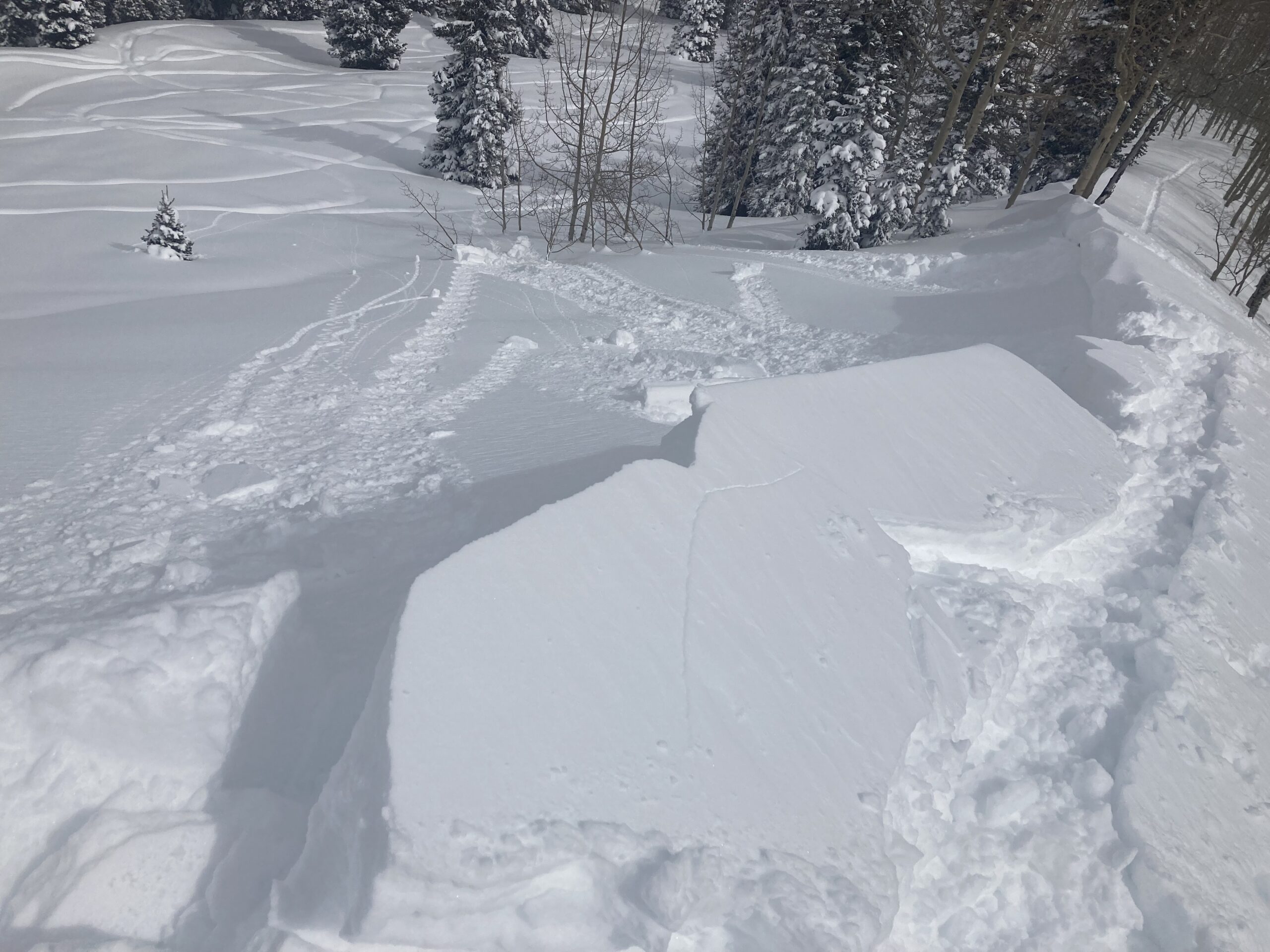
Observed avalanche activity: Yes Avalanches: On wind loaded southerly aspects, we found sensitive wind slabs that we could easily trigger remotely failing on the 3/8 crust. Even from locations without any drifting or slab formation, shooting cracks would connect to a drifted feature and release it. We remotely triggered about 5 small wind slabs on drifted rollovers below treeline on S or SE aspects. Near treeline, we remotely triggered a large wind slab in the “mini spoon” that propagated 400 vertical feet above our location and crossed the whole slope; crown was 10″ to 24″+ thick. There was also a large natural that came out of the Spoon yesterday or last night, crown filled in.
With decent visibility, we spotted a handful of D1 to D2 slab avalanches that failed recently, recorded in a separate ob. Most looked like wind slabs failing within the storm snow. One appeared to be a large persistent slab below Scarp Ridge. Weather: Cold and windy. Large plumes of blowing snow off of the high peaks. Continuous drifting in valley floor. Mostly clear skies overhead, some hazy clouds lingering over the Ruby Range. Snowpack: About 5″ of settled storm snow over the 3/8 crust on southerly aspects. This crust formed during the one day of sunny weather in the middle of last week’s storm cycle, and I suspect there is some radiation recrystallization associated with it, given its behavior.
On NW aspects below treeline on Snodgrass, we got numerous collapses on the sandbox layer about 2 feet down. Some collapses required stomping, some went while breaking trail. We were in tight trees and collapses didn’t radiate very far. In windsheltered southwest facing terrain, we found stable conditions.
Photos:
We remotely triggered a handful of wind slabs like this on cross-drifted terrain features below treeline.
We remotely triggered this large slab avalanche from about 50 feet away. The failure propagated up slope about 400 vertical feet and pulled into the typical uptrack for Gothic.
Zoom in to the thickest part of the crown which appeared to be about 2 feet thick.
Looking down at the debris
A natural that came out of the Spoon early this morning or yesterday.
Relative Size: R2 small Destructive Size: D2 – could bury, injure, or kill a person Avg. crown height (inches): 16 Avg. width (feet): 200 Avg. vertical run (feet): 1200
Involvements
# of people caught: # of partial burials: # of full burials:
Additional comments: Mini Spoon. Remotely triggered from about 50 feet away. Pulled out onto the usual uptrack for Gothic.
Relative Size: R2 small Destructive Size: D2 – could bury, injure, or kill a person Avg. crown height (inches): Avg. width (feet): Avg. vertical run (feet):
Involvements
# of people caught: # of partial burials: # of full burials:
Additional comments: Debris pile in bottom of Spoon. Likely a wind slabs on SE or S aspect N or ATL.
Zone: Northwest Mountains Route Description: Washington Gulch
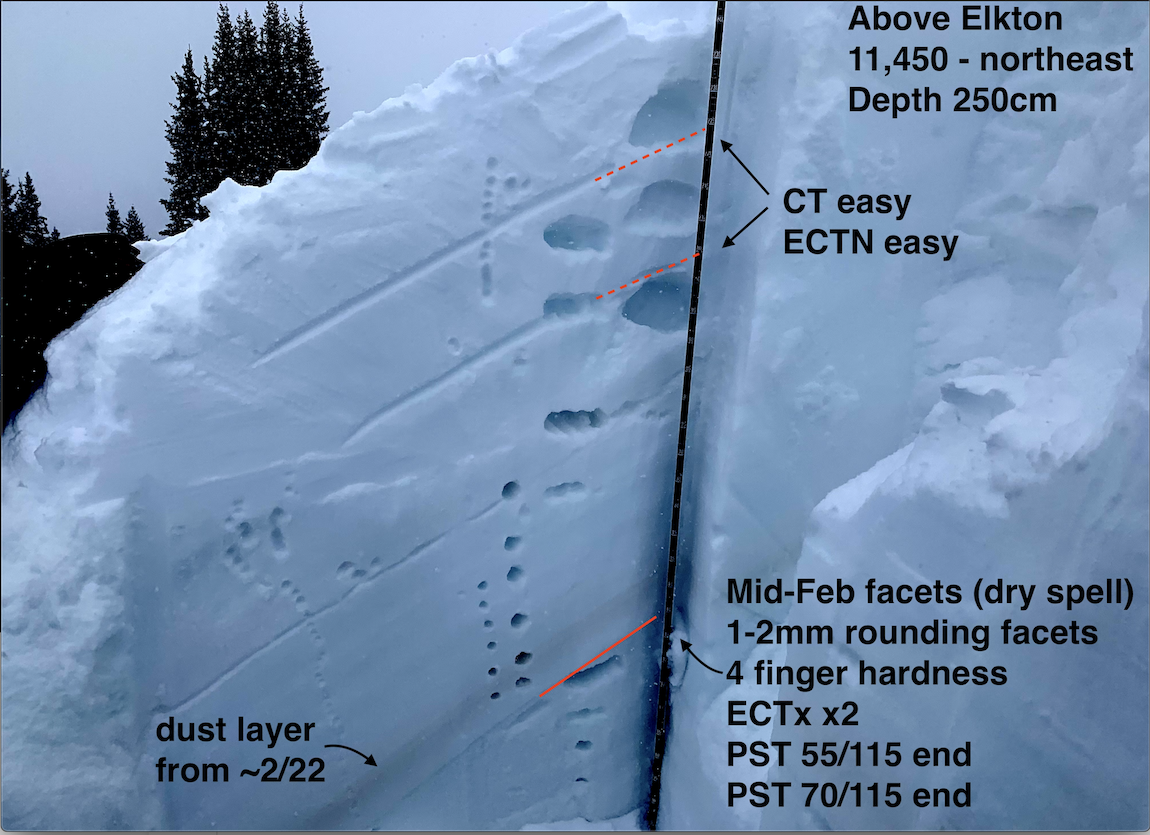
Observed avalanche activity: Yes Avalanches: Visibility was poor so I did not observe a crown, but I spotted one fresh debris pile in a southwest gully on Gothic Mtn, D1.5. Weather: From noon to 4 pm, skies were mostly cloudy with light snowfall. Winds were light with moderate gusts up to 11,400 feet. Snowpack: I was snowmobiling for fun, but dug a quick profile on a northeast-facing slope at 11,450 feet – see photo. I found two interfaces, around 1 and 2 feet down, that produced easy, small-column test results but only produced tiny cracks on small test features while snowmobiling. The mid-February facet “drought layer” was down about 115cm below a stiff, cohesive slab. The weak layer from mid-February has improved a small amount in this area, but the stark difference in grain size and hardness with the overlying slab remains obvious in the profile wall.
Zone: Northwest Mountains Route Description: Lower Slate and Lower OBJ, various aspects traveling mostly below treeline.
Observed avalanche activity: No Avalanches: Had so-so vis into Redwell Basin and didn’t see anything notable. Maybe a couple of thin, small soft slabs on northerly below treeline. Weather: Wintery temps. Very light snowfall this afternoon. Light northwest winds were drifting snow near valley bottom. No transport higher up. Snowpack: About 6″ to 8″ new. Got a couple of large, rumbling collapses near the valley bottom on moderate angled NE aspects. Got one deep but localized collapse on a flat ridgeline at 11,000ft. These were all on the sandbox layer about 3 feet down. Got a few minor cracks and one shallow collapse that radiated about 40 ft on a steep south facing slope. This was on the 3/8 crust, which is a thin, soft crust that developed during the one sunny day between storms this week. There was about 6″ of storm snow above the crust; not sure there’s enough to produce a slab avalanche unless you were in a drifted location. We traveled on steep southeast aspects and a few east/northeast facing bed surfaces from the 2/23 cycle with no signs of instability on either.
Zone: Southeast Mountains Route Description: The old reliable, park at the bottom and look up at the mountain tour.
Observed avalanche activity: Yes Avalanches: A couple of small wind slabs on Whetstone. These were D1 to D1.5 in size. The only appeared to involve storm snow and didn’t propagate very wide. Probably ran yesterday during the stronger winds. ATL E to NE. Nothing else was observed while looking into those mountains.
Zone: Northwest Mountains Route Description: Kebler Pass trailhead to Elk Creek, toured up ridge above the creek. 9,000 ft-10,500 ft
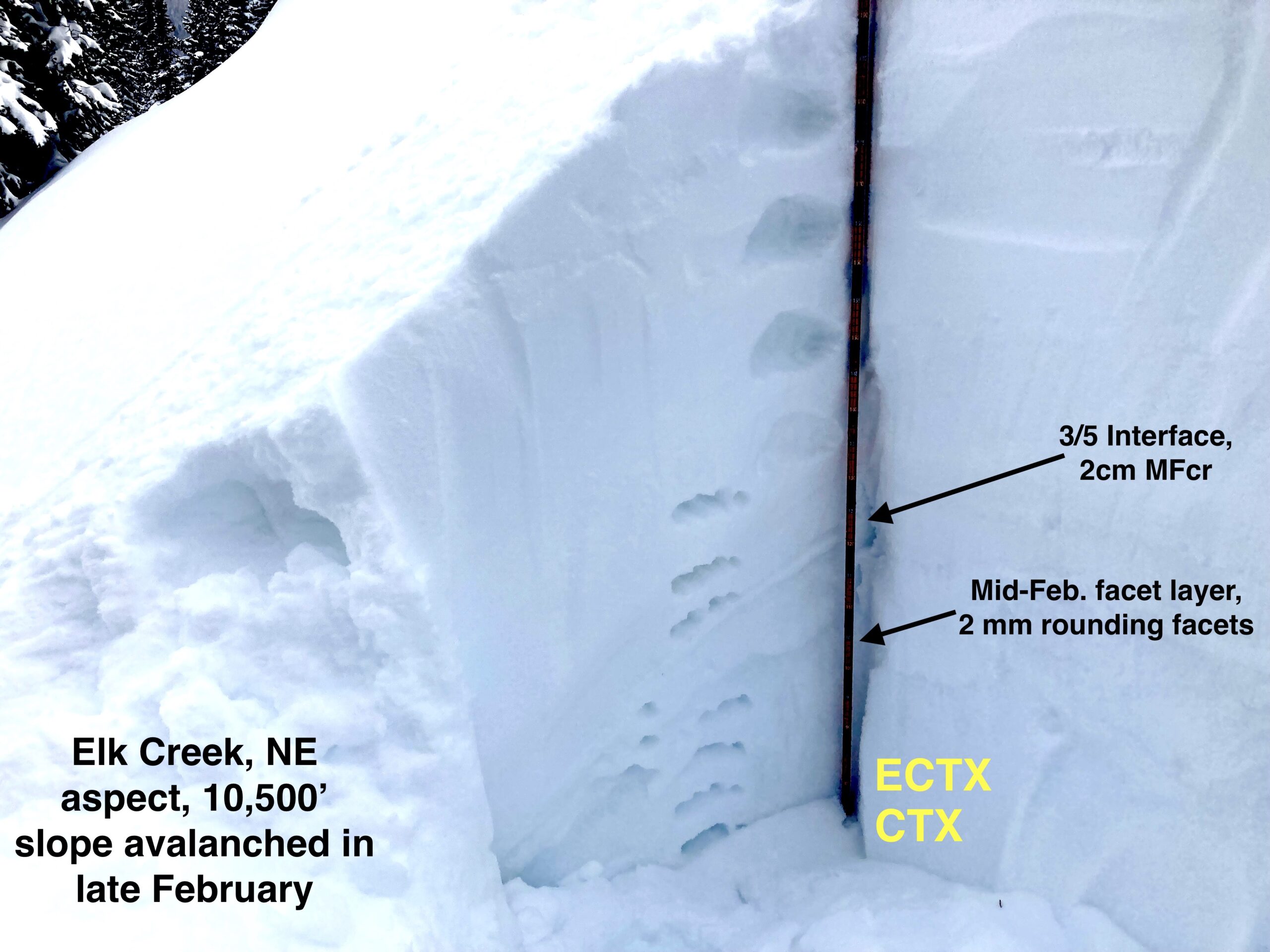
Observed avalanche activity: No Avalanches: No new avalanches observed on this tour. Very limited views into the surrounding upper elevation terrain. Weather: Broken skies and higher clouds gave way to low clouds, moderate snow and some wind around 2:30 as a squall moved in. Temps remained quite chilly, felt more like January than March. Snowpack: Walked around and jumped on a number of below tree line, northeasterly start zones, most of which avalanched early in the late February cycle. Generally, a soft 60-70 cm slab is resting on the bed surfaces in this zone. Bed surfaces themselves were a variably thick 1 finger hard crust capping 4 finger, 2 mm facets which do appear to be gaining strength. Very few signs of instability were observed underfoot or in a test pit other than 1 small leeward feature which had around 2ft of drifted snow and produced some small cracks in the new snow. No collapses or cracking were observed on the deeper weak layers on either slopes that avalanched or in-tact slopes.
Small cracking in the recently drifted new snow
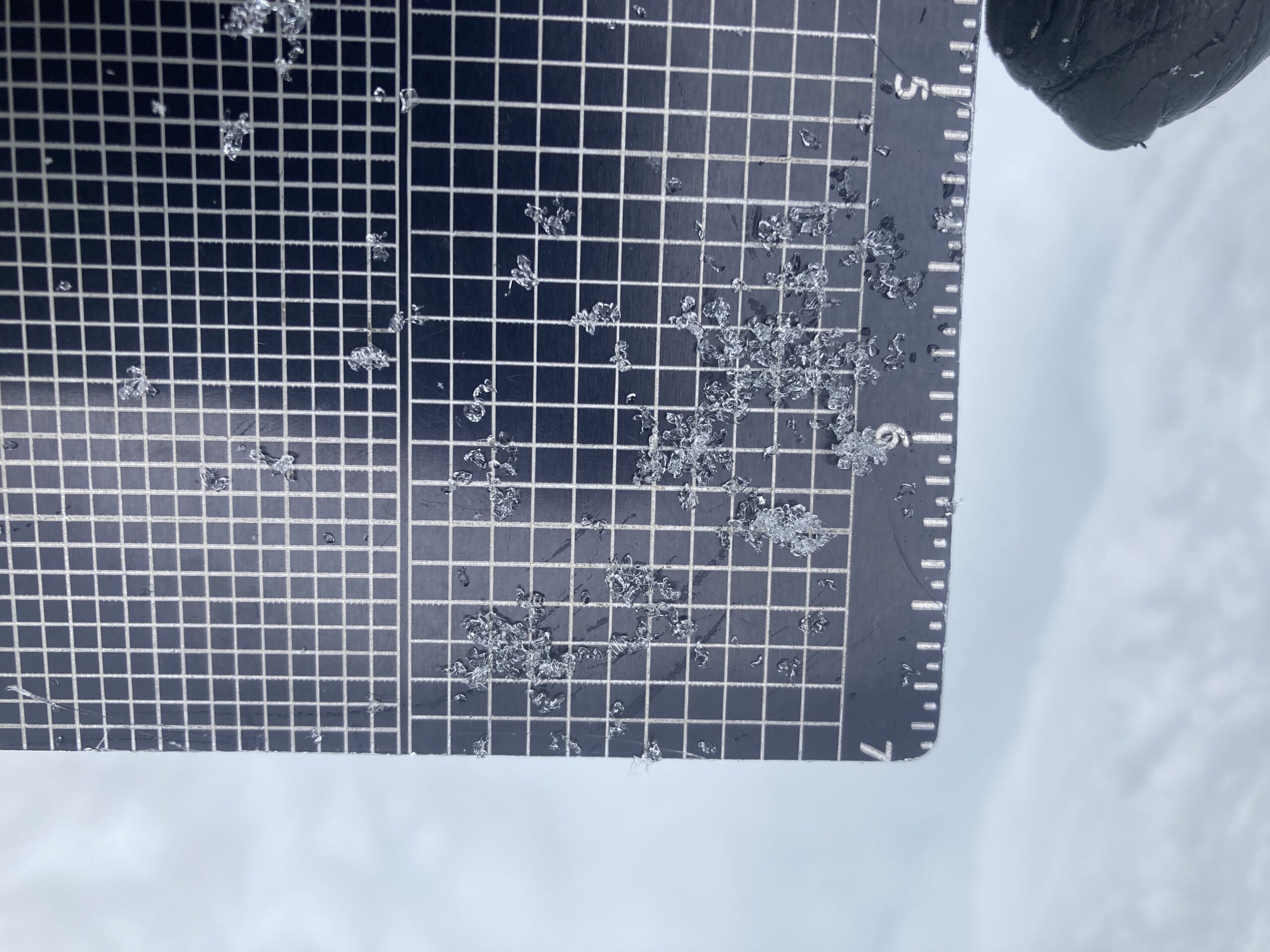
The “sandbox layer” is showing signs of rounding and sintering of grains.
Test pit from a slope that avalanched early during the late Feb cycle.
Zone: Northwest Mountains Route Description: Slate River to Pittsburg, standard uptrack and descent on the rollers. 9,000 ft -10,600 ft.
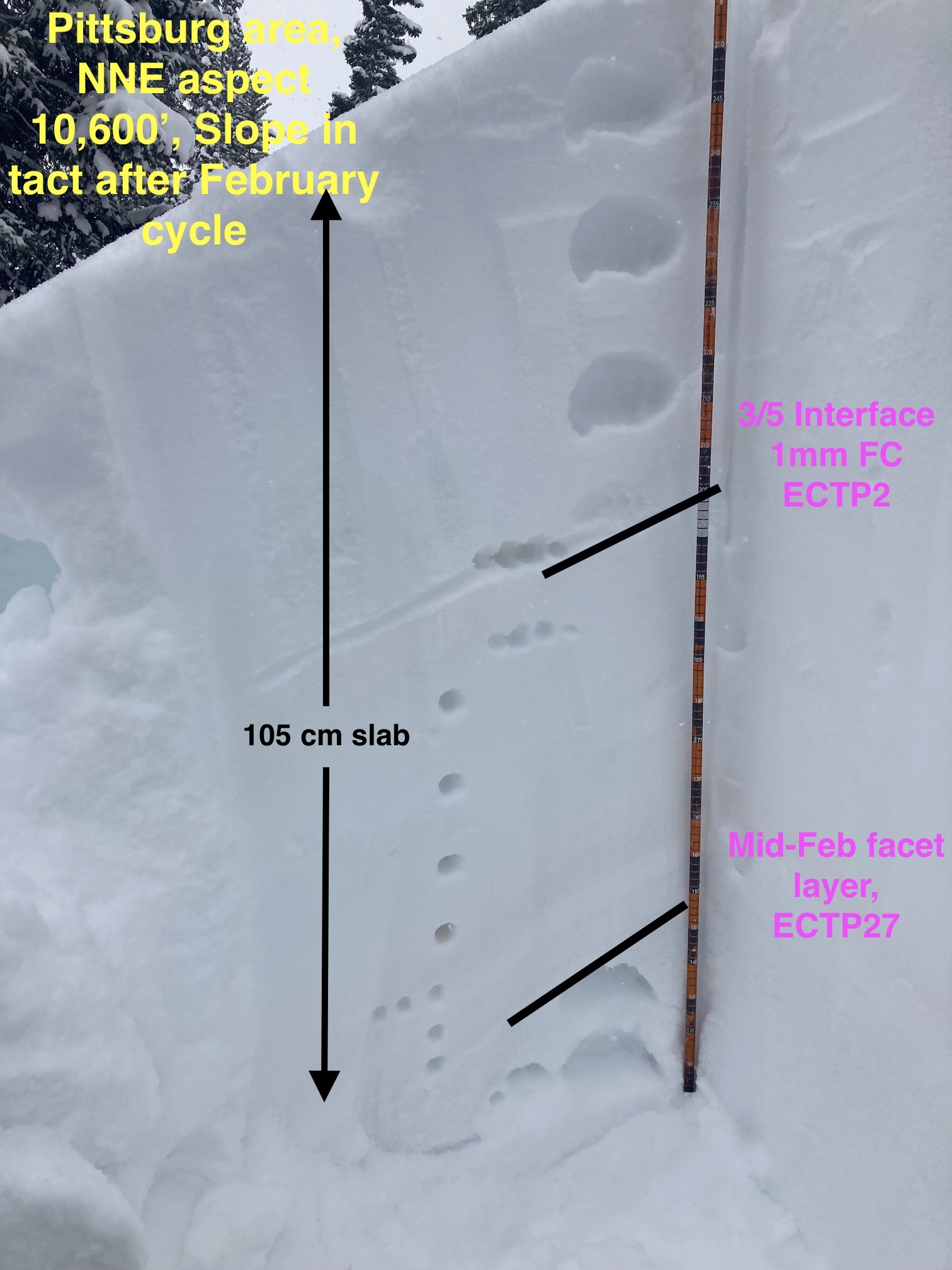
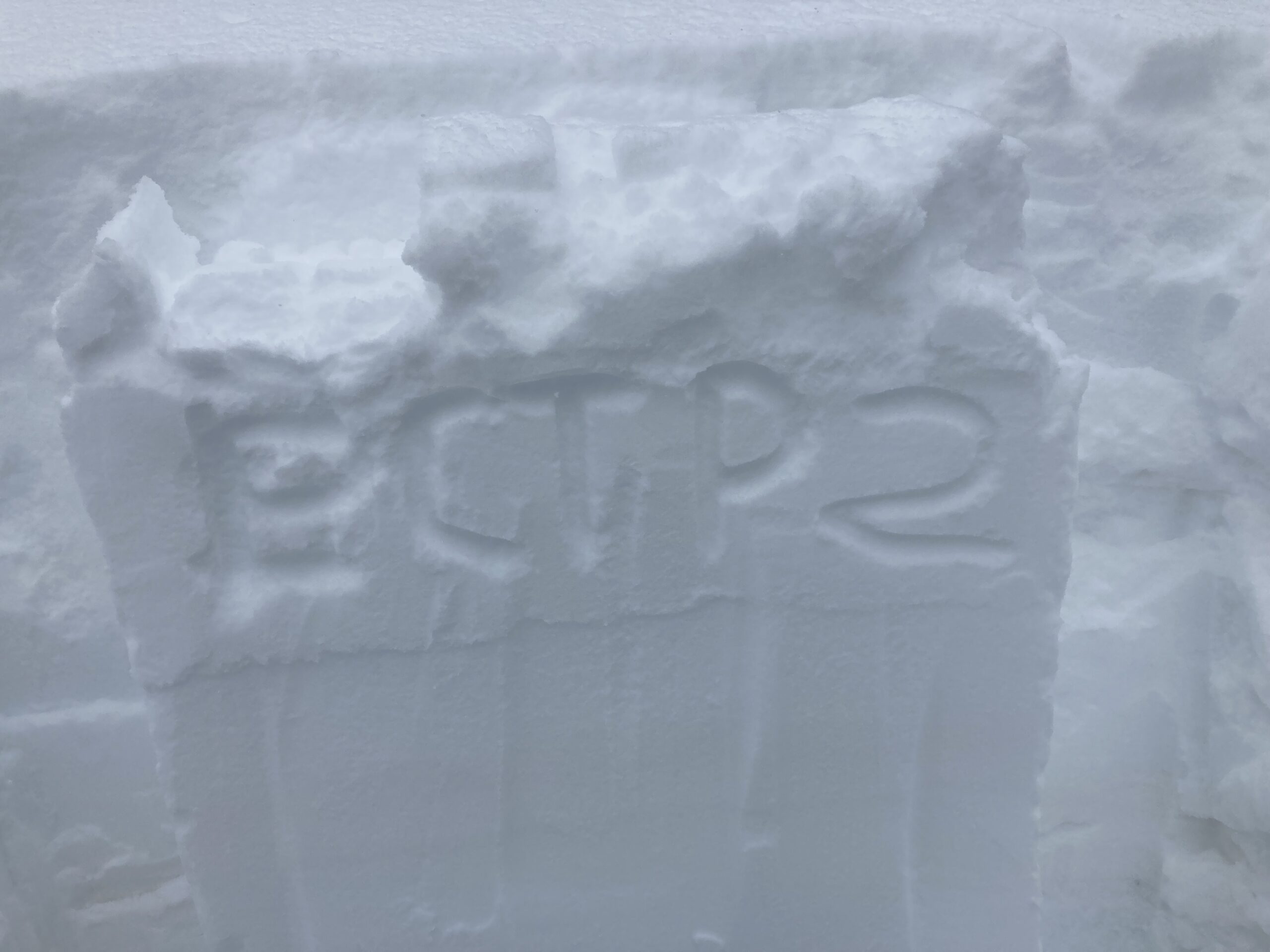
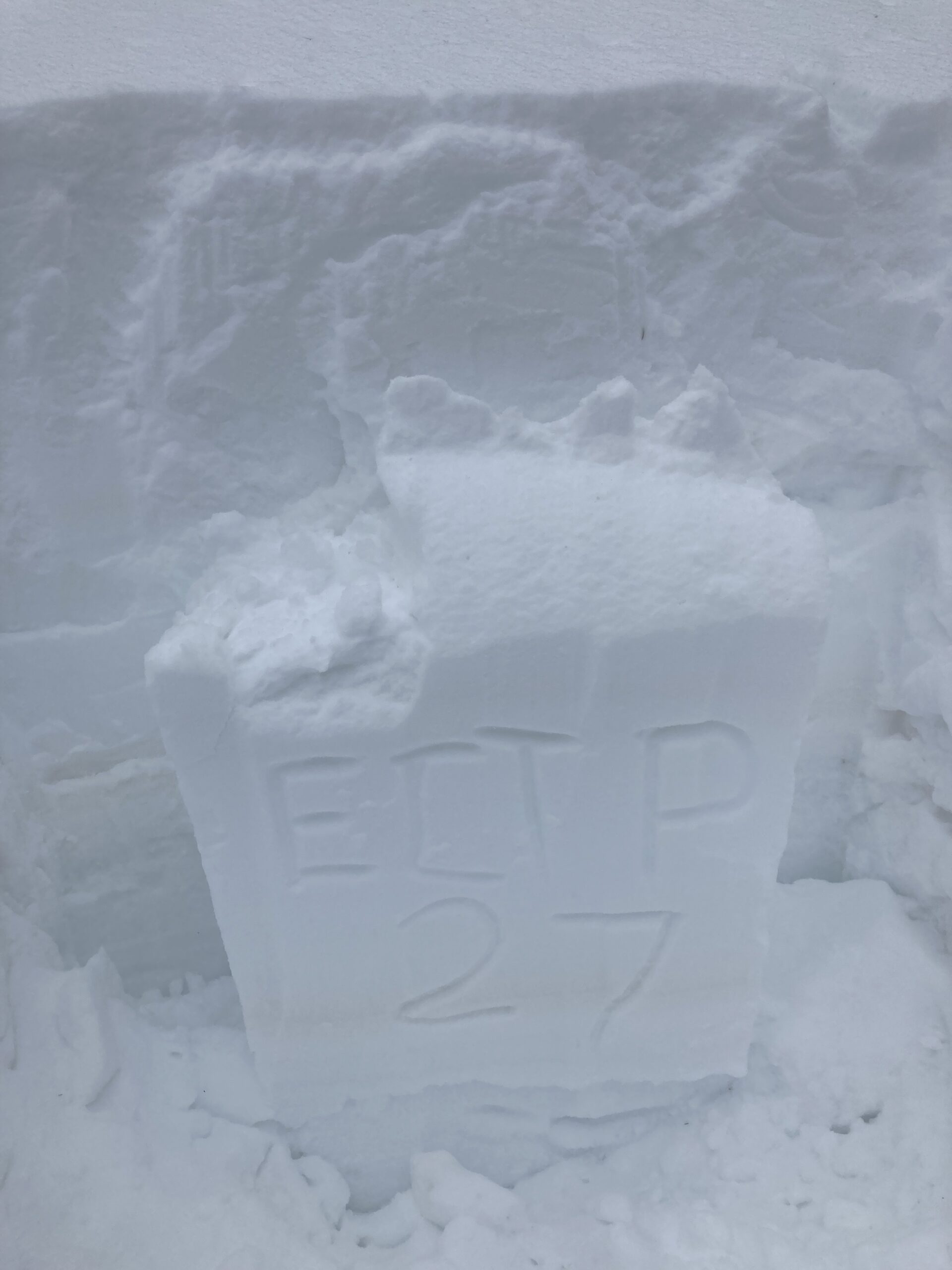
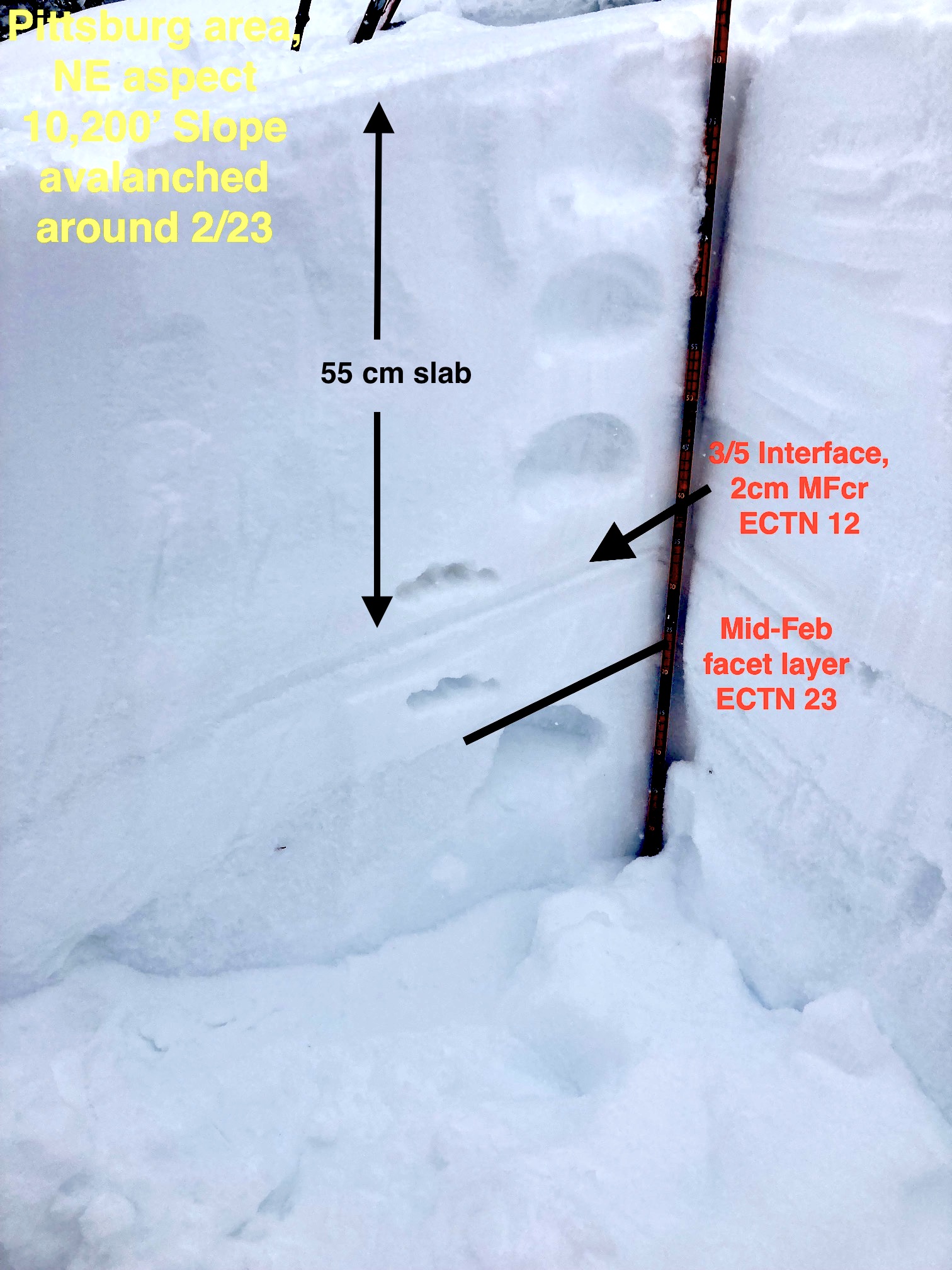
Observed avalanche activity: No Avalanches: No new avalanches were observed. Vis was poor so could not see into the surrounding terrain. Weather: Overcast, temps in the 20s, very light snowfall throughout the tour with accumulation less than an inch. Just after 2:00 SW winds picked up and started knocking snow bombs off the trees below treeline. Moderate to heavy snow began to fall around 4:30. Snowpack: HST only 4.5″ thus far with no instabilities seen in new snow. Traveling primarily on slopes facing E-N below treeline, I was targeting the mid-February weak layer sensitivity in spots that previously avalanched as well as in-tact slopes. The snowpack was very quiet with no collapsing or cracking in new snow or on Feb facet layer. Slopes that did not slide in late February have a slab just over 100cm thick, up to 1F+ hard, while a slope that slid had a much softer slab(F-4F-) and about half that thickness. Tests in both areas show stubborn results with hard propagation on full depth slopes and ECTN results on bed surface slopes where the slab is thinner and softer. The February facet layer is still soft(F hard) whether the slopes slid or not with a thin crust capping 2mm facets on the slopes that slid, these layers will be tested with more loading. Easy propagating results were observed in one pit on a NNE aspect where small facets were found at the 3/5 interface however no other signs of instability were observed on this layer. May be one to watch in the future on northerly slopes.
NNE aspect, slope did not avalanche in late February
Easy propagating results on NNE slope. Small 1 mm facets were found at the 3/5 interface.
Hard propagating results on the Feb facets
NE aspect, slope slid in late February.
Thin crust capping 2 mm facets on a slope that slid in late Feb.
Observed avalanche activity: No Weather: Light snow starting before midnight and continuing all night but with just 2½” new and water 0.16″ No wind and overcast sky while cool with the low 7F and current 11. Snowpack is at 67″.
Zone: Southeast Mountains Route Description: NW aspect, 10900 ft.
Observed avalanche activity: Yes Avalanches: Slab avalanche broke 3 feet above skier, and carried him briefly for 3 or 4 feet before he self arrested. D1 in size.
Photos:
Relative Size: R1 very small Destructive Size: D1- Relatively harmless to people Avg. crown height (inches): Avg. width (feet): Avg. vertical run (feet):
Involvements
# of people caught: 1 # of partial burials: 0 # of full burials:
Observed avalanche activity: Yes Avalanches: A D1 windslab(?) observed lookers left of the Spoon SE aspect 10700~.
2 wind slabs observed on Baldy. SE aspect near the ridge. One released during our ski in between 11 and 5 PM. Weather: 13 Degrees
Light NW wind
4/8 Skycover Snowpack: SW aspects had 4-8″ of low density snow on top of a solid meltfreeze layer.
SE aspects were similar until we hit NTL and ATL elevations. Obvious deeper drifts below ridgeline. No signs of cracking or or signs of instability but noticed the windslab was present. 2-4″ thick.
Below 10500′ on sun exposed aspects SE-SW, observed already crusted up snow with crusts ~1-3″ thick