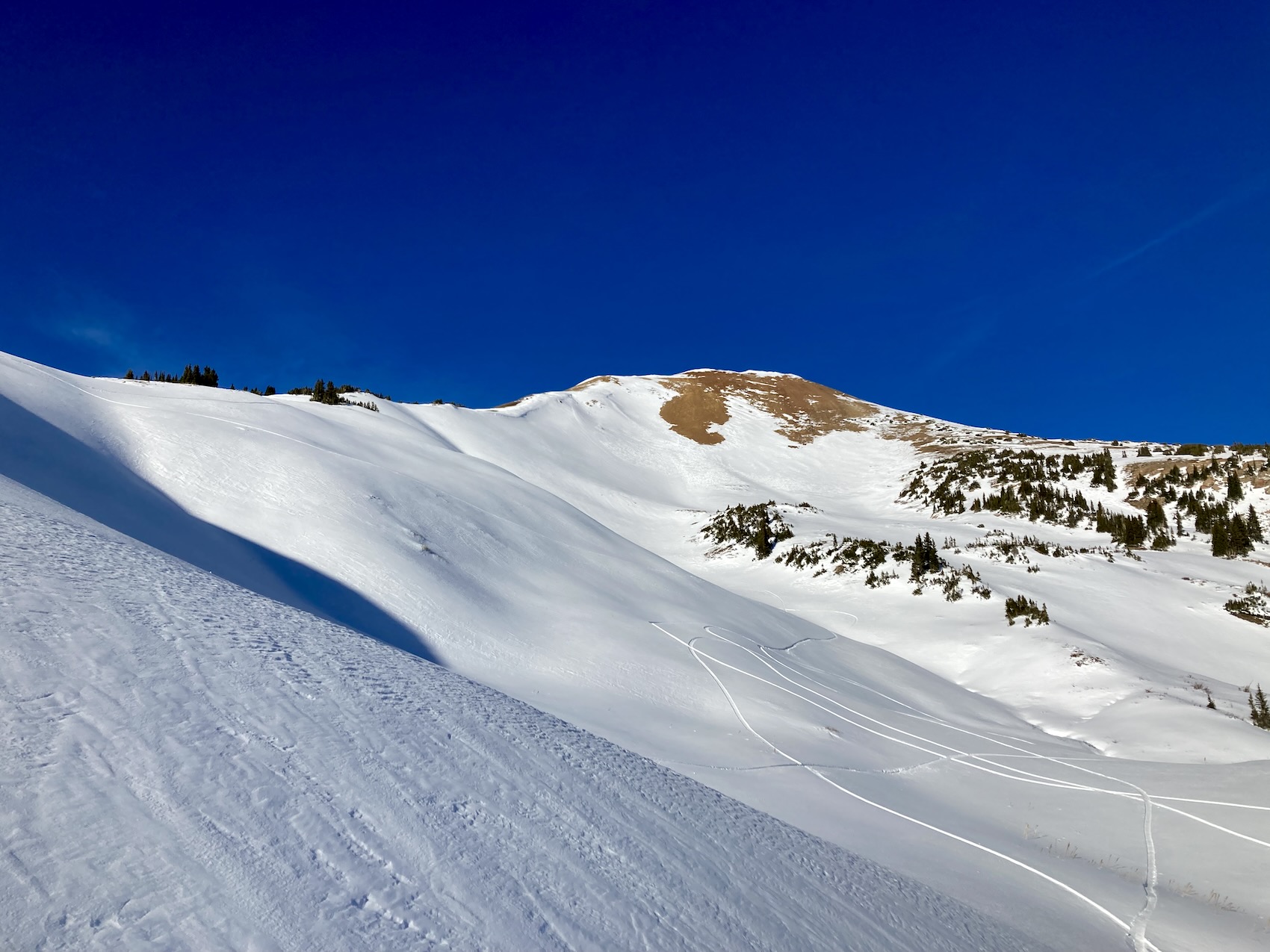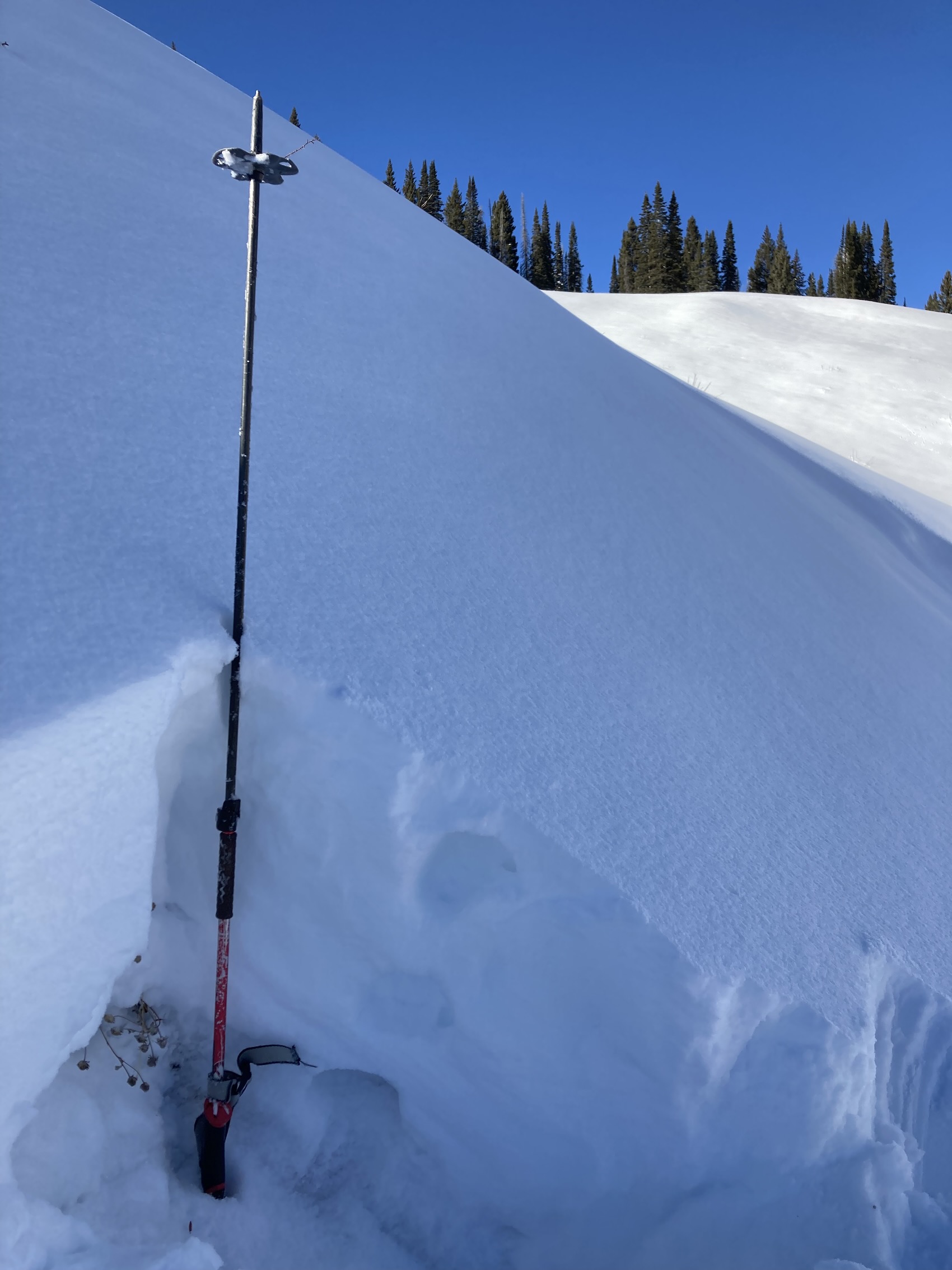
Facets on southerly facing aspects

CBACCBAC Observations

Date of Observation: 12/21/2021
Name: Evan Ross

Zone: Northwest Mountains
Route Description: Washington Gulch 9,500ft to 11,500

Weather: Mostly cloudy sky in the morning, became clear for the rest of the day.

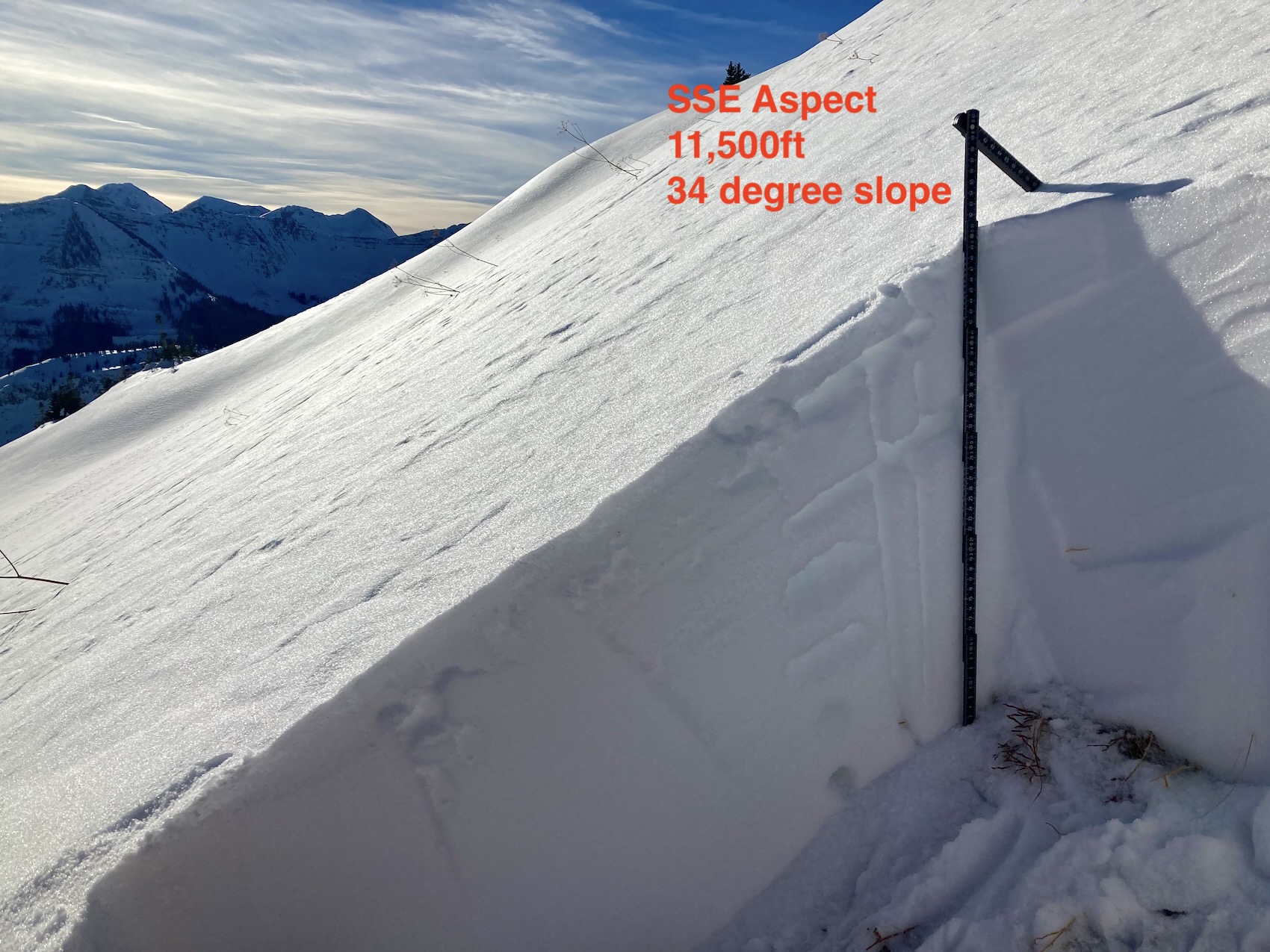
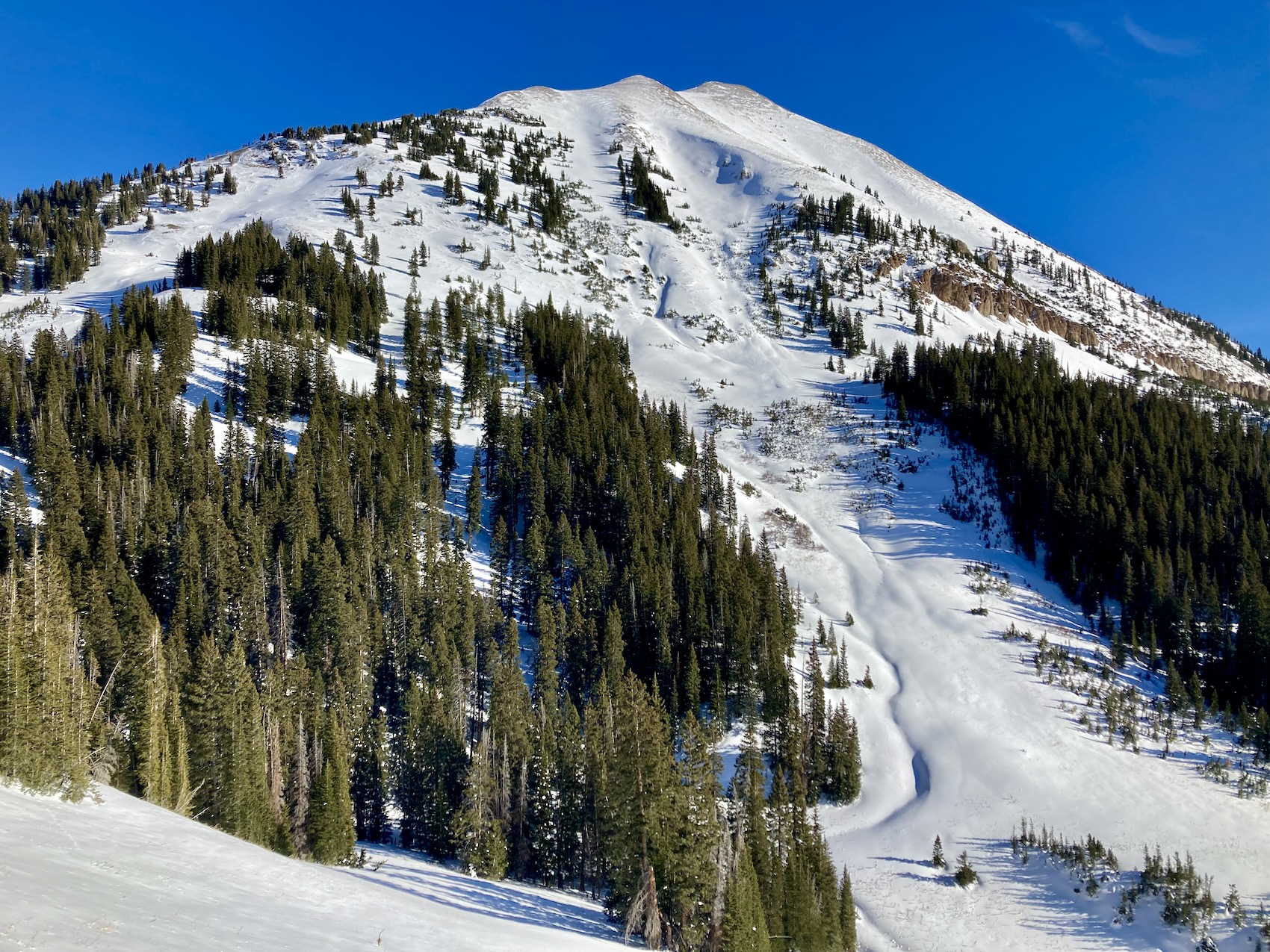
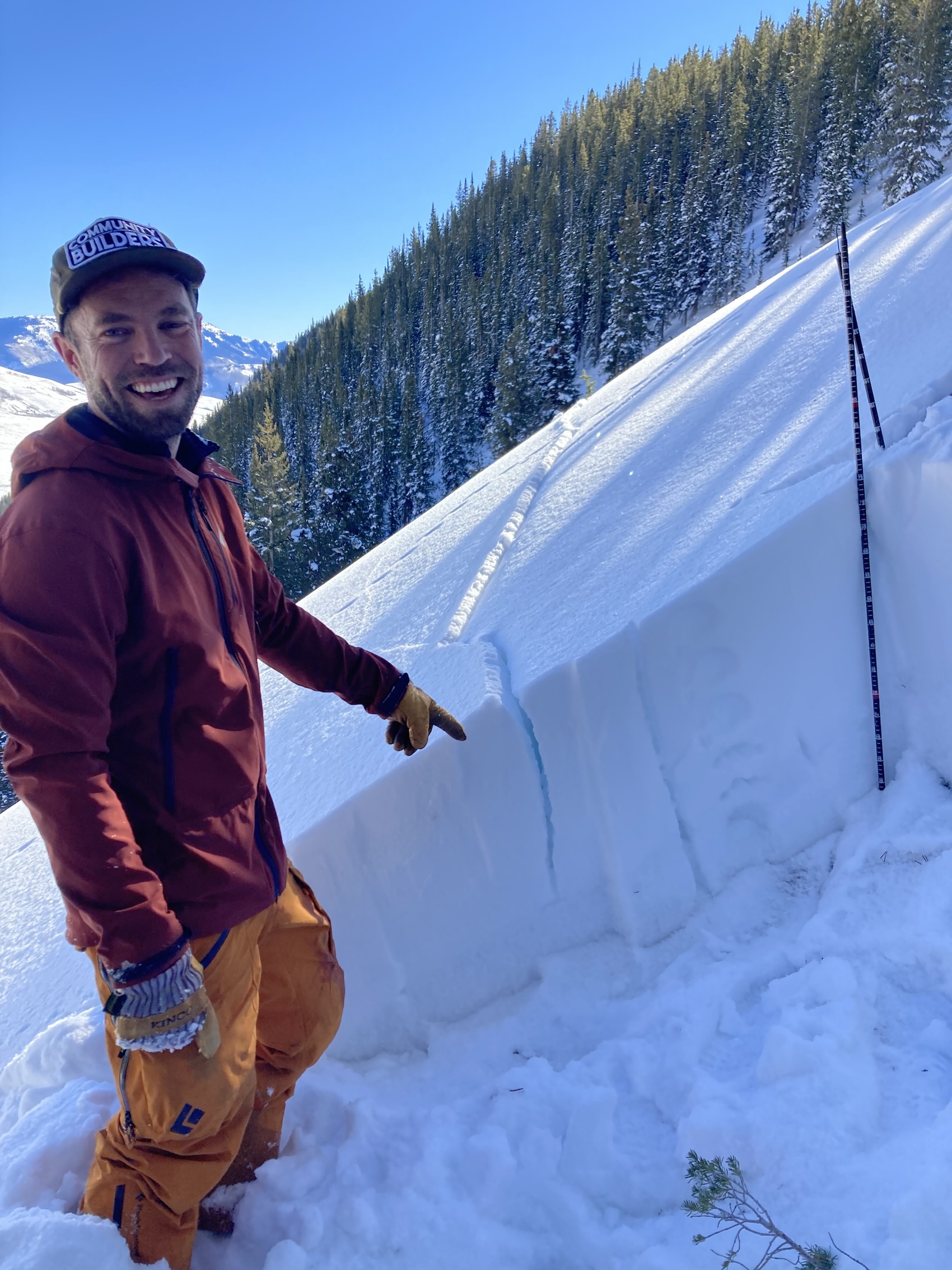
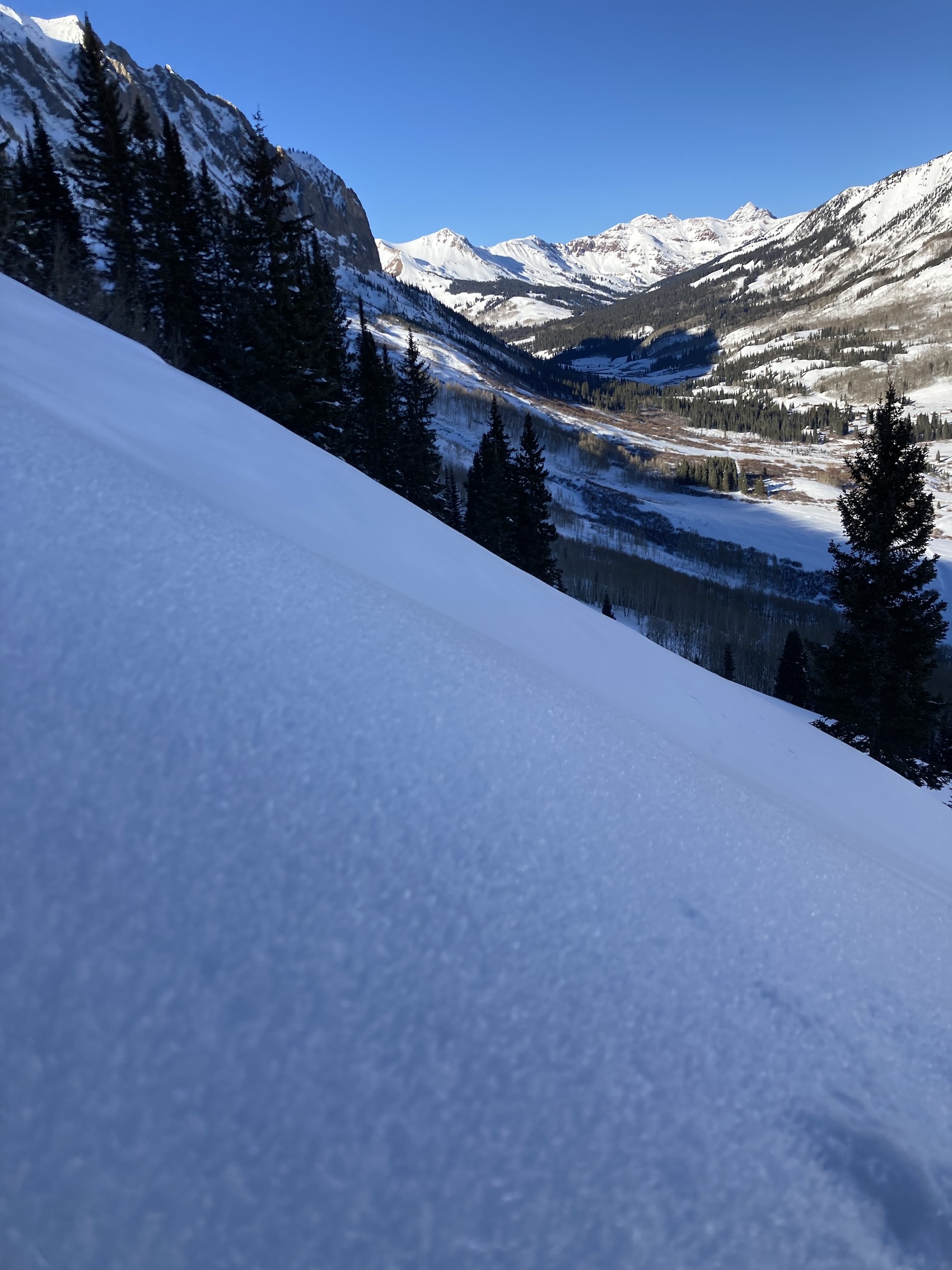
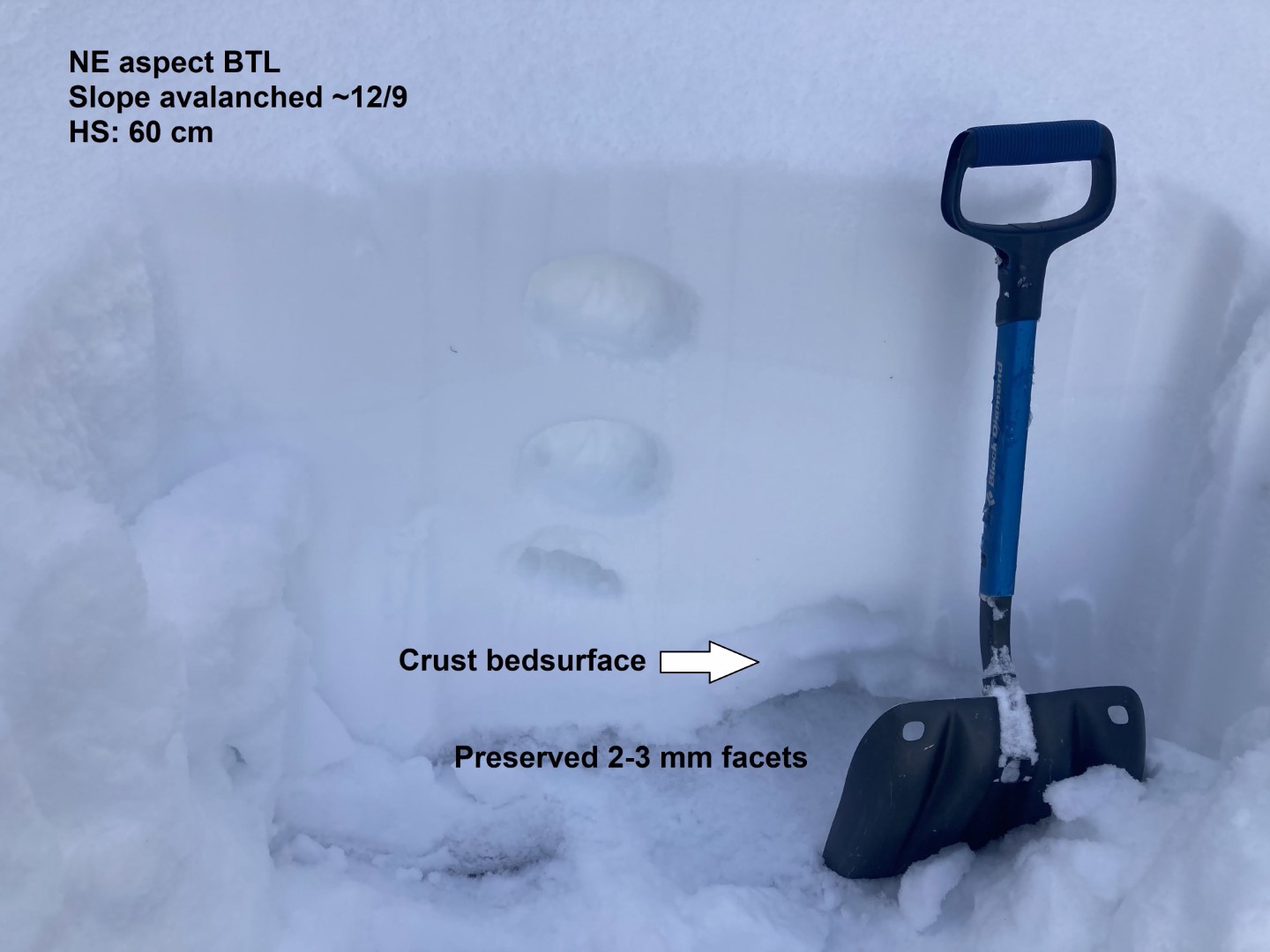
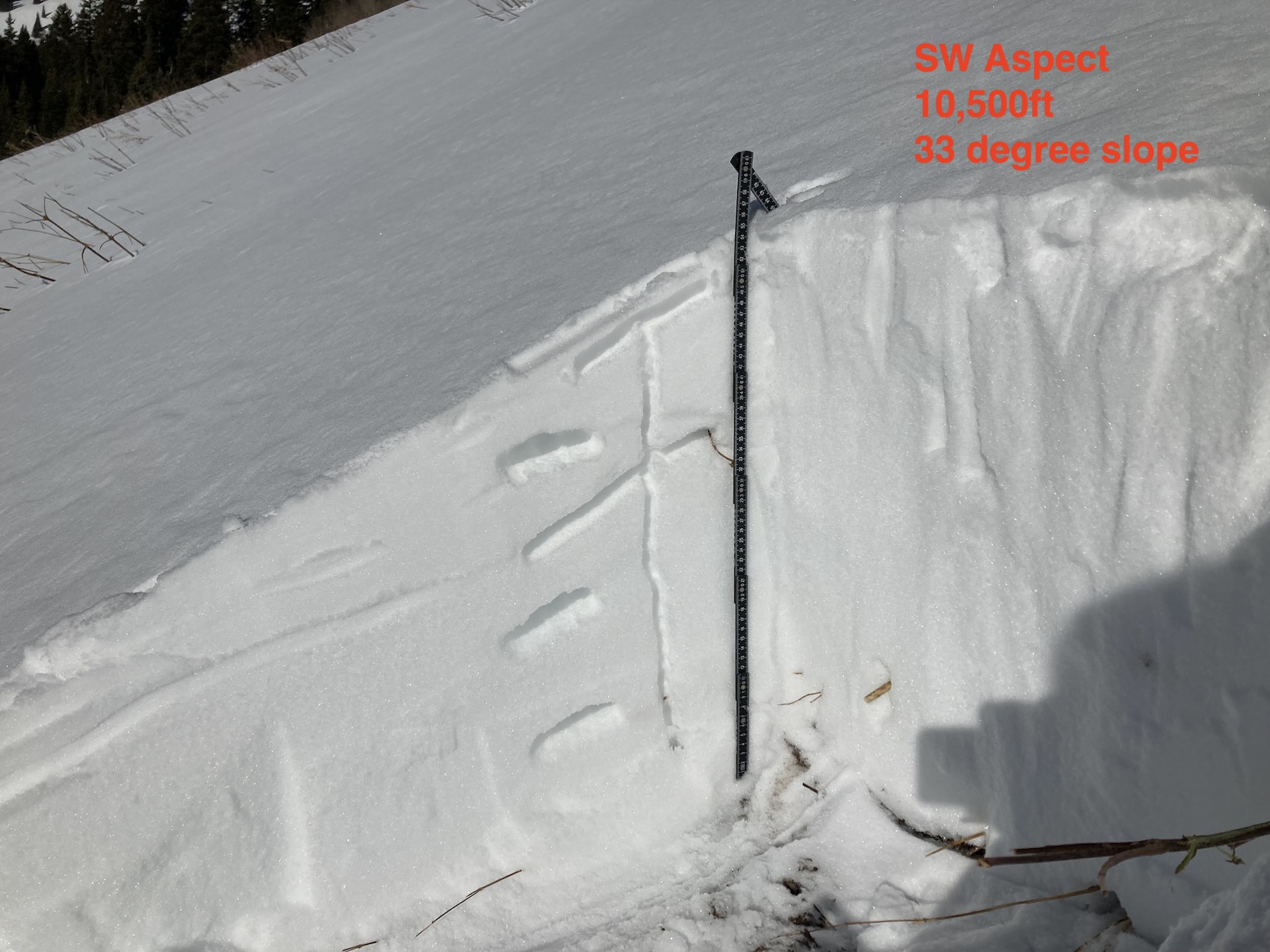
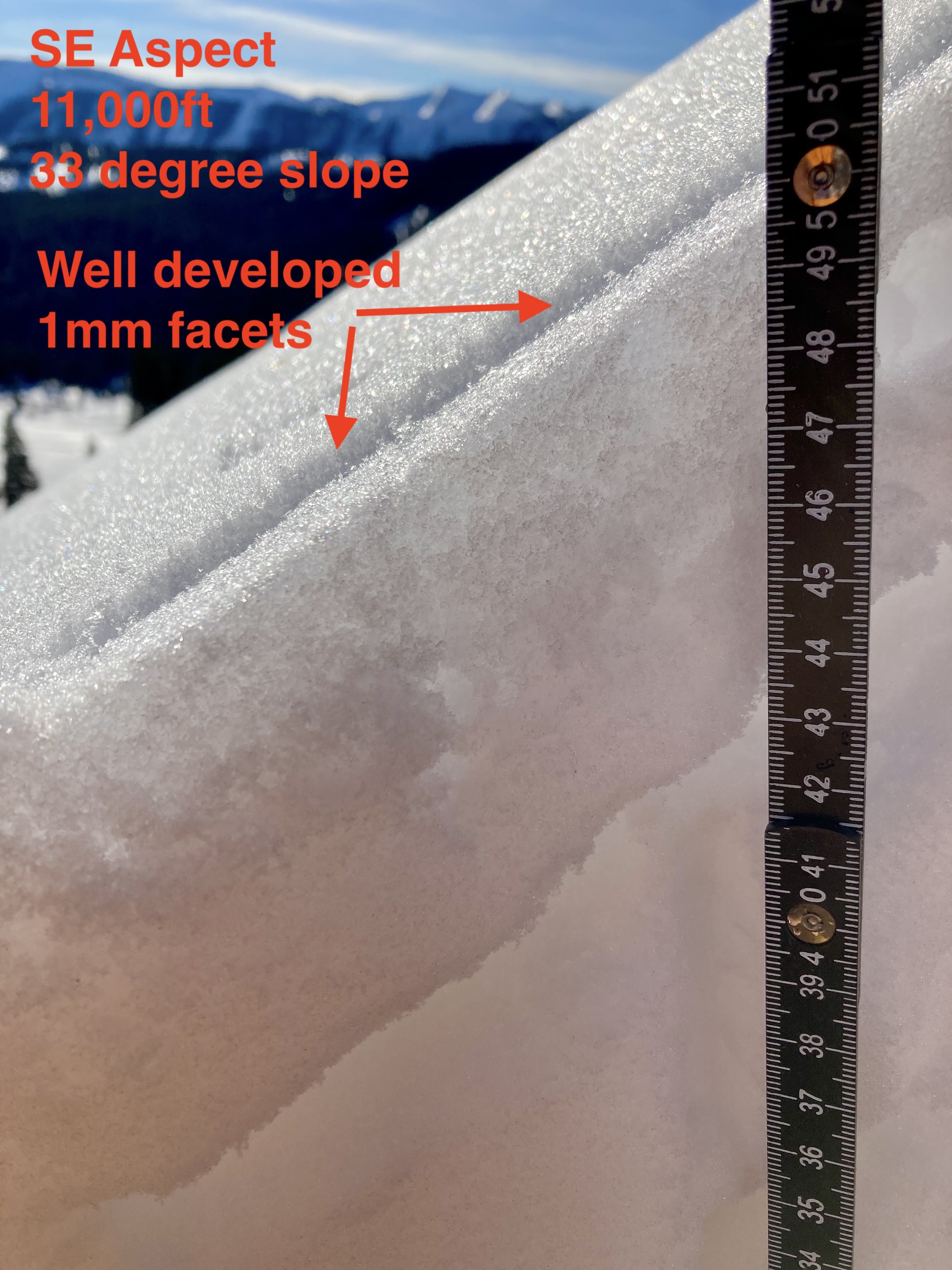
Snowpack: Stopped at 3 different spots to take a look at snow surfaces on southerly-facing slopes. The primary layer of concern in all three locations was facets on top of the crusts.

SW, 10,500ft, 33 degree slope. Dry, lightly faceted < .5mm grains above a 1cm crust. HS 55.

SE, 11,500ft, 33 degree slope. Dry, well-developed 1mm facets with multiple lines of striation, above a moist 4cm crust. HS 50.

SSE, 11,500ft, 34 degree slope. Dry, well-developed 1mm facets with multiple lines of striation, above a 3cm crust. HS 50.

Photos:
5126

Red Lady Glades trespassing PSA

CBACAnnouncements, Backcountry Notes, News

Dear Community,

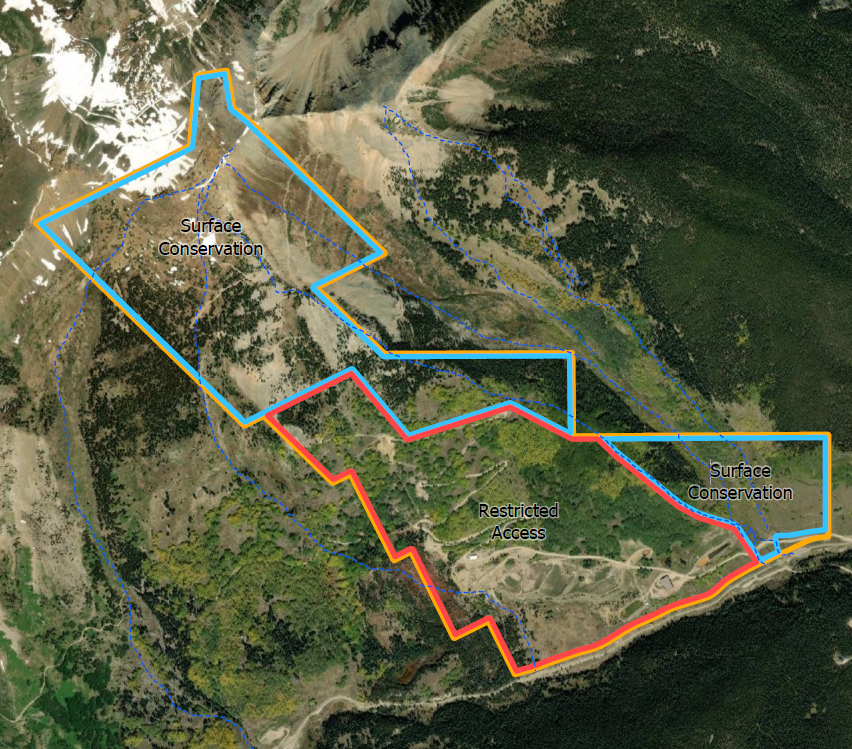
In an effort to preserve everyone’s access to Red Lady, we are asking backcountry travelers to respect the restricted access boundaries around the Mt. Emmons Wastewater Treatment Plant Site. This is the working area to your left as you are climbing the Red Lady skin track. The Site Supervisor on Mt. Emmons has encountered an increase in backcountry travelers on their water treatment plant property this year. They have asked us to help spread the word that while the Red Lady skin track is currently open, they may have to enforce a no-trespass policy for the community’s safety and the security of their facilities if it continues. The mine regularly operates heavy equipment and snow removal machinery on their roads and does not want a collision with skiers or riders. Additionally, the area of concern includes the Keystone Snow Course established in 1961 by the NRCS for measuring snow water equivalent in the Upper Gunnison watershed. That snow course and the surrounding area lie on private land. Continued impacts on the area could compromise important data collection vital to our water source. The standard fall line egress from Red Lady Glades does not pass through this private property, the route that veers east towards the bottom does. Please familiarize yourself with this image of the property boundary if you enjoy skiing Red Lady Glades.

Thanks, Crested Butte Avalanche Center

Weak snow around the compass in the shallow snowpack of the donut hole

CBACCBAC Observations

Date of Observation: 12/21/2021
Name: Zach Guy

Zone: Southeast Mountains
Route Description: Various aspects below treeline on Mt. Crested Butte, 9500 to 10500 ft.

Observed avalanche activity: No
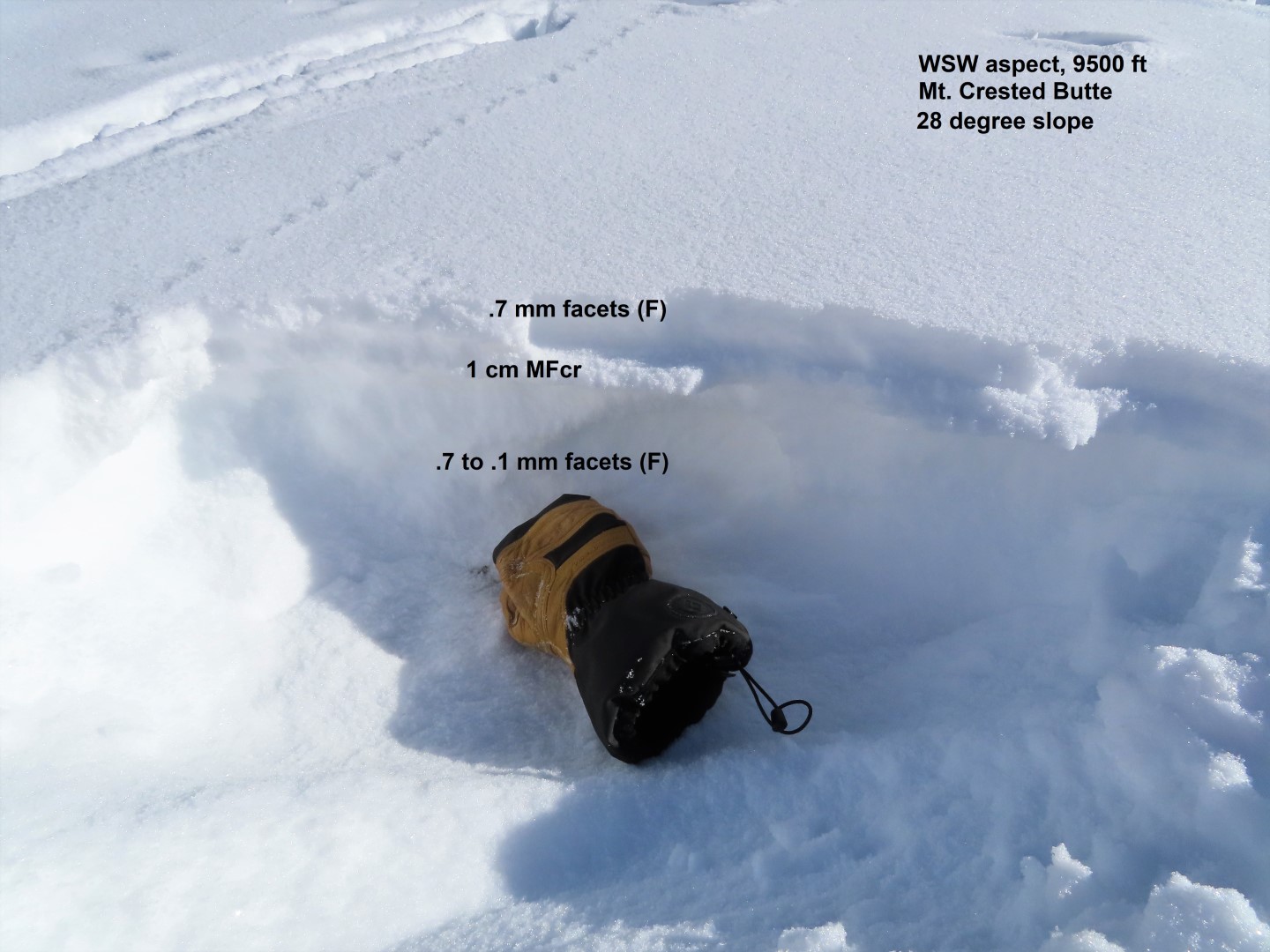
Snowpack: The snow from December storms has faceted into .7 to .1 mm, fist hard facets on all aspects. This layer is uniform and about 25 to 30 cm thick on East to North to West aspects, and sits over larger depth hoar grains (12/6 layer) on NE to NW aspects. On southerly aspects, the facets surround or are capped by one or two melt-freeze crusts. On steep, due south, the crust is >10 cm thick and generally goes to or near to the ground; lower angled south has a crust/facet sandwich. On SE and SW aspects, the surface crust thins towards a fragile, soft crust that is <1cm thick. Long story short, there are concerning persistent weak layers at the snow surface on all but due south BTL here…this will be the 12/23 interface. This layer isn’t as large-grained and fragile as the 12/6 layer, but it will certainly cause issues, and it spans more terrain than the 12/6 layer.  This layer is also noticeably weaker and better developed in the shallow snowpacks (SE Mtns) than in our deeper snowpacks (NW Mtns), and also weaker on bed surfaces from the last cycle.

Photos:

5123

Felt like Rice-A-Ronie to the ground

CBACCBAC Observations

Date of Observation: 12/20/2021
Name: Evan Ross & Bud Tymczyszyn

Zone: Southeast Mountains
Route Description: Coney’s and the NE side of Snodgrass, below treeline.

Observed avalanche activity: No
Weather: Clear and calm.
Snowpack: 12/19 Coneys area:

12/19 Coneys area:
On the up valley tilted NE slopes the snowpack lacked much structure and was basically becoming all weak. We didn’t observed avalanche problem in those areas. On the down valley tilted easterly slopes, we found many thick slabs from the wind event last week that created previous cross-loading. However, those slopes didn’t have a weak layer below them. We didn’t encounter somewhere where a slab and a weak layer mixed, where ever that pocket is located would be the most concerning area.

12/20 Snodgrass NE
80% of the terrain we traveled through had either previously avalanched and had a very shallow weak snowpack, or the slope hadn’t avalanched and was still weak without any concerning structure. The other 20% of the terrain traveled had decaying slabs that still had enough structure to collapse and shoot cracks. There were a couple pockets that we chose to avoid. Otherwise, a triggered avalanche didn’t appear like it would propagate very wide given the discontinuous slabs and variability in the snowpack structure. Unfortunately, once it snows again the weak layer will be very continuous through the terrain.

Photos:

5122

Weaker snow surfaces on bed surfaces

CBACCBAC Observations

Date of Observation: 12/20/2021
Name: Zach Guy

Zone: Northwest Mountains
Route Description: Traveled on E to S to SW aspects to 12,500 ft in Poverty Gulch

Observed avalanche activity: Yes
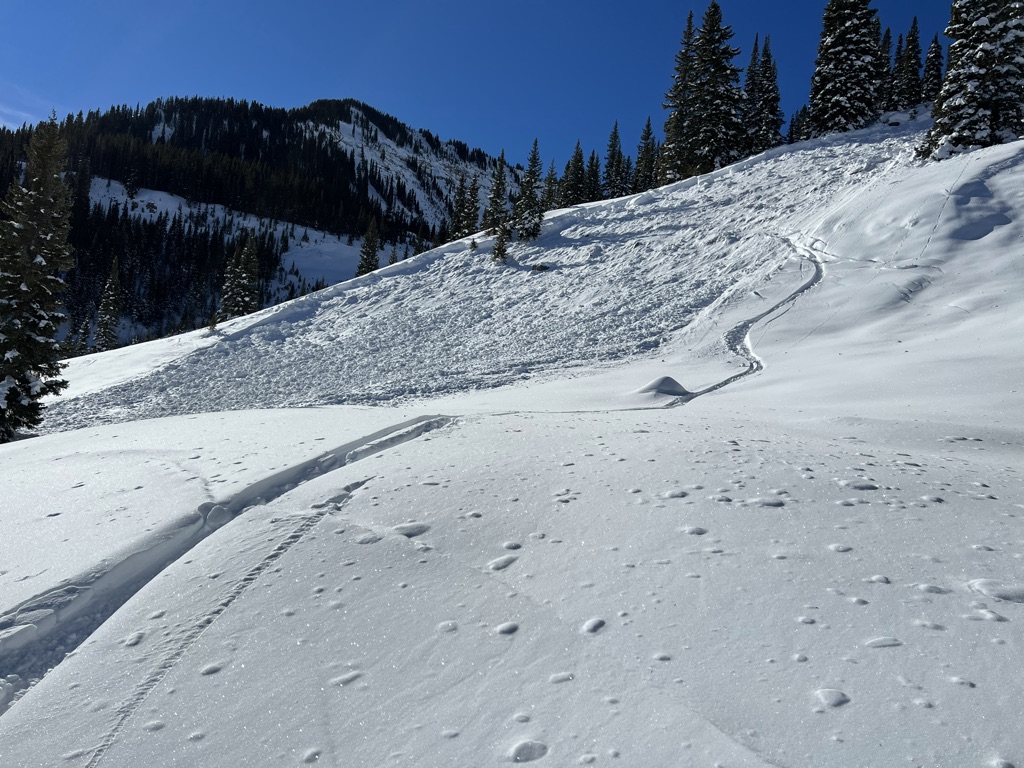
Avalanches: A handful of D1s off of Mineral Point from the past few days on both south and east aspects. Some were point releases, at least one looked like a small wind slab.
Weather: Mild, sunny, light winds.
Snowpack: Checking on snow surfaces near and above treeline before the next storm. In general, they weren’t overly alarming in this area, as far as long-lived persistent weak layers go. The snow surface is settling and slightly textured by wind around the compass. There are some very small facets developing on the surface that could be an issue in the short term. The most developed facets at the surface, up to 1mm in size, were in shallow areas: areas that were recently scoured close to the ground by wind, or on old bed surfaces on shady aspects. So it seems persistent instabilities on repeat offenders will be at play out here. The snow surface became slightly moist above treeline on south aspects and got wet below treeline on the southern quadrant. Snow depths are around 2 meters at 11,000 ft. No signs of instability all day.

Photos:

5121

Anthracite Range

CBACCBAC Observations

Date of Observation: 12/19/2021
Name: Zach Guy

Zone: Northwest Mountains
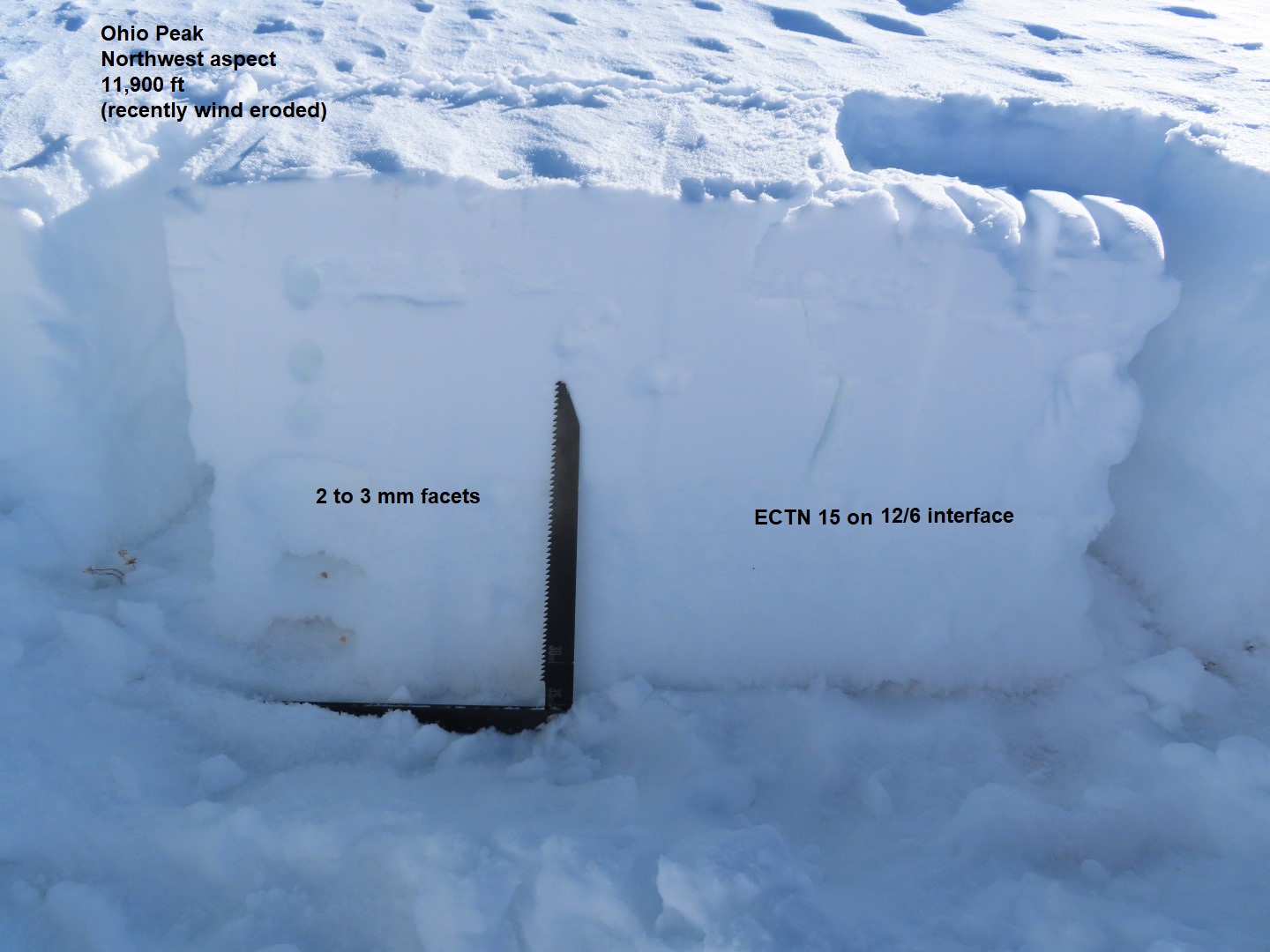
Route Description: Various aspects of Ohio Peak from 9500 to 12200 ft.

Observed avalanche activity: Yes
Avalanches: A few harmless loose snow avalanches trigged by solar warming on southerly aspects.
Weather: Light winds, clear skies. Temps felt cold in the shade, mild in the sun.
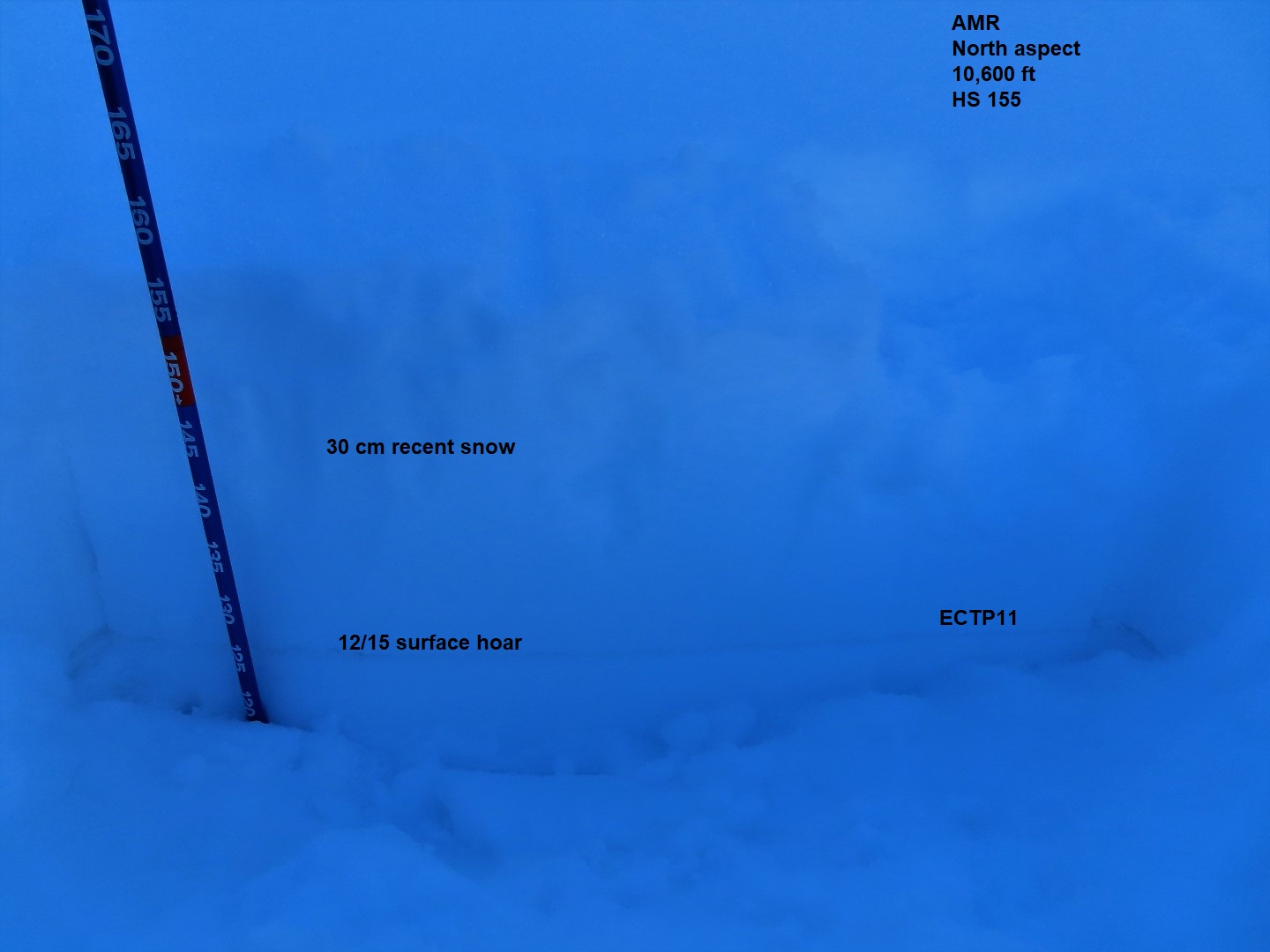
Snowpack: No signs of instability all day (for a change). Persistent slab problem feels deep and stubborn here in wind protected terrain, HS averaged about 160 cm. The 12/15 surface hoar layer is preserved below about 30 cm of recent snow and is already producing propagating results in column tests. We found this layer on northerly facing, sparse glades up to about 10,600 ft, and not above that. There is also surface hoar on the snow surface in a similar distribution. Apart from wind board on some slopes above treeline, the snow surface is low density on northerly aspects and I expect it will continue faceting over the next few days. Snow surfaces were getting a little moist on steep southerlies.

Photos:

5120

Big collapse

CBACCBAC Observations

Date of Observation: 12/16/2021
Name: Jeff Banks

Zone: Southeast Mountains
Route Description: Forest Road going up to green lakes

Observed avalanche activity: No
Snowpack: Big collapse in an open clearing of a road cut, dropped a couple inches. To paraphrase an old Cake song; bowel shaking earth quakes of doubt & remorse. Skinned for a couple of km of low angle forest and this was perhaps the most wide open clearing we encountered & notably only collapse, in otherwise dense, silent forest.

5115

Collapses on the flats and another preserved surface hoar layer

CBACCBAC Observations

Date of Observation: 12/17/2021
Name: Zach Guy

Zone: Northwest Mountains
Route Description: Traveled on NE to SE aspects near and below treeline, lower Slate.

Observed avalanche activity: Yes
Avalanches: Nothing recent. Documented more activity from last cycle.
Weather: Very light snowfall at times. Mostly cloudy skies, light winds, no transport observed.
Snowpack: We found about 6″ to 10″ of recent snow over a preserved surface hoar layer that somehow survived the wind event and was buried on 12/15. I found this layer consistently in hand pits up to about 10,000 ft in sparsely gladed, wind sheltered terrain on northerly aspects. I didn’t see it near ridgeline start zones. Not enough snow on this surface hoar layer for slab concerns at the moment..
We experienced a handful of collapses on basal facets near valley bottom on low angle terrain, some were localized, some radiated up to 100 ft. Many occurred after the second or third skier in the skin track had crossed. Stability tests near and below treeline on shady aspects produced hard, propagating results on the 12/6 facets. Almost all of the steep terrain that we passed by today had slid naturally during the previous cycle. Those slopes did not show signs of instability.
There were small, localized drifts from the 12/15 wind event behind tree fences and near ridges. Ski cuts and cornice drops didn’t produce any signs of instability with these wind slabs.

Photos:

5112

Fireside Chat Speaker Series #2 (Recording Link)

CBACAnnouncements, Backcountry Notes, Events

Link to Recording of this chat!

Code: U#@chi8D

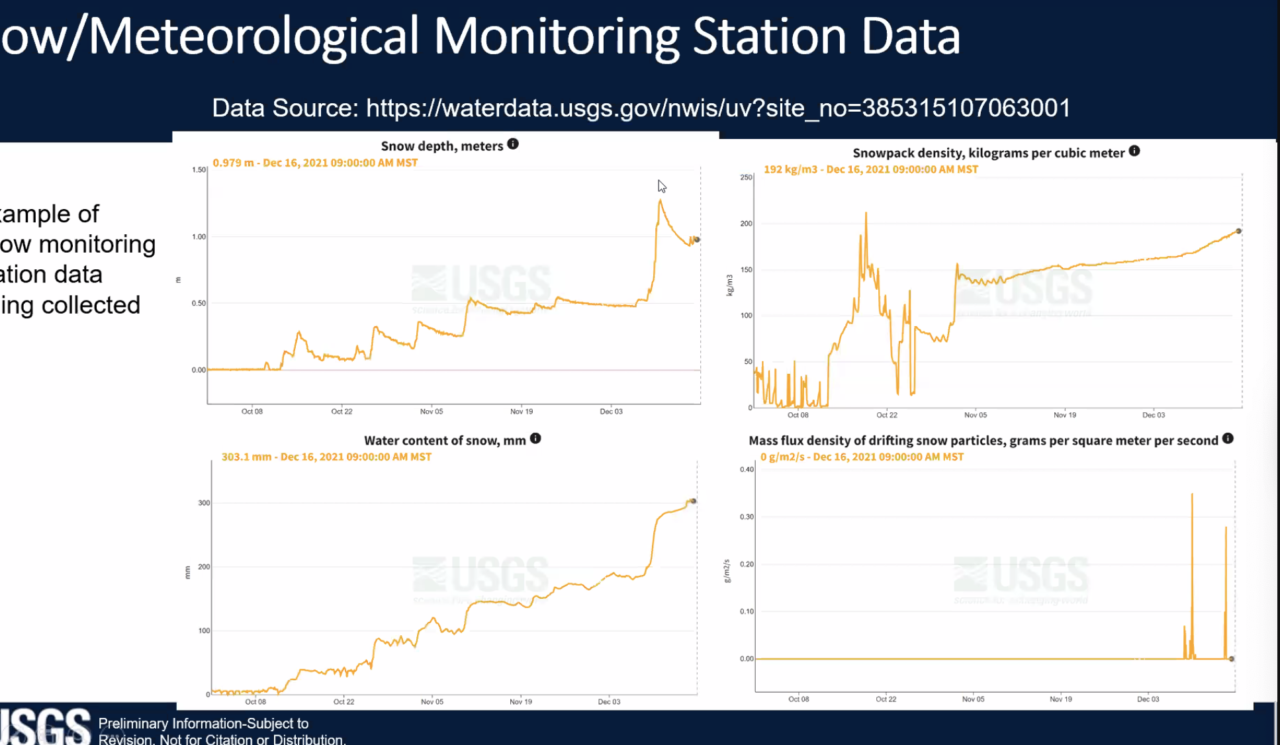
Graham Sexstone is a Research Hydrologist with the USGS Colorado Water Science Center. Graham will be presenting on USGS snow monitoring and modeling activities in the Upper Colorado River Basin and will highlight research efforts planned in and around the greater Crested Butte and Gunnison areas. This research is focused on better understanding snow as a water resource and linking snowpack to streamflow.

Featured Image also contains link to additional weather station link in the Kebler Pass/Lake Irwin area.